Department of Biology of Adipose Tissue Depots, Pennington Biomedical Research Center, Louisiana State University System, Baton Rouge, LA, USA.
Division of Health Economics, Louisiana State Department of Health and Hospitals, Baton Rouge, LA, USA.
Int J Obes (Lond). 2014 Feb;38(2):224-30. doi: 10.1038/ijo.2013.106. Epub 2013 Jun 10.
To investigate in vitro adipocyte differentiation in baboon fetuses in response to reduced maternal nutrition.
Cross-sectional comparison of adipocyte differentiation in normally grown fetuses and fetuses of pregnant baboons fed 70% of the control global diet from 30 days of pregnancy to term.
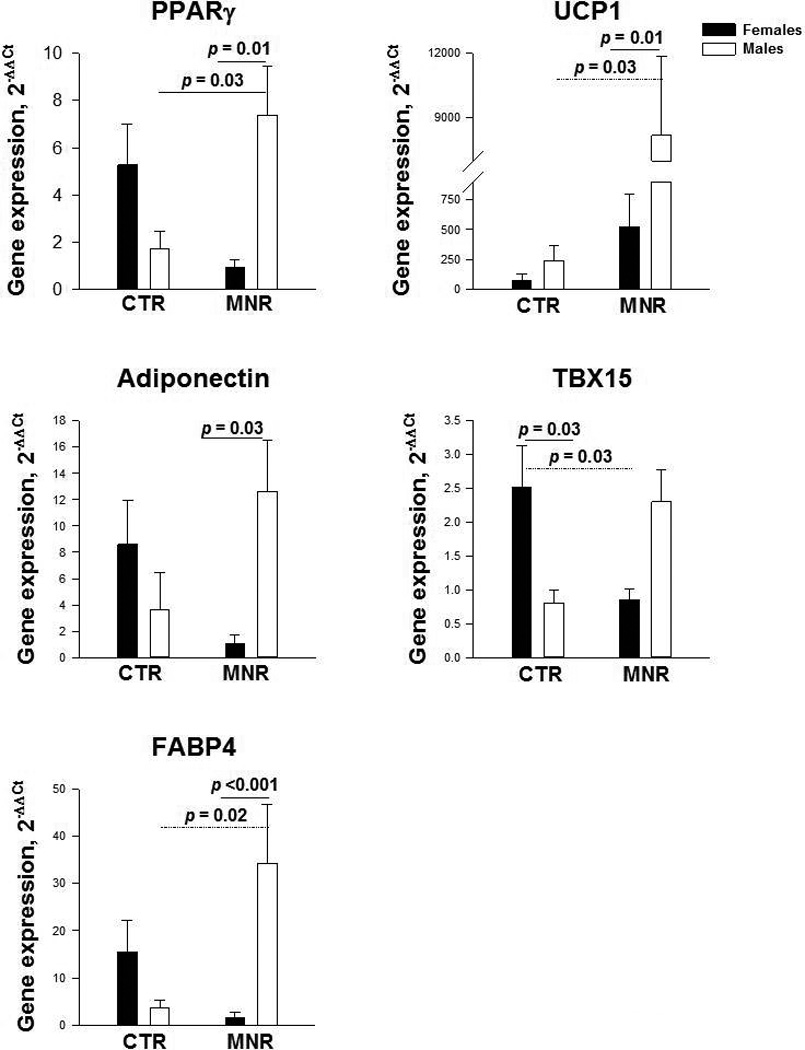
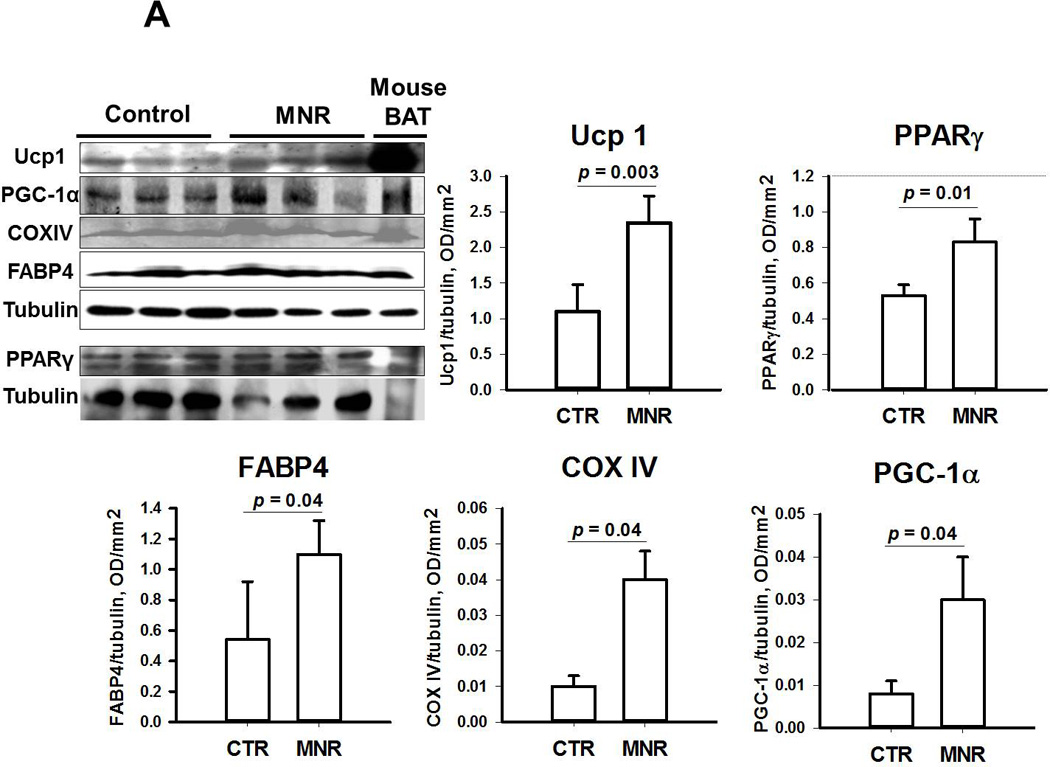
The subjects comprised control (CTR) fetuses (five female and five male) of mothers fed ad libitum and fetuses of mothers fed 70% of the global diet consumed by CTR (maternal nutrient reduction (MNR), five female and five male fetuses). The expression of genes/proteins involved in adipogenesis (PPARγ, FABP4 and adiponectin) and brown adipose tissue development (UCP1, TBX15 and COXIV) were determined in in vitro-differentiated stromal-vascular cultures from subcutaneous abdominal, subcutaneous femoral and omental adipose tissue depots. Adipocyte number per area (mm(2)) was determined histologically to assist in the evaluation of adipocyte size.
Maternal suboptimal nutrition suppressed growth of male but not female fetuses and led to adipocyte hypertrophy accompanied by increased markers of white- and, particularly, brown-type adipogenesis in male but not female fetuses.
Adipose tissue responses to fetal nonhuman primate undernutrition are sexually dimorphic. While female fetuses adapt adequately, the male ones enhance pathways involved in white and brown adipose tissue development but are unable to compensate for a delayed development of adipose tissue associated with intrauterine growth restriction. These differences need to be considered when assessing developmental programming of adiposity in response to suboptimal maternal nutrition.
研究食源减少对狒狒胎儿体外脂肪细胞分化的影响。
从妊娠 30 天到足月,比较正常生长胎儿和食源减少(70%对照全球饮食)的孕狒狒胎儿的脂肪细胞分化。
该研究对象包括正常生长(CTR)胎儿(母亲随意进食,各 5 名雌性和雄性胎儿)和食源减少(MNR)胎儿(母亲进食 70%对照全球饮食,各 5 名雌性和雄性胎儿)。通过体外分化的基质血管培养,从皮下腹部、皮下股部和网膜脂肪组织中检测脂肪生成(PPARγ、FABP4 和脂联素)和棕色脂肪组织发育(UCP1、TBX15 和 COXIV)相关基因/蛋白的表达。通过组织学方法确定每单位面积(mm2)的脂肪细胞数量,以辅助评估脂肪细胞大小。
母体营养不足抑制雄性而非雌性胎儿生长,并导致脂肪细胞肥大,雄性胎儿的白色和棕色脂肪生成标志物增加,尤其是棕色脂肪生成标志物。
非人类灵长类动物胎儿对营养不足的脂肪组织反应存在性别差异。虽然雌性胎儿能充分适应,但雄性胎儿增强了白色和棕色脂肪组织发育的途径,但无法补偿与宫内生长受限相关的脂肪组织发育延迟。在评估亚最佳母体营养对脂肪发育的编程作用时,需要考虑这些差异。