Department of Pathology and Cell Biology and The Taub Institute for Research on Alzheimer's Disease and the Aging Brain v, Columbia University, New York, NY 10032, USA.
Nat Commun. 2013;4:1939. doi: 10.1038/ncomms2927.
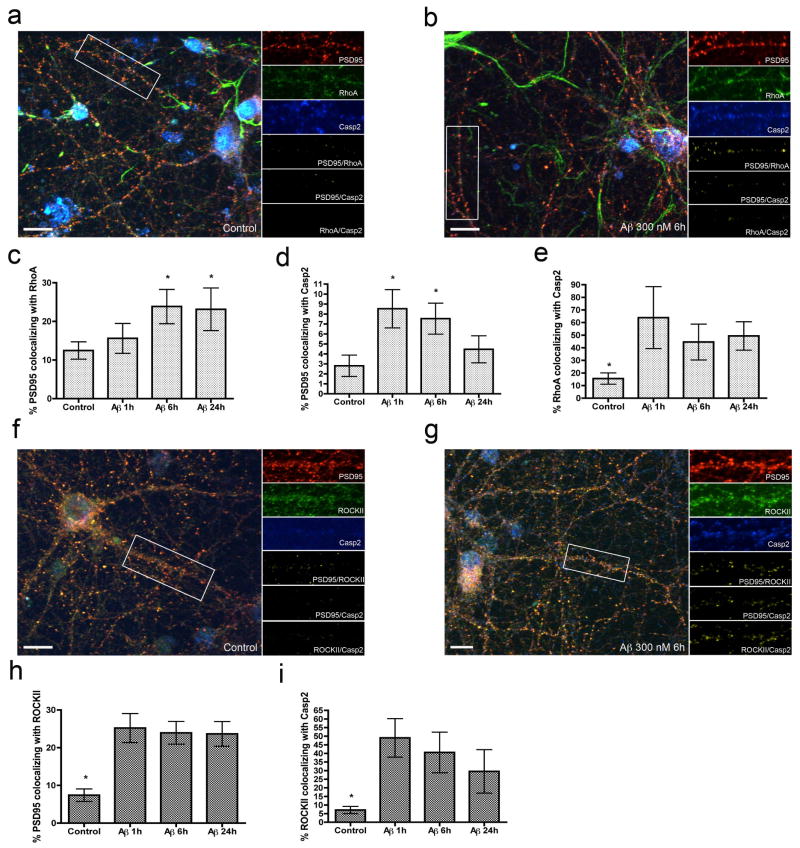
Caspases have critical roles in Alzheimer's disease pathogenesis. Here we show that caspase-2 is required for the cognitive decline seen in human amyloid precursor protein transgenic mice (J20). The age-related changes in behaviour and dendritic spine density observed in these mice are absent when they lack caspase-2, in spite of similar levels of amyloid beta (Aβ) deposition and inflammation. A similar degree of protection is observed in cultured hippocampal neurons lacking caspase-2, which are immune to the synaptotoxic effects of Aβ. Our studies suggest that caspase-2 is a critical mediator in the activation of the RhoA/ROCK-II signalling pathway, leading to the collapse of dendritic spines. We propose that this is controlled by an inactive caspase-2/RhoA/ROCK-II complex localized in dendrites, which dissociates in the presence of Aβ, allowing for their activation and entry in the spine. These findings directly implicate caspase-2 as key driver of synaptic dysfunction in Alzheimer's disease and offer novel therapeutic targets.
半胱天冬酶在阿尔茨海默病发病机制中具有关键作用。在这里,我们表明半胱天冬酶-2 是人类淀粉样前体蛋白转基因小鼠(J20)认知能力下降所必需的。尽管淀粉样β(Aβ)沉积和炎症程度相似,但缺乏半胱天冬酶-2 的这些小鼠中,与年龄相关的行为和树突棘密度变化则不存在。在缺乏半胱天冬酶-2 的培养海马神经元中也观察到类似程度的保护,这些神经元对 Aβ 的突触毒性作用具有免疫力。我们的研究表明,半胱天冬酶-2 是 RhoA/ROCK-II 信号通路激活的关键介质,导致树突棘崩溃。我们提出,这是由位于树突中的无活性半胱天冬酶-2/RhoA/ROCK-II 复合物控制的,该复合物在 Aβ 存在下解离,从而允许它们激活并进入棘突。这些发现直接表明半胱天冬酶-2 是阿尔茨海默病突触功能障碍的关键驱动因素,并提供了新的治疗靶点。