Peninsula Sleep Center, Burlingame, CA, USA.
Nat Sci Sleep. 2013 May 14;5:53-9. doi: 10.2147/NSS.S44736. Print 2013.
This feasibility study examined the initial-use safety and effectiveness of a new noninvasive oral pressure therapy (OPT) system developed to treat obstructive sleep apnea (OSA).
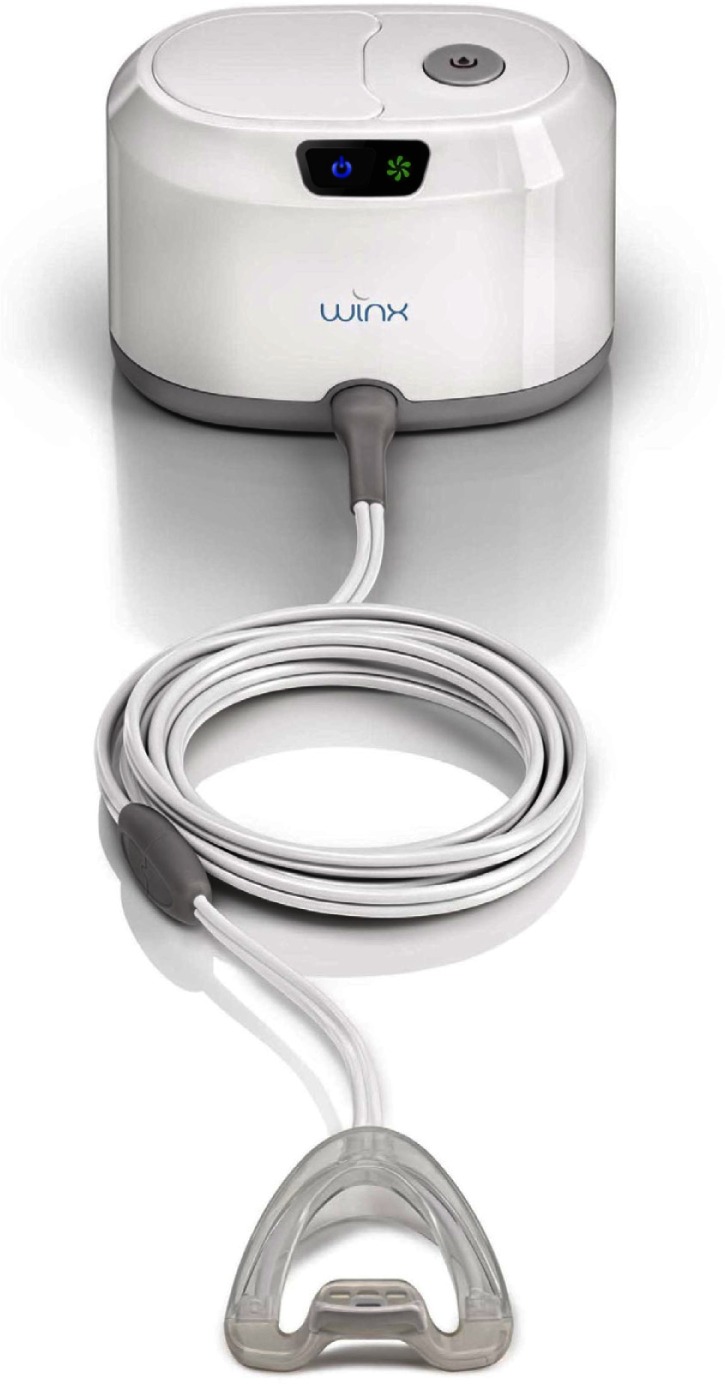
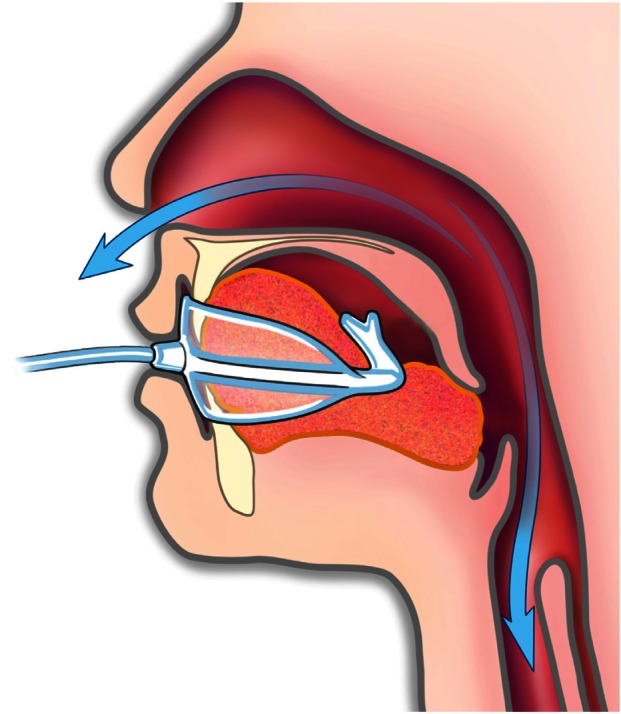
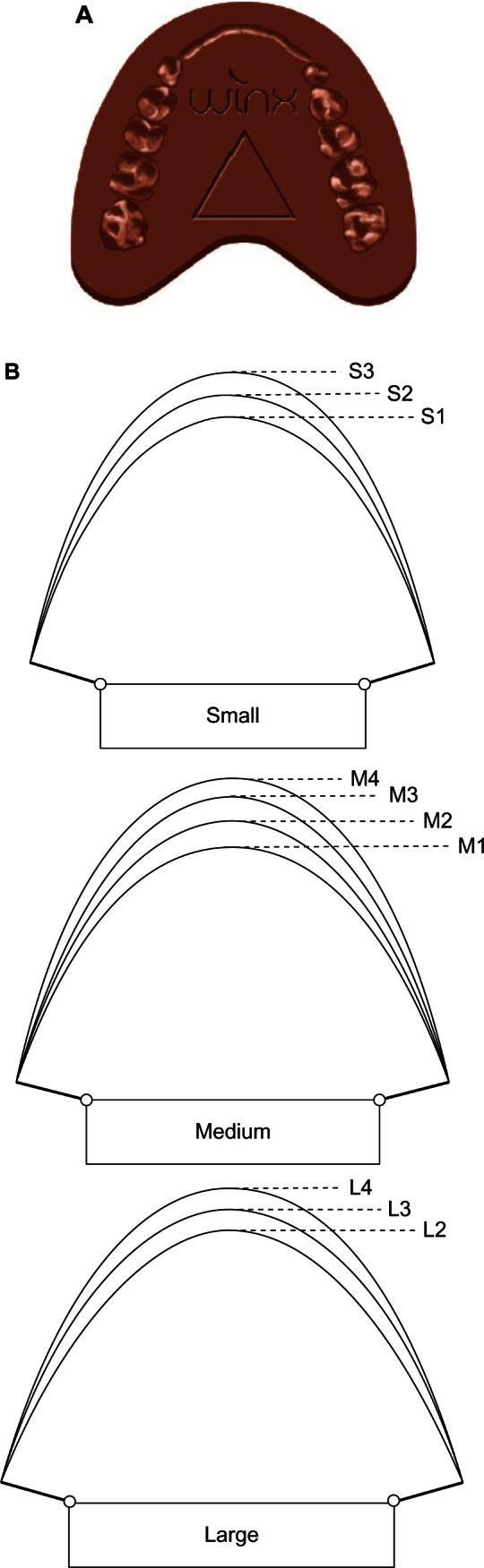
The OPT system consists of a console that connects with flexible tubing to a premanufactured polymer mouthpiece. Through the mouthpiece, a pump in the console creates oral vacuum intended to move the soft palate anteriorly to decrease obstruction of the airway during sleep. The mouthpiece was produced in ten different sizes to accommodate a range of oral dimensions. Subjects with OSA in this single-center, single-night study underwent a polysomnography (PSG) study at baseline, followed by PSG during use of OPT.
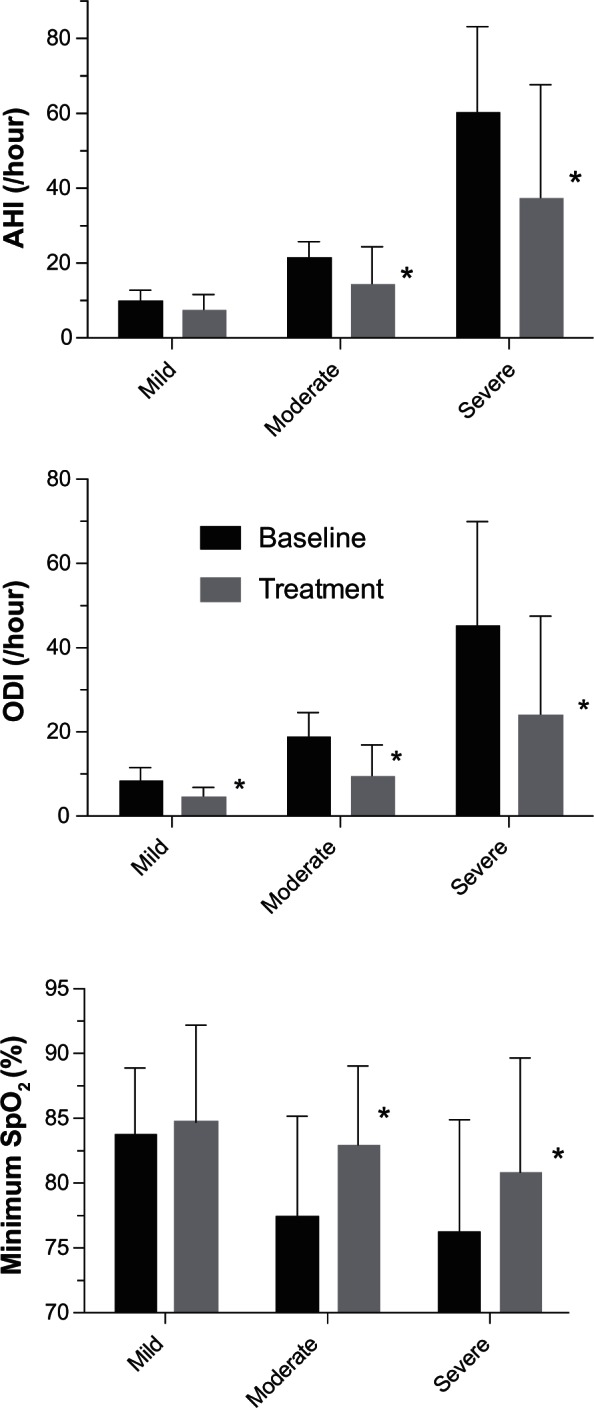
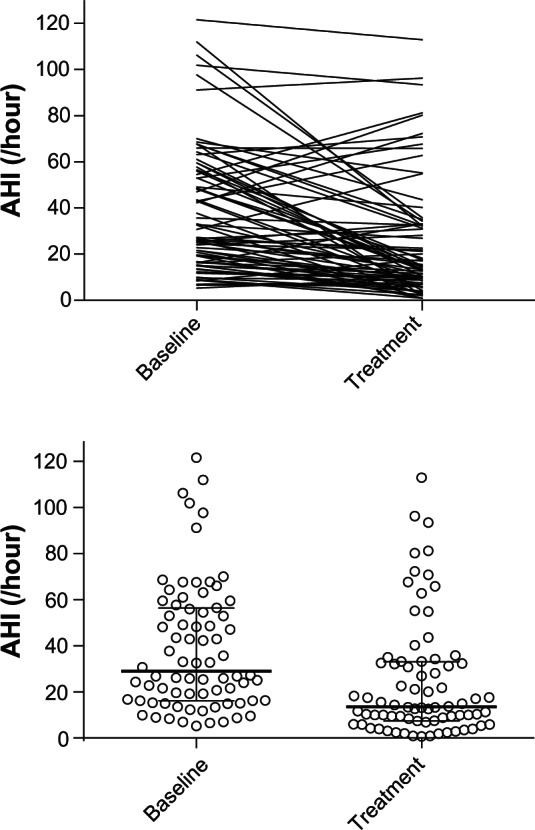
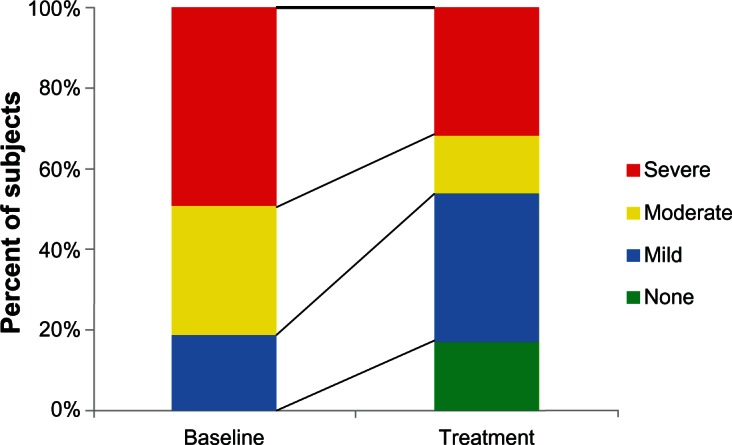
Fifty-six men and 20 women, aged 50.8 ± 12.0 years (mean ± standard deviation [SD]), had OSA with apnea-hypopnea indices (AHI) greater than five events per hour at baseline. Body weight averaged 98.0 ± 18.2 kg (mean ± SD), body mass index ranged from 22.6 kg/m(2) to 57.9 kg/m(2) and averaged 32.5 ± 5.8 kg/m(2) (mean ± SD). OPT was generally well tolerated without any serious adverse events. Baseline AHI was 38.7 ± 27.5 events/hour (mean ± SD) and was reduced with treatment to 24.6 ± 25.7 events/hour (P < 0.001, Cohen's d 0.53). Treatment produced AHI less than or equal to ten events/hour in 38% of the subjects. Oxygen desaturation index was 30.1 ± 23.7 events/hour at baseline versus 15.8 ± 19.1 events/hour with treatment (P < 0.001, Cohen's d 0.66). The minimum oxygen saturation increased with treatment from 77.9 ± 8.3 to 82.2 ± 7.9 (P < 0.001, Cohen's d 0.53). Stage-N1 sleep shifts, total sleep-stage shifts, and awakenings were significantly reduced with treatment.
This single-center, single-night feasibility study demonstrates that OPT can improve OSA in certain subjects identifiable by PSG during systematic usage. In appropriately responsive patients, OPT shows potential as a clinically useful new alternative for treatment of OSA without the need for custom manufacture of an oral device component.
本可行性研究旨在检验一种新型无创口腔压力疗法(OPT)系统的初步使用安全性和有效性,该系统旨在治疗阻塞性睡眠呼吸暂停(OSA)。
OPT 系统由一个控制台组成,控制台通过柔性管与预制聚合物口腔器连接。通过口腔器,控制台中的泵产生口腔真空,旨在将软腭向前移动,以减少睡眠时气道阻塞。口腔器生产了十种不同的尺寸,以适应各种口腔尺寸。在这项单中心、单晚的研究中,患有 OSA 的 56 名男性和 20 名女性接受了基线多导睡眠图(PSG)研究,随后在使用 OPT 时进行了 PSG 检查。
56 名男性和 20 名女性的年龄为 50.8 ± 12.0 岁(平均值 ± 标准差[SD]),OSA 的呼吸暂停-低通气指数(AHI)大于基线时每小时 5 次。体重平均为 98.0 ± 18.2kg(平均值 ± SD),体重指数范围从 22.6kg/m²到 57.9kg/m²,平均为 32.5 ± 5.8kg/m²(平均值 ± SD)。OPT 通常耐受性良好,没有任何严重的不良事件。基线 AHI 为 38.7 ± 27.5 次/小时(平均值 ± SD),治疗后降低至 24.6 ± 25.7 次/小时(P < 0.001,Cohen's d 0.53)。治疗使 38%的受试者的 AHI 小于或等于 10 次/小时。基线时的氧减饱和度指数为 30.1 ± 23.7 次/小时,治疗时为 15.8 ± 19.1 次/小时(P < 0.001,Cohen's d 0.66)。治疗后,最低氧饱和度从 77.9 ± 8.3 增加到 82.2 ± 7.9(P < 0.001,Cohen's d 0.53)。N1 期睡眠转移、总睡眠期转移和觉醒明显减少。
这项单中心、单晚的可行性研究表明,OPT 可以改善某些通过 PSG 在系统使用过程中确定的 OSA 患者的睡眠质量。在适当有反应的患者中,OPT 显示出作为一种临床有用的新方法治疗 OSA 的潜力,而无需定制制造口腔装置部件。