Department of Neuroscience, Mayo Clinic College of Medicine Jacksonville, FL, USA.
Front Cell Neurosci. 2013 May 31;7:81. doi: 10.3389/fncel.2013.00081. eCollection 2013.
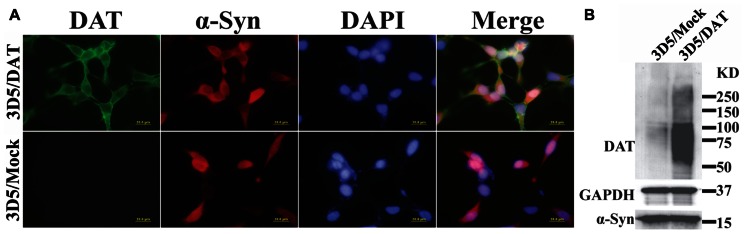
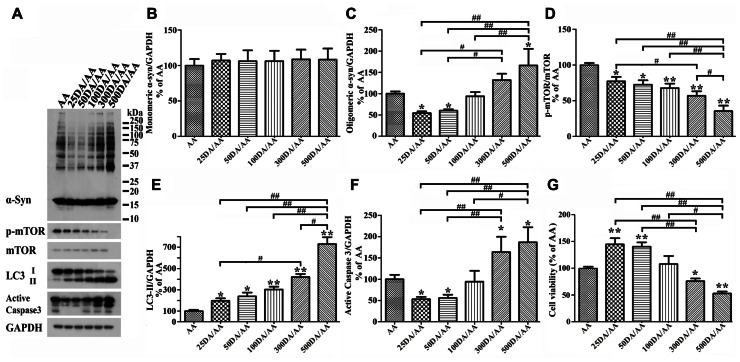
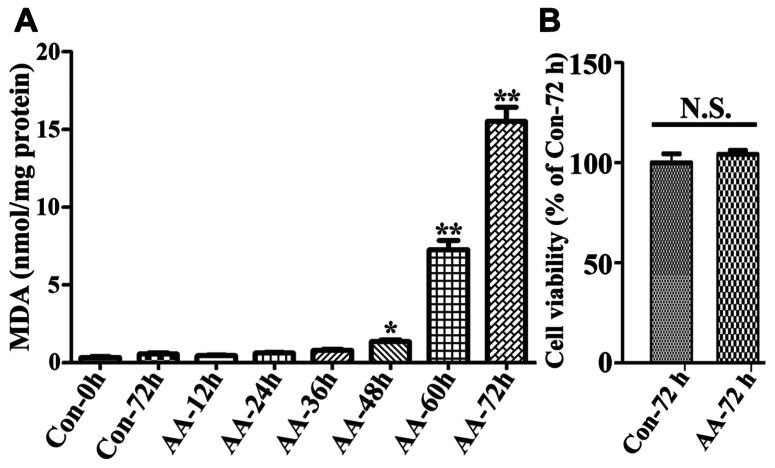
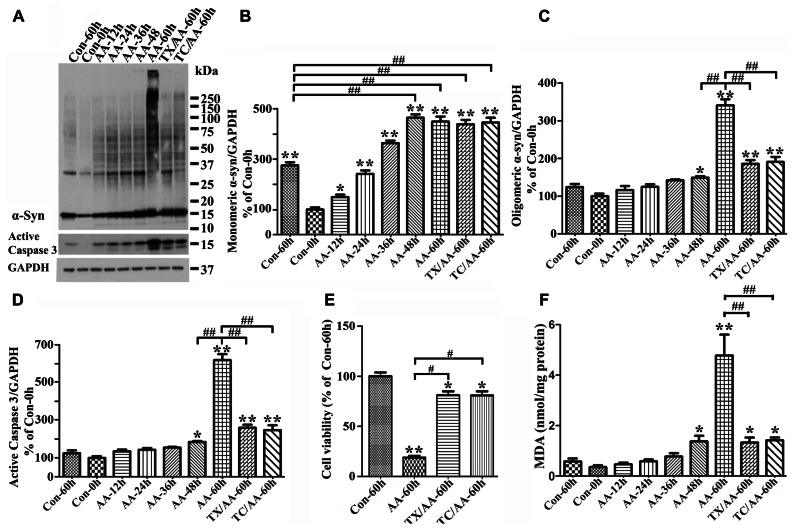
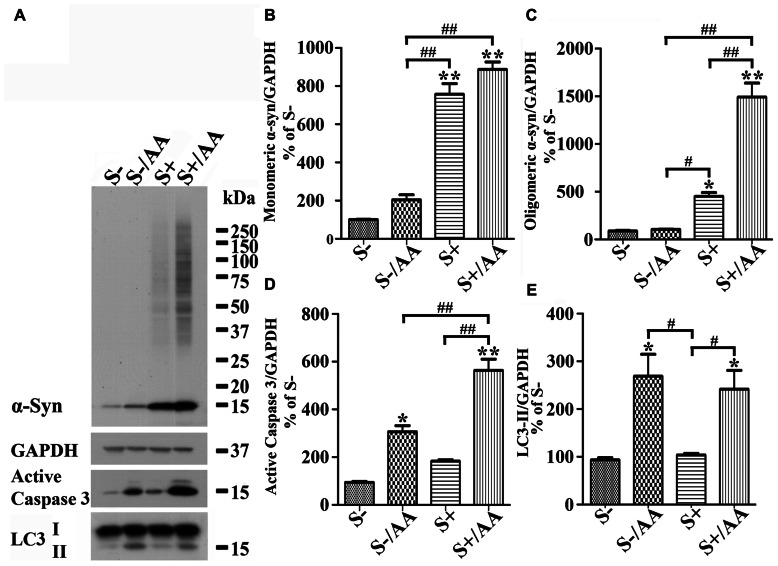
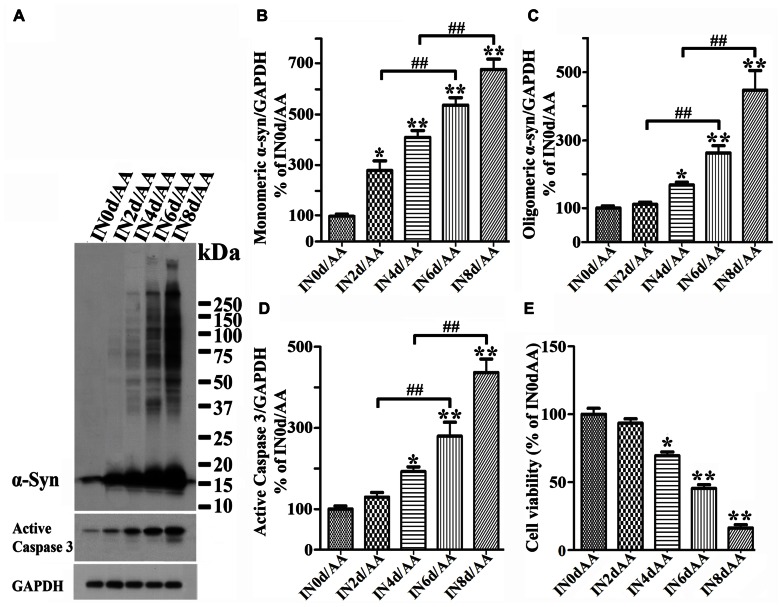
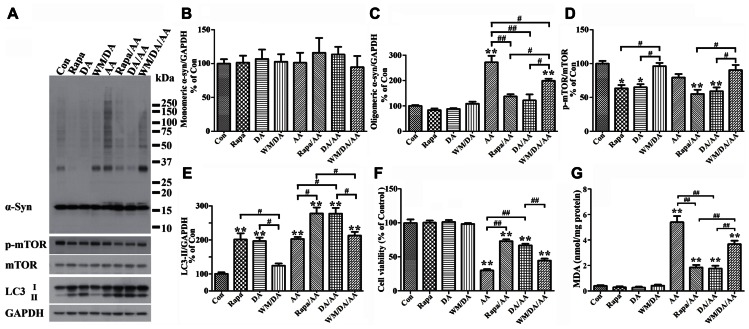
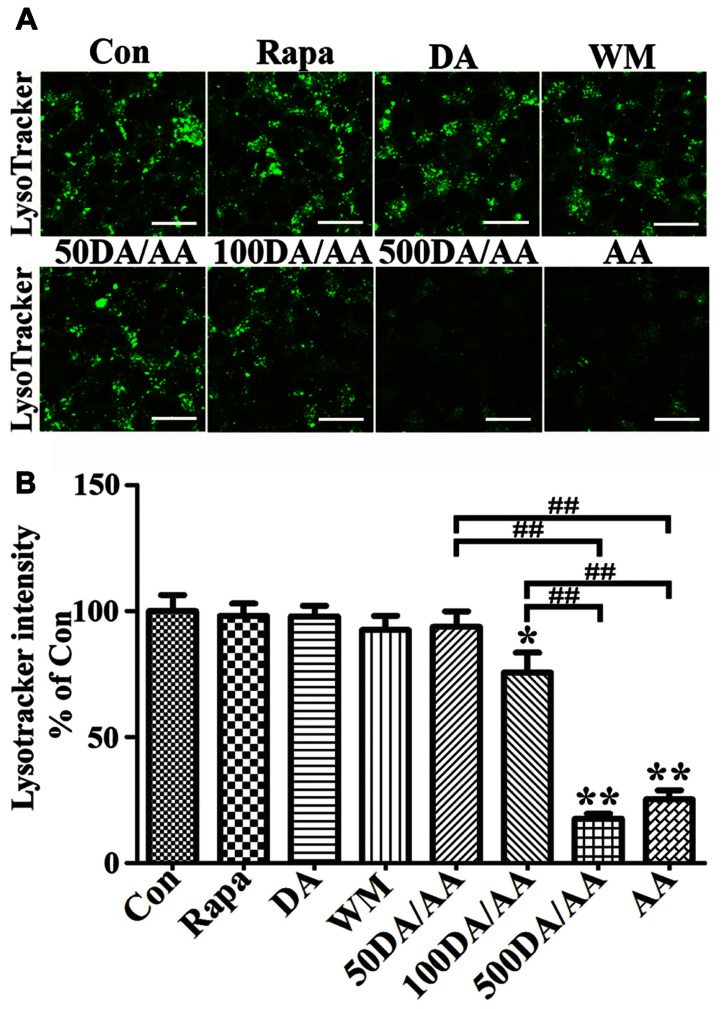
The formation of Lewy bodies containing α-synuclein (α-syn), prominent loss of dopaminergic neurons and dopamine (DA) deficiency in substantia nigra and striatum are histopathological and biochemical hallmarks of Parkinson's disease (PD). Multiple lines of evidence have indicated that a critical pathogenic factor causing PD is enhanced production of reactive oxygen species (ROS), which reacts readily with polyunsaturated fatty acids to cause lipid peroxidation (LPO). LPO products have been shown to facilitate assembly of toxic α-syn oligomers in in vitro studies. Since DA is prone to autoxidation and cause ROS, it has been suggested that interactions among DA, LPO, and α-syn play an important role in neuronal loss in PD. However, the exact mechanism(s) remains unclear. We addressed this issue using a neuronal cell model which inducibly expresses human wild-type α-syn by the tetracycline off (Tet-Off) mechanism and stably expresses high levels of DA transporter. Under retinoic acid elicited neuronal differentiation, cells with or without overexpressing α-syn and with or without exposure to LPO inducer-arachidonic acid (AA), plus 0-500 μM of DA were assessed for the levels of LPO, α-syn accumulation, cell viability, and autophagy. AA exposure elicited similar LPO levels in cells with and without α-syn overexpression, but significantly enhanced the accumulation of α-syn oligomers and monomers only in cultures with Tet-Off induction and decreased cell survival in a LPO-dependent manner. Surprisingly, DA at low concentrations (<50 μM) protected cells from AA cytotoxicity and α-syn accumulation. Such effects were attributed to the ability of DA to preserve autophagic-lysosomal function compromised by the AA exposure. At high concentrations (>100 μM), DA exposure enhanced the toxic effects of AA. To our knowledge, this is the first report showing biphasic effects of DA on neuronal survival and α-syn accumulation.
路易体(Lewy bodies)包含α-突触核蛋白(α-syn),黑质和纹状体多巴胺能神经元的显著丧失和多巴胺(DA)缺乏是帕金森病(PD)的组织病理学和生物化学特征。有多项证据表明,导致 PD 的一个关键致病因素是活性氧(ROS)的产生增加,ROS 很容易与多不饱和脂肪酸反应,导致脂质过氧化(LPO)。体外研究表明,LPO 产物有助于有毒的α-突触核蛋白寡聚物的组装。由于 DA 容易自动氧化并产生 ROS,因此有人提出 DA、LPO 和 α-syn 之间的相互作用在 PD 中的神经元丧失中起着重要作用。然而,确切的机制尚不清楚。我们使用神经元细胞模型解决了这个问题,该模型通过四环素关闭(Tet-Off)机制可诱导表达人野生型α-syn,并稳定表达高水平的多巴胺转运体。在维甲酸诱导的神经元分化下,评估了过表达α-syn 和/或暴露于 LPO 诱导剂-花生四烯酸(AA)以及 0-500μM DA 的细胞中的 LPO 水平、α-syn 积累、细胞活力和自噬。AA 暴露在过表达和不过表达α-syn 的细胞中引起相似的 LPO 水平,但仅在 Tet-Off 诱导的培养物中显着增强了α-syn 寡聚物和单体的积累,并以 LPO 依赖的方式降低了细胞存活率。令人惊讶的是,DA 在低浓度(<50μM)下可保护细胞免受 AA 的细胞毒性和α-syn 积累。这种作用归因于 DA 保留了被 AA 暴露破坏的自噬溶酶体功能的能力。在高浓度(>100μM)下,DA 暴露增强了 AA 的毒性作用。据我们所知,这是第一项显示 DA 对神经元存活和α-syn 积累具有双相作用的报告。