Rutgers University, Center for Advanced Biotechnology and Medicine, Piscataway, New Jersey 08854, USA.
Nat Rev Cancer. 2013 Jul;13(7):443-54. doi: 10.1038/nrc3537. Epub 2013 Jun 13.
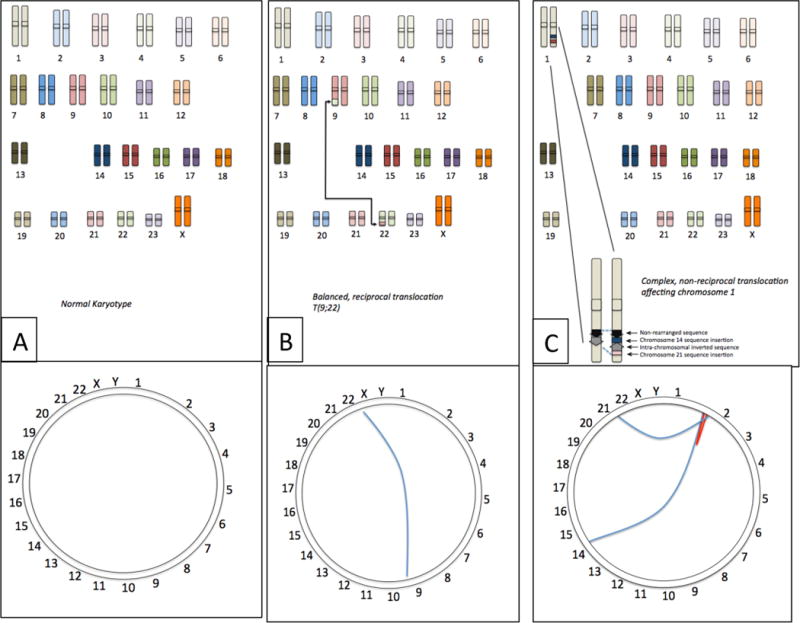
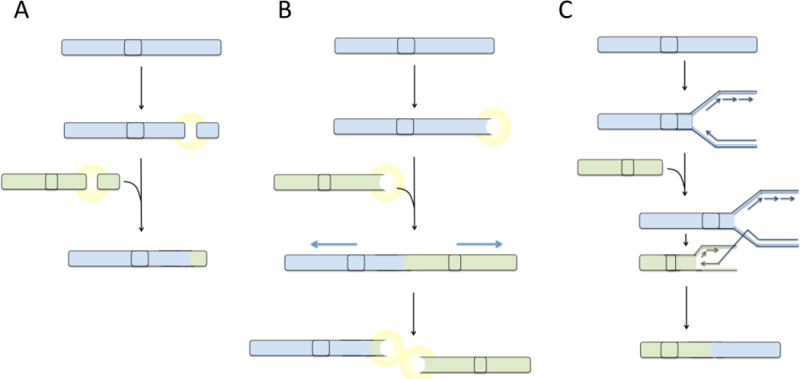
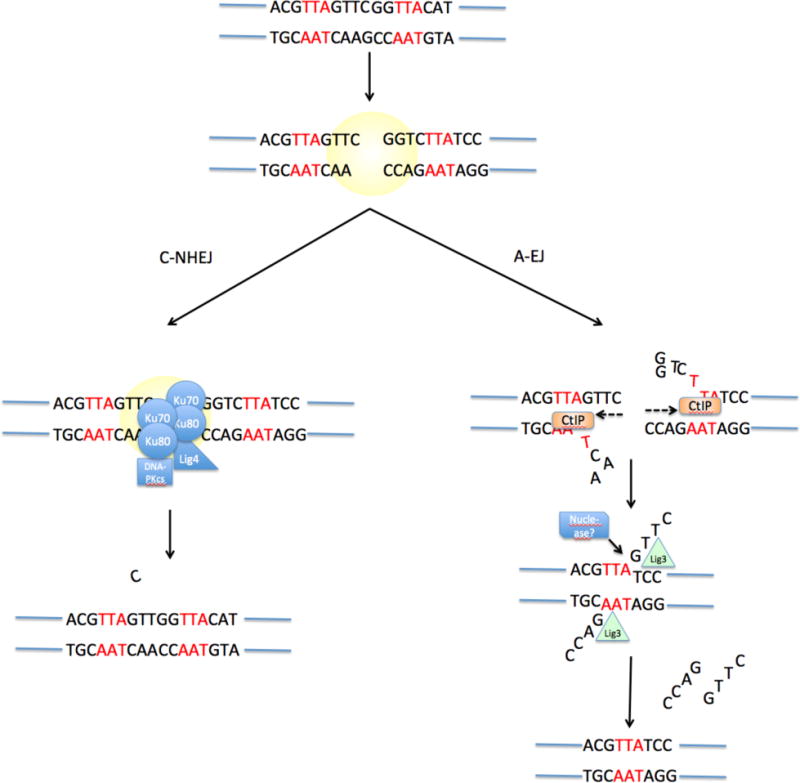
Fusion genes that are caused by chromosome translocations have been recognized for several decades as drivers of deregulated cell growth in certain types of cancer. In recent years, oncogenic fusion genes have been found in many haematological and solid tumours, demonstrating that translocations are a common cause of malignancy. Sequencing approaches have now confirmed that numerous, non-clonal translocations are a typical feature of cancer cells. These chromosome rearrangements are often highly complex and contain DNA sequence from multiple genomic sites. The factors and pathways that promote translocations are becoming clearer, with non-homologous end-joining implicated as a key source of genomic rearrangements.
几十年来,人们已经认识到染色体易位导致的融合基因是某些类型癌症中细胞生长失控的驱动因素。近年来,在许多血液系统肿瘤和实体瘤中发现了致癌融合基因,这表明易位是恶性肿瘤的常见原因。测序方法现已证实,许多非克隆易位是癌细胞的一个典型特征。这些染色体重排通常非常复杂,包含来自多个基因组位点的 DNA 序列。促进易位的因素和途径变得越来越清晰,非同源末端连接被认为是基因组重排的关键来源。