Institute of Virology, University of Bonn Medical Centre, Bonn, Germany.
mBio. 2013 Jun 11;4(3):e00322-13. doi: 10.1128/mBio.00322-13.
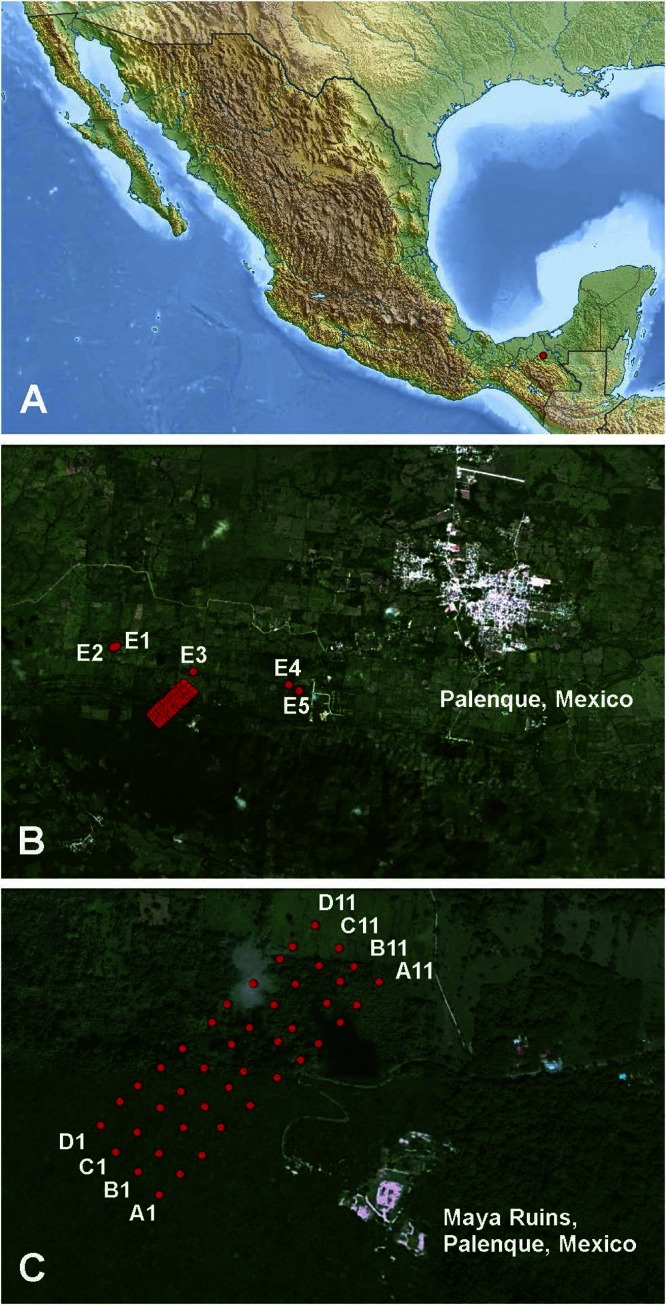
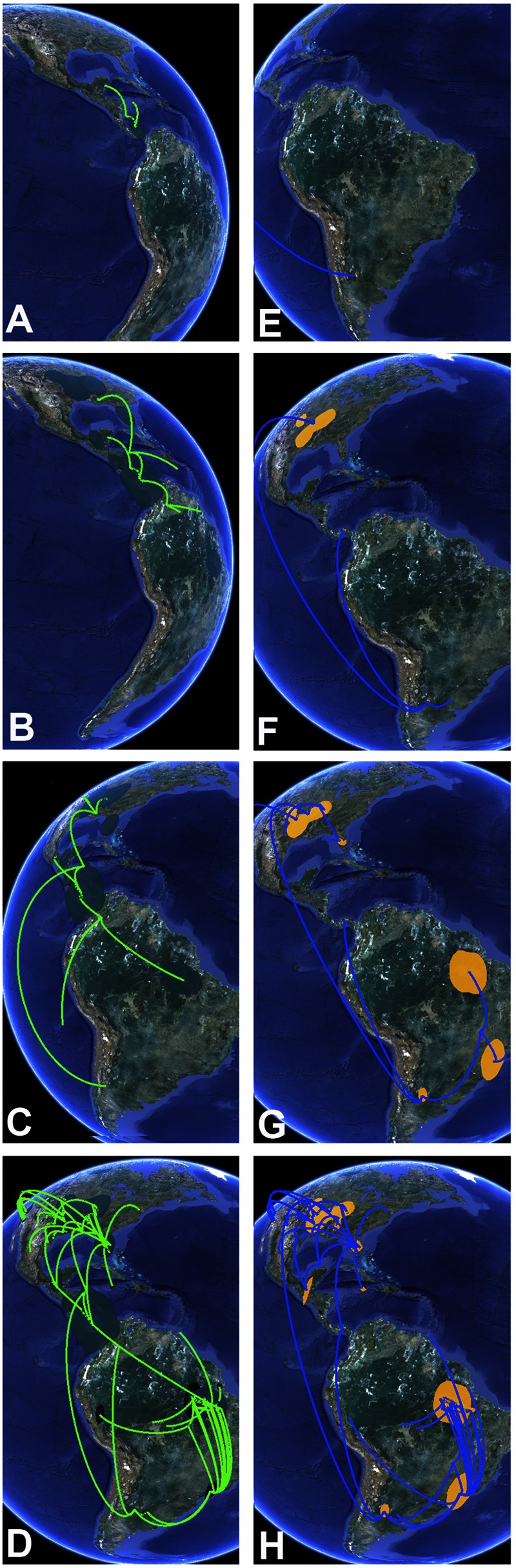
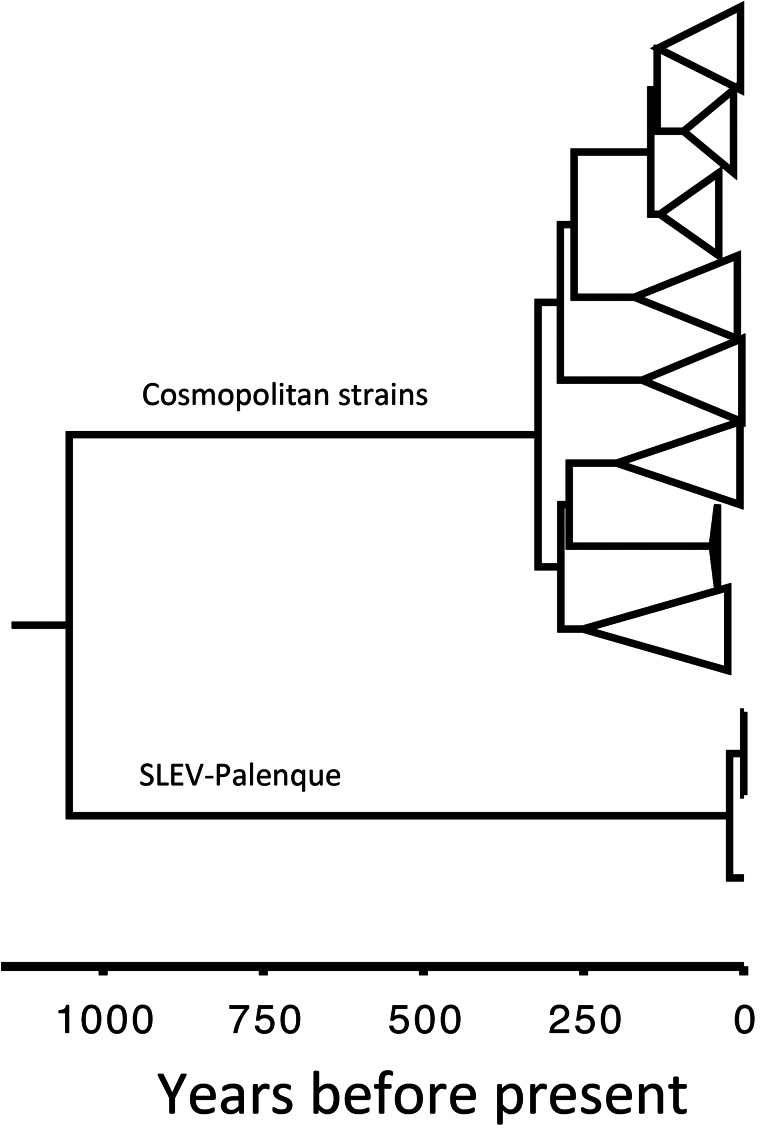
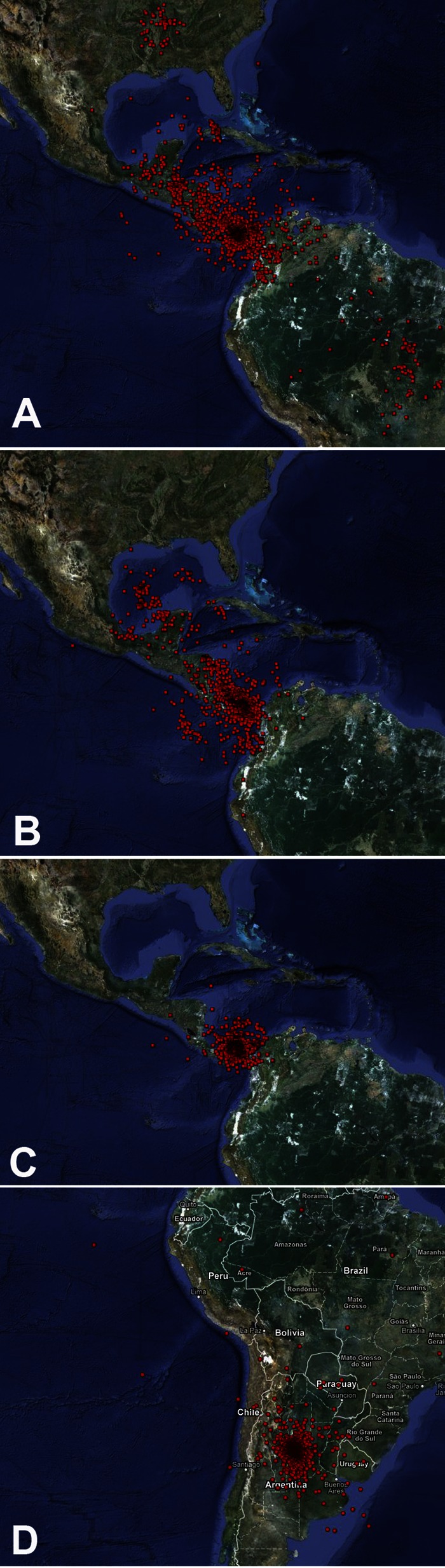
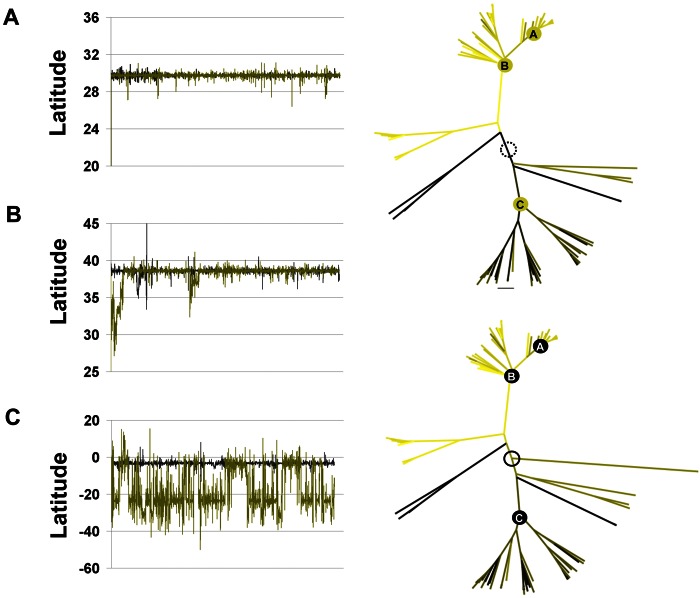
St. Louis encephalitis virus (SLEV) is the prototypic mosquito-borne flavivirus in the Americas. Birds are its primary vertebrate hosts, but amplification in certain mammals has also been suggested. The place and time of SLEV emergence remain unknown. In an ecological investigation in a tropical rainforest in Palenque National Park, Mexico, we discovered an ancestral variant of SLEV in Culex nigripalpus mosquitoes. Those SLEV-Palenque strains form a highly distinct phylogenetic clade within the SLEV species. Cell culture studies of SLEV-Palenque versus epidemic SLEV (MSI-7) revealed no growth differences in insect cells but a clear inability of SLEV-Palenque to replicate in cells from birds, cotton rats, and free-tailed bats permissive for MSI-7 replication. Only cells from nonhuman primates and neotropical fruit bats were moderately permissive. Phylogeographic reconstruction identified the common ancestor of all epidemic SLEV strains to have existed in an area between southern Mexico and Panama ca. 330 years ago. Expansion of the epidemic lineage occurred in two waves, the first representing emergence near the area of origin and the second involving almost parallel appearances of the virus in the lower Mississippi and Amazon delta regions. Early diversification events overlapped human habitat invasion during the post-Columbian era. Several documented SLEV outbreaks, such as the 1964 Houston epidemic or the 1990 Tampa epidemic, were predated by the arrival of novel strains between 1 and 4 years before the outbreaks. Collectively, our data provide insight into the putative origins of SLEV, suggesting that virus emergence was driven by human invasion of primary rainforests. IMPORTANCE St. Louis encephalitis virus (SLEV) is the prototypic mosquito-transmitted flavivirus of the Americas. Unlike the West Nile virus, which we know was recently introduced into North America from the Old World, the provenience of SLEV is obscure. In an ecological investigation in a primary rainforest area of Palenque National Park, Mexico, we have discovered an ancestral variant of SLEV. The ancestral virus was much less active than the epidemic virus in cell cultures, reflecting its incomplete adaptation to hosts encountered outside primary rainforests. Knowledge of this virus enabled a spatiotemporal reconstruction of the common ancestor of all SLEVs and how the virus spread from there. We can infer that the cosmopolitan SLEV lineage emerged from Central America in the 17th century, a period of post-Columbian colonial history marked by intense human invasion of primary rainforests. Further spread followed major bird migration pathways over North and South America.
圣路易斯脑炎病毒(SLEV)是美洲典型的蚊媒黄病毒。鸟类是其主要的脊椎动物宿主,但也有人提出某些哺乳动物的病毒扩增。SLEV 的出现地点和时间仍然未知。在墨西哥帕伦克国家公园的热带雨林进行的一项生态调查中,我们在库蚊中发现了 SLEV 的一个祖先变体。这些 SLEV-帕伦克毒株在 SLEV 种内形成了一个高度独特的系统发育分支。与流行的 SLEV(MSI-7)相比,SLEV-帕伦克的细胞培养研究表明,昆虫细胞中的生长没有差异,但 SLEV-帕伦克明显无法在允许 MSI-7 复制的鸟类、棉鼠和无尾蝙蝠的细胞中复制。只有来自非人类灵长类动物和新热带果蝠的细胞中度允许。系统地理学重建确定了所有流行的 SLEV 株系的共同祖先大约在 330 年前存在于墨西哥南部和巴拿马之间的一个地区。流行谱系的扩张分两个波发生,第一个代表起源地区的出现,第二个代表病毒几乎同时出现在密西西比河下游和亚马逊三角洲地区。早期的多样化事件与后哥伦布时代人类栖息地的入侵重叠。几项有记录的 SLEV 暴发,如 1964 年休斯顿暴发或 1990 年坦帕暴发,都在新菌株出现之前 1 至 4 年,早于暴发。总的来说,我们的数据提供了对 SLEV 假定起源的深入了解,表明病毒的出现是由人类对原始雨林的入侵所驱动的。重要性圣路易斯脑炎病毒(SLEV)是美洲典型的蚊媒黄病毒。与我们知道的最近从旧世界引入北美的西尼罗河病毒不同,SLEV 的起源尚不清楚。在墨西哥帕伦克国家公园的一个原始雨林地区的生态调查中,我们发现了 SLEV 的一个祖先变体。这种祖先病毒在细胞培养物中的活性远低于流行病毒,反映了它对原始雨林以外遇到的宿主的不完全适应。对这种病毒的了解使我们能够对所有 SLEV 的共同祖先进行时空重建,以及病毒如何从那里传播。我们可以推断,世界性的 SLEV 谱系是在 17 世纪从中美洲出现的,这是一个后哥伦布时代的殖民历史时期,标志着人类对原始雨林的强烈入侵。随着鸟类在北美和南美的主要迁徙路线的进一步传播。