Departments of Medicine, Indiana University School of Medicine, Indianapolis, IN, USA.
Lab Anim. 2013 Oct;47(4):257-65. doi: 10.1177/0023677213489548. Epub 2013 Jun 10.
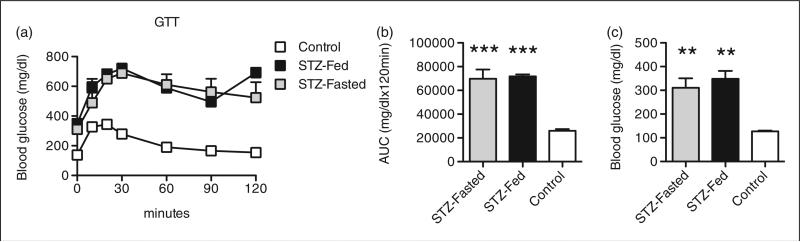
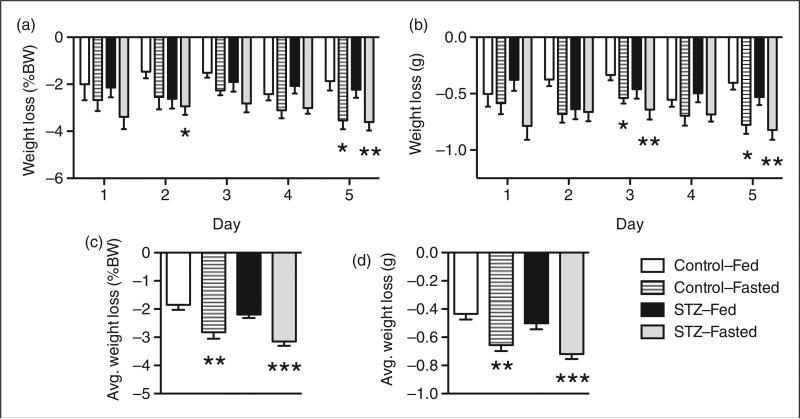
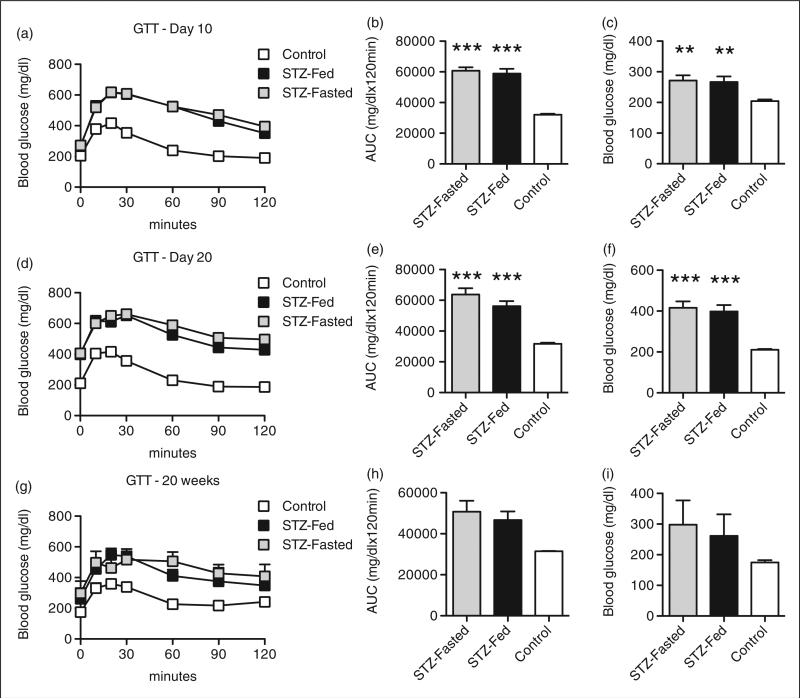
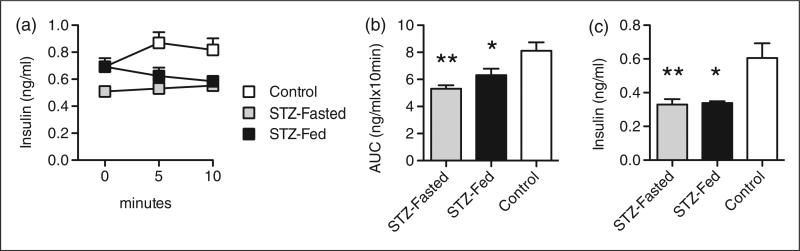
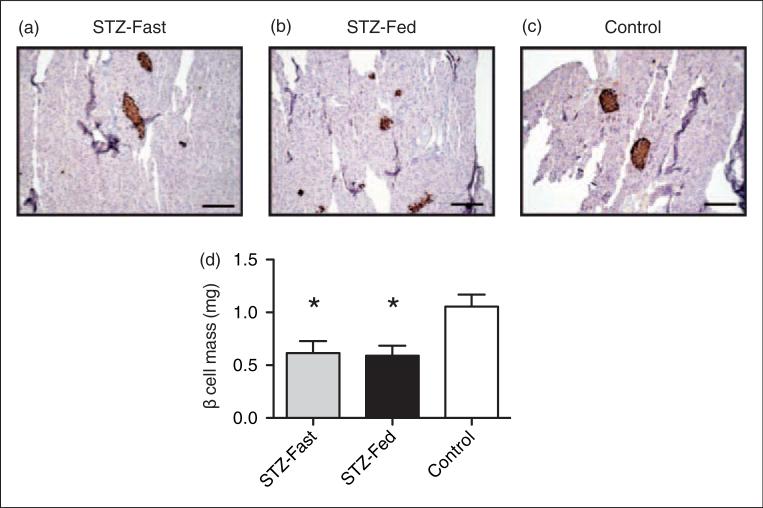
Streptozotocin (STZ) is a selective pancreatic β cell toxin used to generate experimental hyperglycemia in rodent models. Several laboratory animal protocols suggest that STZ be administered to fasted rodents to minimize competition between STZ and glucose for low affinity GLUT2 transporters on β cells. However, whether the diabetogenic effects of multiple low dose (MLD)-STZ administration are enhanced by fasting has not been addressed. Given that repeated bouts of fasting can cause undue metabolic stress in mice, we compared the efficacy of MLD-STZ injections (50 mg/kg body weight daily for 5 days) to induce experimental hyperglycemia in both NOD/SCID/γchain(null) and C57BL/6J mice that were either ad libitum fed (STZ-Fed) or that had been fasted for 6 h (STZ-Fasted) prior to the time of STZ administration. Both STZ-Fed and STZ-Fasted mice had significantly worse glucose tolerance than vehicle-treated control mice 10 days after initiation of the MLD-STZ regimen. In C57BL/6J mice, fasting glucose levels, serum insulin levels, β cell mass, and glucose disposal during intraperitoneal glucose tolerance tests (IPGTTs) were indistinguishable between STZ-Fed and STZ-Fasted mice 20 days after MLD-STZ. The glucose intolerant phenotypes persisted for 20 weeks thereafter, irrespective of whether C57BL/6J mice were fed or fasted at the time of STZ injections. However, STZ-Fasted C57BL/6J mice experienced significant weight loss during the repeated bouts of fasting/re-feeding that were required to complete the MLD-STZ protocol. In summary, induction of experimental hyperglycemia can be achieved using the MLD-STZ protocol without repeated bouts of fasting, which have the potential to cause metabolic stress in laboratory mice.
链脲佐菌素(STZ)是一种选择性的胰腺β细胞毒素,用于在啮齿动物模型中产生实验性高血糖。几项实验室动物方案建议,应将 STZ 施用于禁食的啮齿动物,以最大程度地减少 STZ 与葡萄糖之间对β细胞低亲和力 GLUT2 转运蛋白的竞争。然而,多次低剂量(MLD)-STZ 给药的致糖尿病作用是否因禁食而增强尚未得到解决。鉴于反复禁食会给小鼠带来不必要的代谢应激,我们比较了 MLD-STZ 注射(50mg/kg 体重,每天一次,共 5 天)在 NOD/SCID/γ 链(null)和 C57BL/6J 小鼠中诱导实验性高血糖的功效,这些小鼠要么自由进食(STZ-Fed),要么在给予 STZ 之前禁食 6 小时(STZ-Fasted)。在 MLD-STZ 方案开始后 10 天,无论是 STZ-Fed 还是 STZ-Fasted 小鼠,其葡萄糖耐量均明显差于 vehicle 处理的对照组小鼠。在 C57BL/6J 小鼠中,禁食血糖水平、血清胰岛素水平、β细胞质量以及腹腔内葡萄糖耐量试验(IPGTT)期间的葡萄糖清除率在 MLD-STZ 后 20 天在 STZ-Fed 和 STZ-Fasted 小鼠之间均无差异。此后,无论 C57BL/6J 小鼠在给予 STZ 时是进食还是禁食,葡萄糖不耐受表型都持续了 20 周。然而,禁食的 C57BL/6J 小鼠在完成 MLD-STZ 方案所需的反复禁食/再喂食过程中经历了明显的体重减轻。总之,使用 MLD-STZ 方案可以在不进行反复禁食的情况下诱导实验性高血糖,而反复禁食有在实验室小鼠中引起代谢应激的潜力。