Institute of Pathology, Medical University of Graz, Graz, Austria.
PLoS One. 2013 Jun 6;8(6):e66094. doi: 10.1371/journal.pone.0066094. Print 2013.
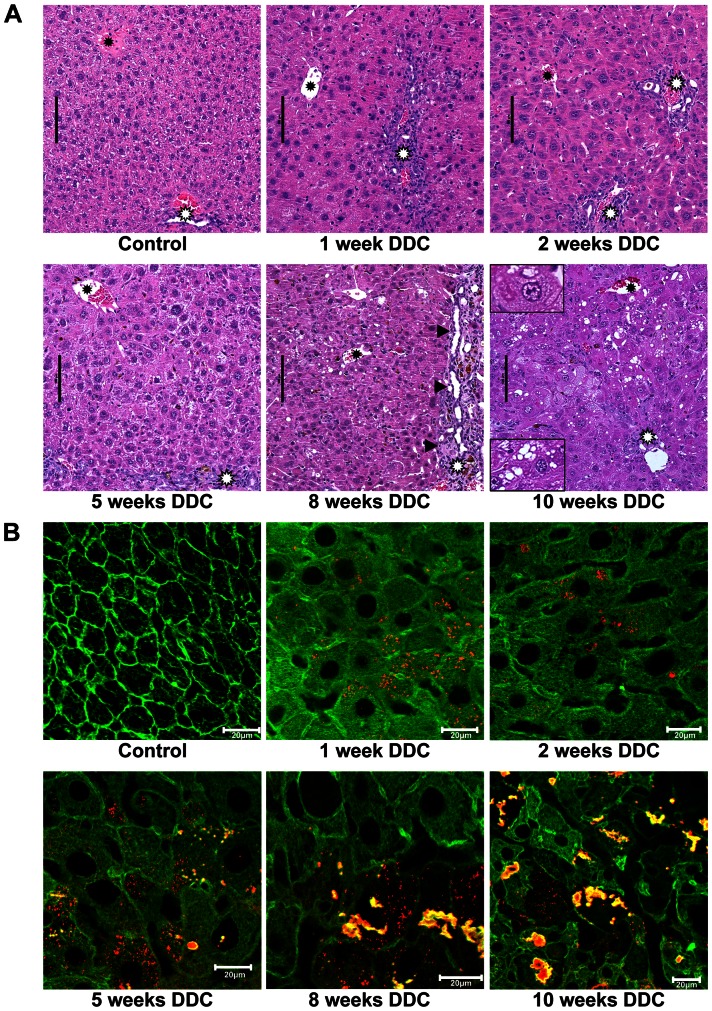
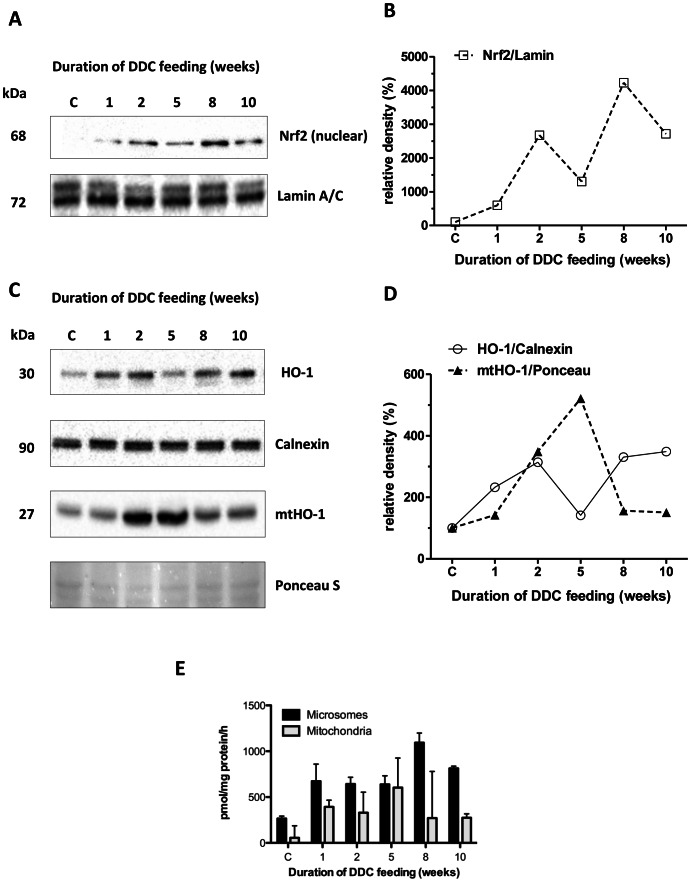
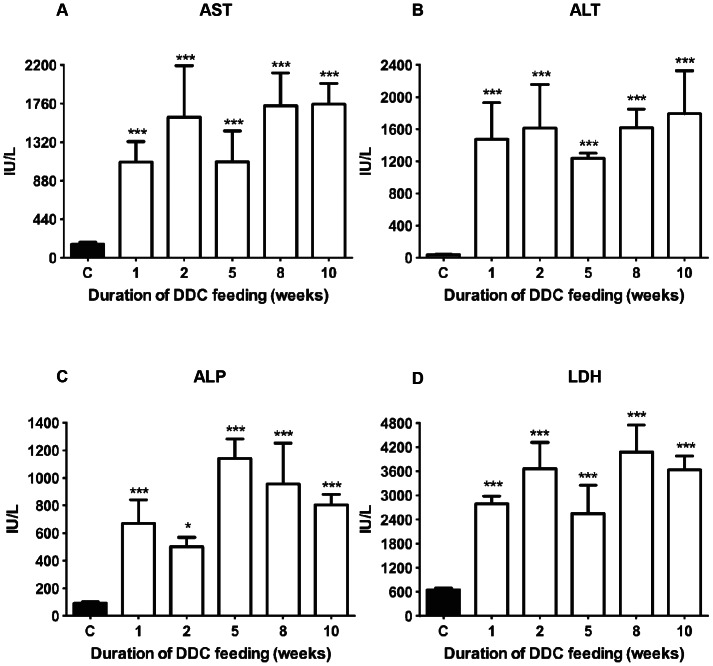
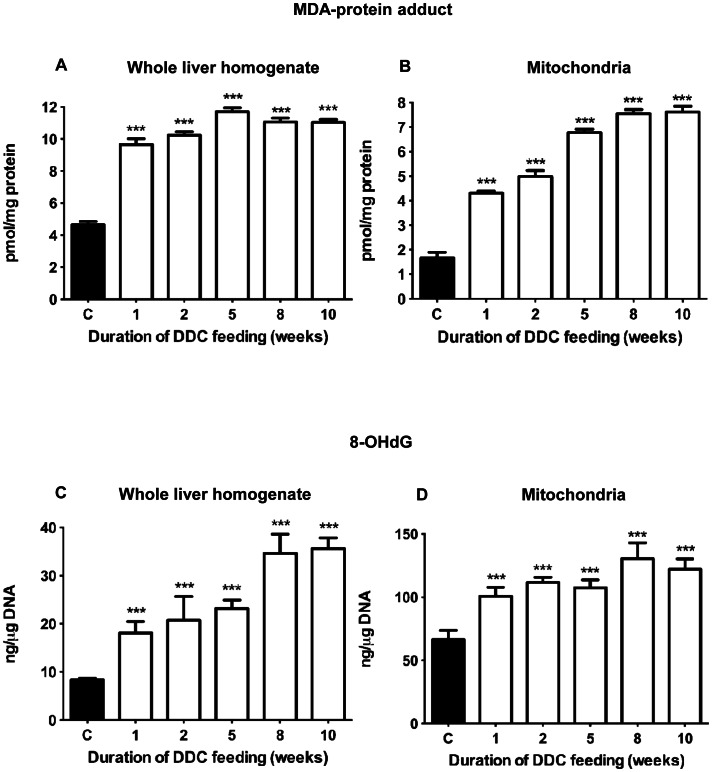
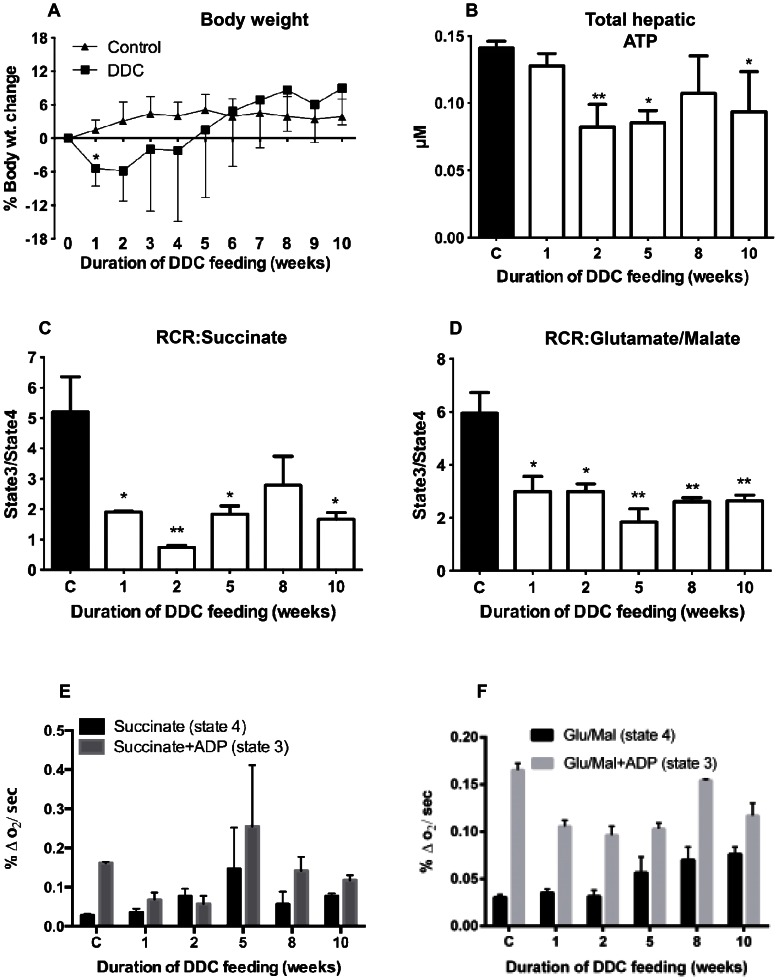
The formation of protein inclusions is frequently associated with chronic metabolic diseases. In mice, short-term intoxication with 3,5-diethoxycarbonyl-1,4-dihydrocollidine (DDC) leads to hepatocellular damage indicated by elevated serum liver enzyme activities, whereas only minor morphological changes are observed. Conversely, chronic administration of DDC for several weeks results in severe morphological damage, characterized by hepatocellular ballooning, disruption of the intermediate filament cytoskeleton, and formation of Mallory-Denk bodies consisting predominantly of misfolded keratins, Sqstm1/p62, and heat shock proteins. To evaluate the mechanistic underpinnings for this dichotomy we dissected the time-course of DDC intoxication for up to 10 weeks. We determined body weight change, serum liver enzyme activities, morphologic alterations, induction of antioxidant response (heme oxygenase-1, HO-1), oxidative damage and ATP content in livers as well as respiration, oxidative damage and the presence and activity of HO-1 in endoplasmic reticulum and mitochondria (mtHO-1). Elevated serum liver enzyme activity and oxidative liver damage were already present at early intoxication stages without further subsequent increase. After 2 weeks of intoxication, mice had transiently lost 9% of their body weight, liver ATP-content was reduced to 58% of controls, succinate-driven respiration was uncoupled from ATP-production and antioxidant response was associated with the appearance of catalytically active mtHO-1. Oxidative damage was associated with both acute and chronic DDC toxicity whereas the onset of chronic intoxication was specifically associated with mitochondrial dysfunction which was maximal after 2 weeks of intoxication. At this transition stage, adaptive responses involving mtHO-1 were induced, indirectly leading to improved respiration and preventing further drop of ATP levels. Our observations clearly demonstrate principally different mechanisms for acute and chronic toxic damage.
蛋白质包涵体的形成通常与慢性代谢性疾病有关。在小鼠中,短期摄入 3,5-二乙氧羰基-1,4-二氢吡啶(DDC)会导致肝损伤,表现为血清肝酶活性升高,而仅观察到轻微的形态变化。相反,慢性给予 DDC 数周会导致严重的形态损伤,特征为肝细胞气球样变、中间丝细胞骨架破坏以及 Mallory-Denk 体的形成,主要由错误折叠的角蛋白、Sqstm1/p62 和热休克蛋白组成。为了评估这种二分法的机制基础,我们对 DDC 中毒的时间过程进行了长达 10 周的剖析。我们测定了体重变化、血清肝酶活性、形态改变、抗氧化反应(血红素加氧酶-1,HO-1)、氧化损伤和肝脏中的 ATP 含量,以及内质网和线粒体(mtHO-1)中的呼吸、氧化损伤和 HO-1 的存在和活性。在早期中毒阶段,就已经出现了血清肝酶活性升高和氧化肝损伤,并且没有进一步增加。在中毒 2 周后,小鼠体重短暂减轻了 9%,肝脏 ATP 含量减少到对照组的 58%,琥珀酸驱动的呼吸与 ATP 生成解耦,抗氧化反应与催化活性 mtHO-1 的出现有关。氧化损伤与急性和慢性 DDC 毒性都有关,而慢性中毒的开始与线粒体功能障碍有关,在中毒 2 周后达到最大值。在这个过渡阶段,涉及 mtHO-1 的适应性反应被诱导,间接导致呼吸改善并防止 ATP 水平进一步下降。我们的观察结果清楚地表明急性和慢性毒性损伤的机制主要不同。