Unidad de Investigación Médica en Enfermedades Infecciosas y Parasitarias, Hospital de Pediatría, Centro Médico Nacional Siglo XXI, Instituto Mexicano del Seguro Social, Avenida Cuauhtémoc 330, Colonia Doctores, Delegación Cuauhtémoc, 06720 México City, DF, Mexico.
Biomed Res Int. 2013;2013:279505. doi: 10.1155/2013/279505. Epub 2013 May 9.
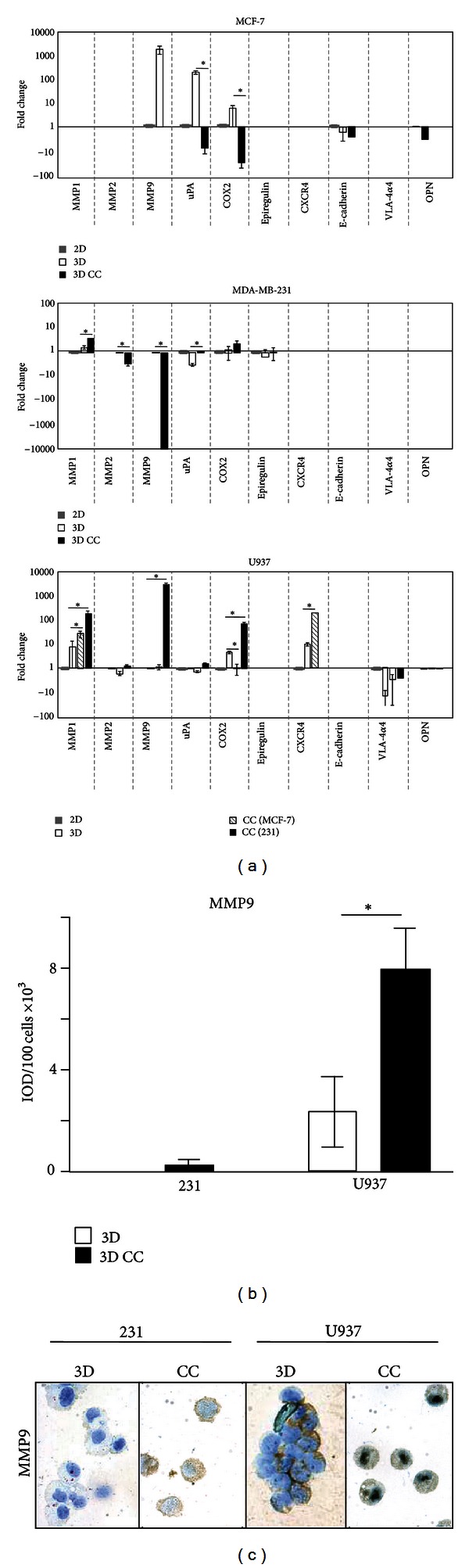
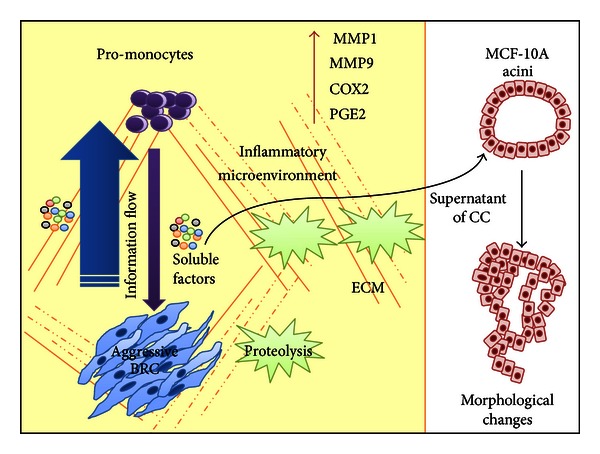
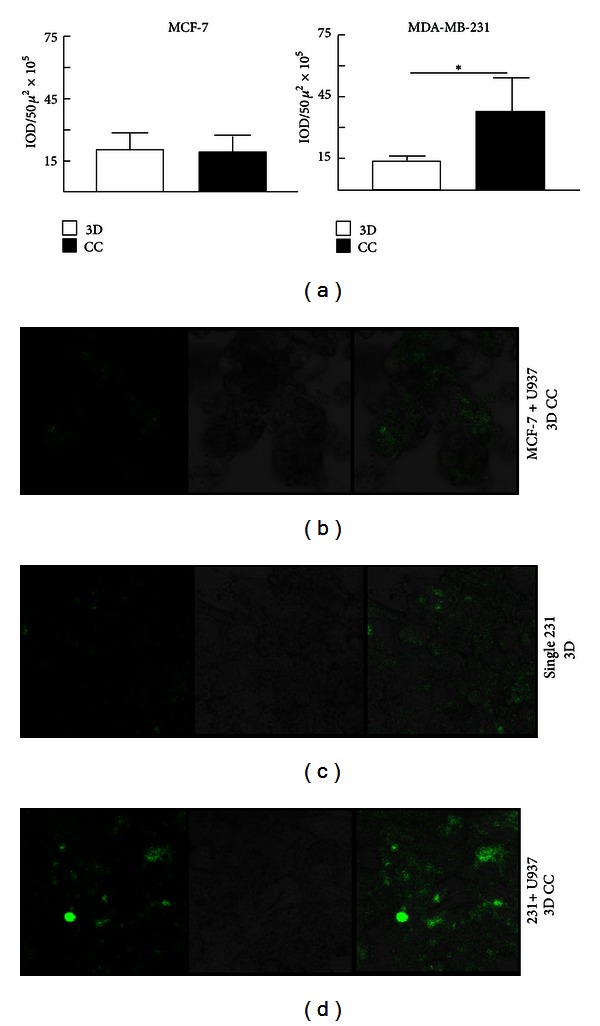
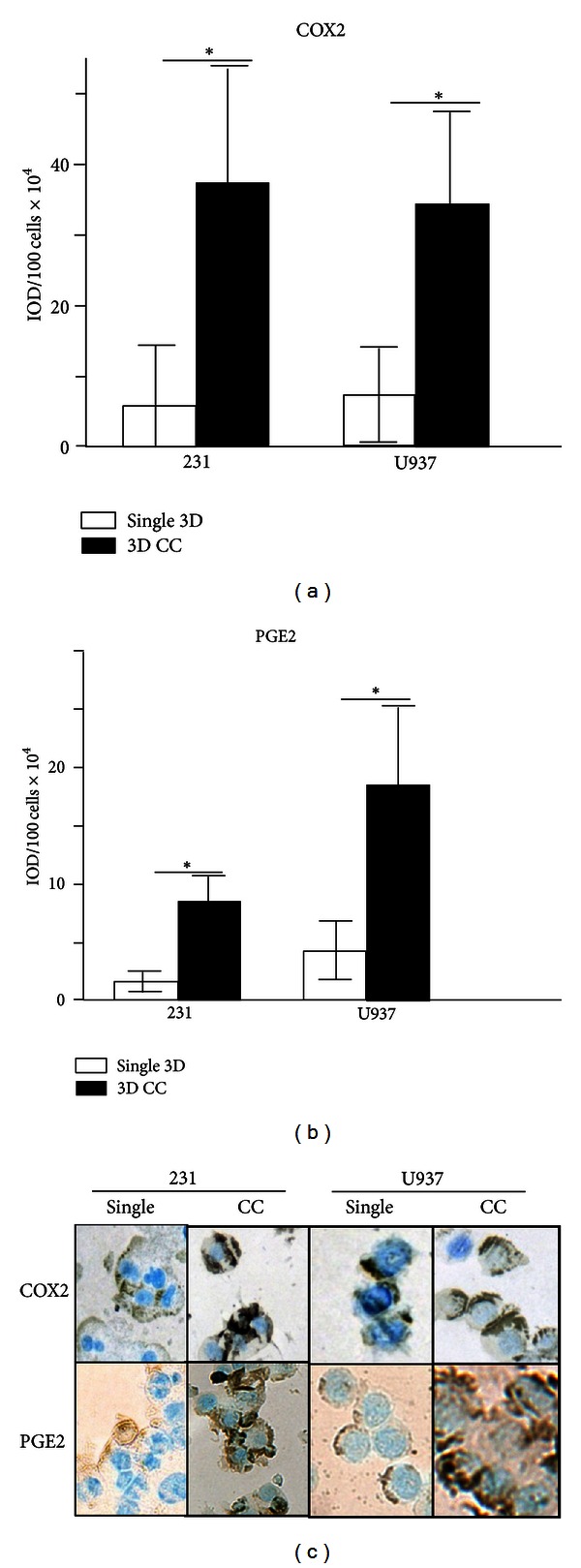
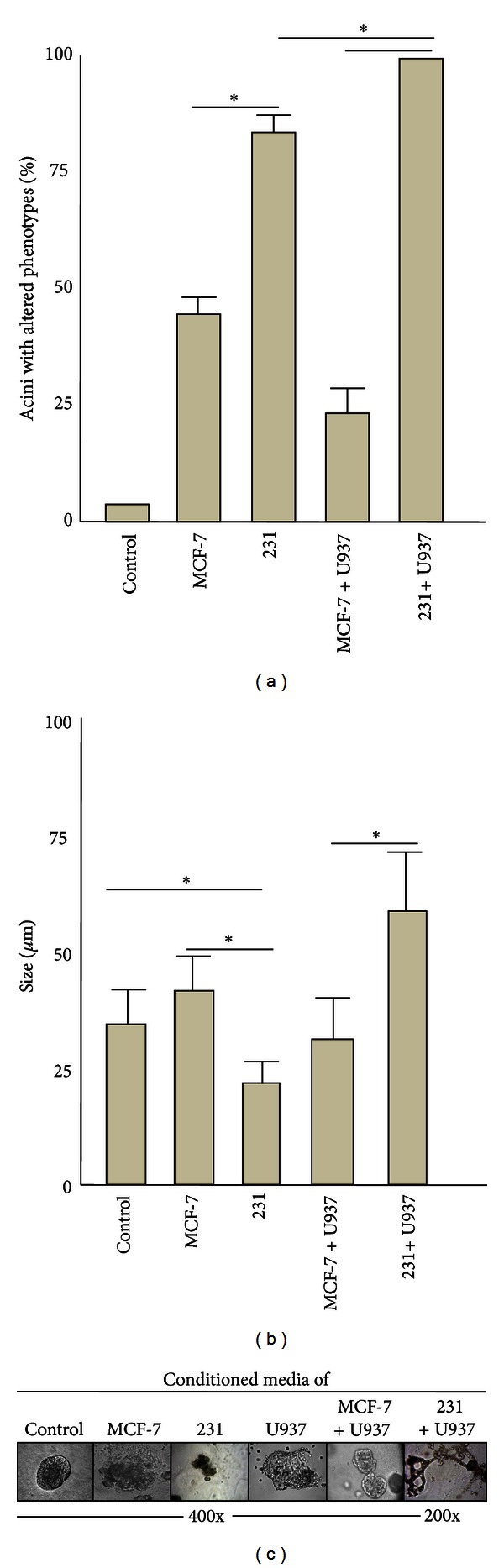
Tumor-associated immune cells often lack immune effector activities, and instead they present protumoral functions. To understand how tumors promote this immunological switch, invasive and noninvasive breast cancer cell (BRC) lines were cocultured with a promonocytic cell line in a Matrigel-based 3D system. We hypothesized that if communication exists between tumor and immune cells, coculturing would result in augmented expression of genes associated with tumor malignancy. Upregulation of proteases MMP1 and MMP9 and inflammatory COX2 genes was found likely in response to soluble factors. Interestingly, changes were more apparent in promonocytes and correlated with the aggressiveness of the BRC line. Increased gene expression was confirmed by collagen degradation assays and immunocytochemistry of prostaglandin 2, a product of COX2 activity. Untransformed MCF-10A cells were then used as a sensor of soluble factors with transformation-like capabilities, finding that acini formed in the presence of supernatants of the highly aggressive BRC/promonocyte cocultures often exhibited total loss of the normal architecture. These data support that tumor cells can modify immune cell gene expression and tumor aggressiveness may importantly reside in this capacity. Modeling interactions in the tumor stroma will allow the identification of genes useful as cancer prognostic markers and therapy targets.
肿瘤相关免疫细胞通常缺乏免疫效应功能,反而具有促肿瘤功能。为了了解肿瘤如何促进这种免疫转换,我们将侵袭性和非侵袭性乳腺癌细胞(BRC)系与单核细胞系在基于 Matrigel 的 3D 系统中进行共培养。我们假设如果肿瘤和免疫细胞之间存在通讯,共培养将导致与肿瘤恶性相关的基因表达增强。发现蛋白酶 MMP1 和 MMP9 以及炎症 COX2 基因的上调可能是对可溶性因子的反应。有趣的是,这些变化在单核细胞中更为明显,并且与 BRC 系的侵袭性相关。通过胶原蛋白降解测定和 COX2 活性产物前列腺素 2 的免疫细胞化学证实了基因表达的增加。然后,我们使用未转化的 MCF-10A 细胞作为具有转化样能力的可溶性因子的传感器,发现在高侵袭性 BRC/单核细胞共培养物的上清液存在的情况下形成的腺泡通常表现出正常结构的完全丧失。这些数据支持肿瘤细胞可以改变免疫细胞的基因表达,并且肿瘤的侵袭性可能重要地存在于这种能力中。对肿瘤基质中的相互作用进行建模将允许鉴定可用作癌症预后标志物和治疗靶标的基因。