Biomedical Research Imaging Center, University of North Carolina at Chapel Hill, CB 7513, Chapel Hill, NC 27599, USA.
Biomed Res Int. 2013;2013:634598. doi: 10.1155/2013/634598. Epub 2013 May 15.
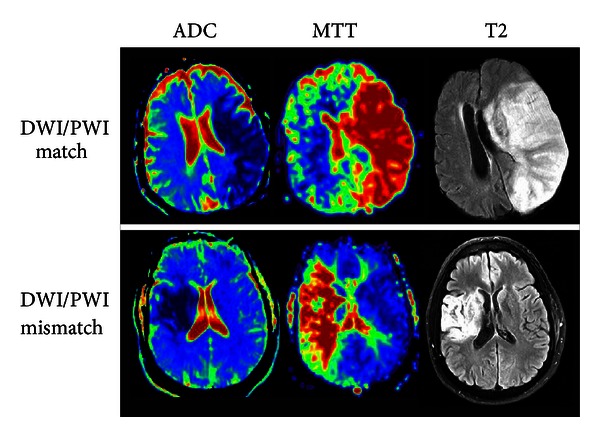
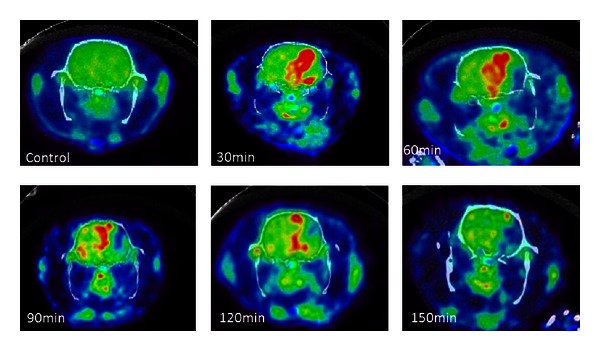
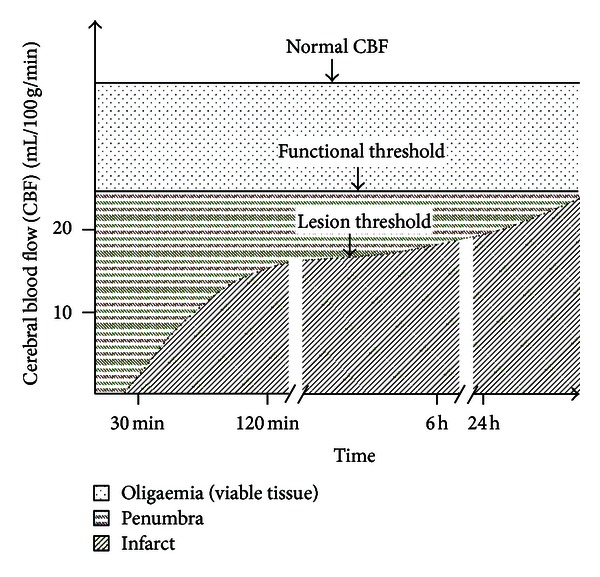
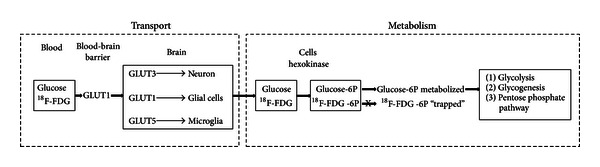
Extensive efforts have recently been devoted to developing noninvasive imaging tools capable of delineating brain tissue viability (penumbra) during acute ischemic stroke. These efforts could have profound clinical implications for identifying patients who may benefit from tPA beyond the currently approved therapeutic time window and/or patients undergoing neuroendovascular treatments. To date, the DWI/PWI MRI and perfusion CT have received the most attention for identifying ischemic penumbra. However, their routine use in clinical settings remains limited. Preclinical and clinical PET studies with [(18)F]-fluoro-2-deoxy-D-glucose ((18)F-FDG) have consistently revealed a decreased (18)F-FDG uptake in regions of presumed ischemic core. More importantly, an elevated (18)F-FDG uptake in the peri-ischemic regions has been reported, potentially reflecting viable tissues. To this end, this paper provides a comprehensive review of the literature on the utilization of (14)C-2-DG and (18)F-FDG-PET in experimental as well as human stroke studies. Possible cellular mechanisms and physiological underpinnings attributed to the reported temporal and spatial uptake patterns of (18)F-FDG are addressed. Given the wide availability of (18)F-FDG in routine clinical settings, (18)F-FDG PET may serve as an alternative, non-invasive tool to MRI and CT for the management of acute stroke patients.
最近,人们投入了大量精力来开发能够描绘急性缺血性中风期间脑组织存活情况(半影区)的非侵入性成像工具。这些努力可能对识别可能从 tPA 治疗中受益的患者具有深远的临床意义,这些患者的时间窗超出了目前批准的治疗时间窗,或正在接受神经血管内治疗的患者。迄今为止,DWI/PWI MRI 和灌注 CT 已成为识别缺血半影区的最受关注的方法。然而,它们在临床环境中的常规应用仍然有限。用 [(18)F]-氟代-2-脱氧-D-葡萄糖([(18)F]-FDG)进行的临床前和临床 PET 研究一致显示,在假定的缺血核心区域中 [(18)F]-FDG 摄取减少。更重要的是,在缺血周边区域报告了 [(18)F]-FDG 摄取增加,这可能反映了存活组织。为此,本文全面回顾了 [(14)C]-2-DG 和 [(18)F]-FDG-PET 在实验和人类中风研究中的应用文献。文中还讨论了可能的细胞机制和生理基础,这些机制和基础归因于报告的 [(18)F]-FDG 的时空摄取模式。鉴于 [(18)F]-FDG 在常规临床环境中的广泛可用性,[(18)F]-FDG PET 可能成为 MRI 和 CT 的替代、非侵入性工具,用于急性中风患者的管理。