Department of Orthopaedic Surgery, UC Irvine Multidisciplinary Sarcoma Center, Chao Family Comprehensive Cancer Center, University of California, Irvine, USA.
Mol Cancer. 2013 Jun 10;12:55. doi: 10.1186/1476-4598-12-55.
Osteosarcoma (OS) is the most common primary bone malignancy with a high propensity for local invasion and distant metastasis. Limited by the severe toxicity of conventional agents, the therapeutic bottleneck of osteosarcoma still remains unconquered. Flavokawain B (FKB), a kava extract, has been reported to have significant anti-tumor effects on several carcinoma cell lines both in vitro and in vivo. Its efficacy and low toxicity profile make FKB a promising agent for use as a novel chemotherapeutic agent.
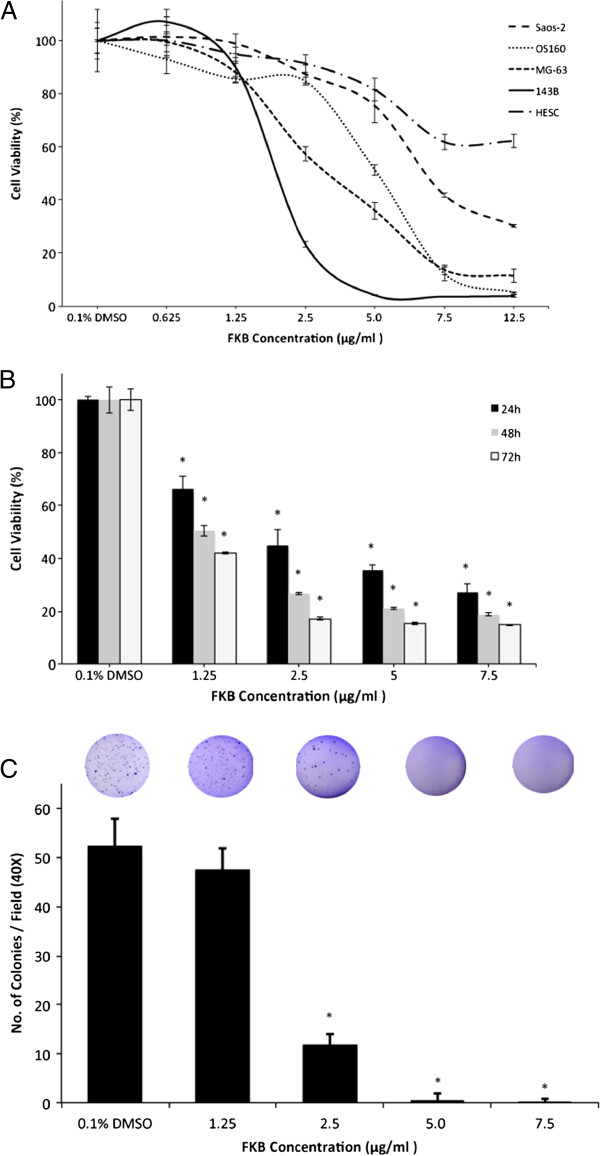
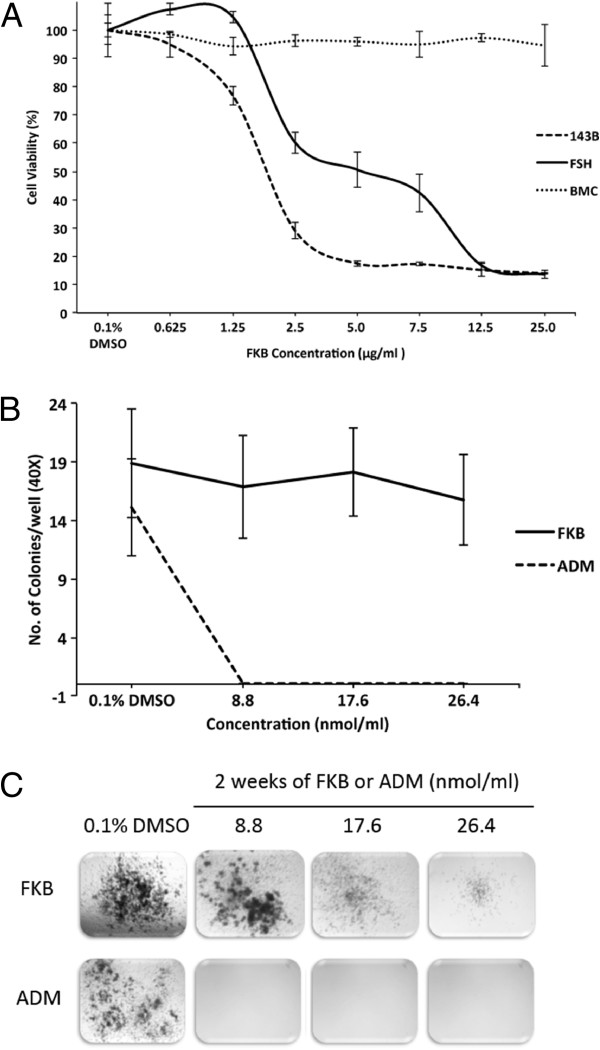
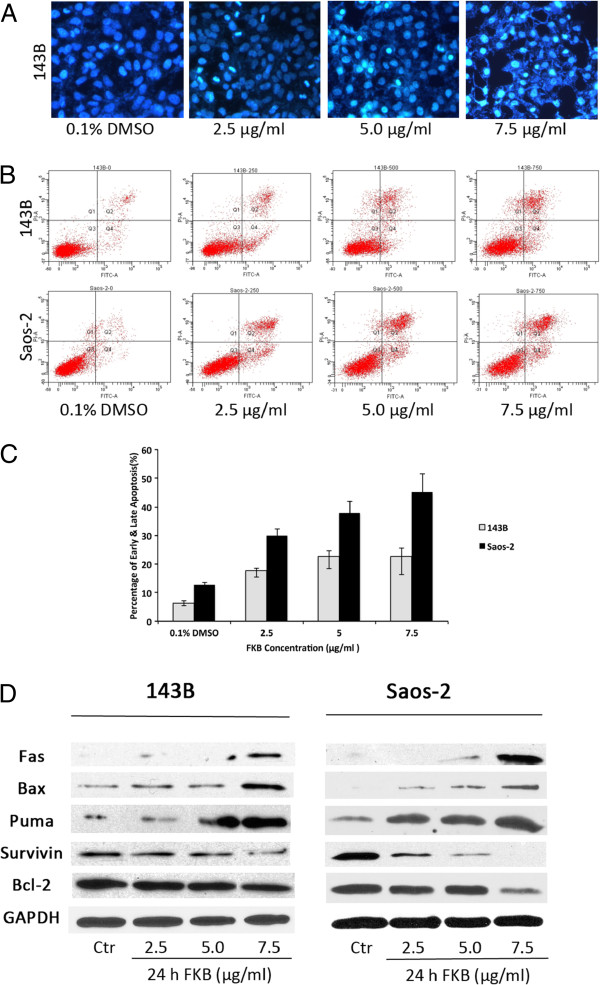
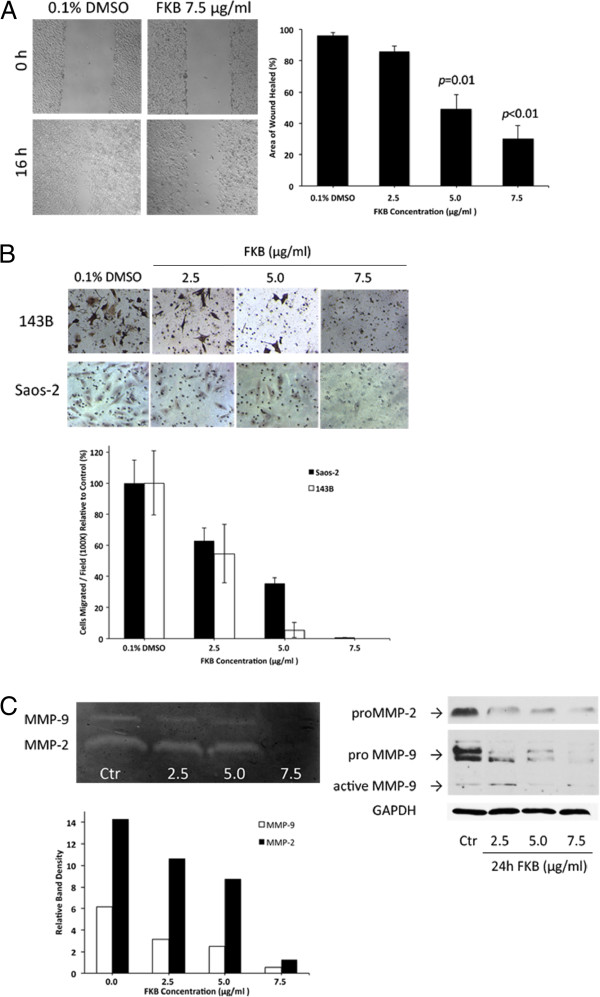
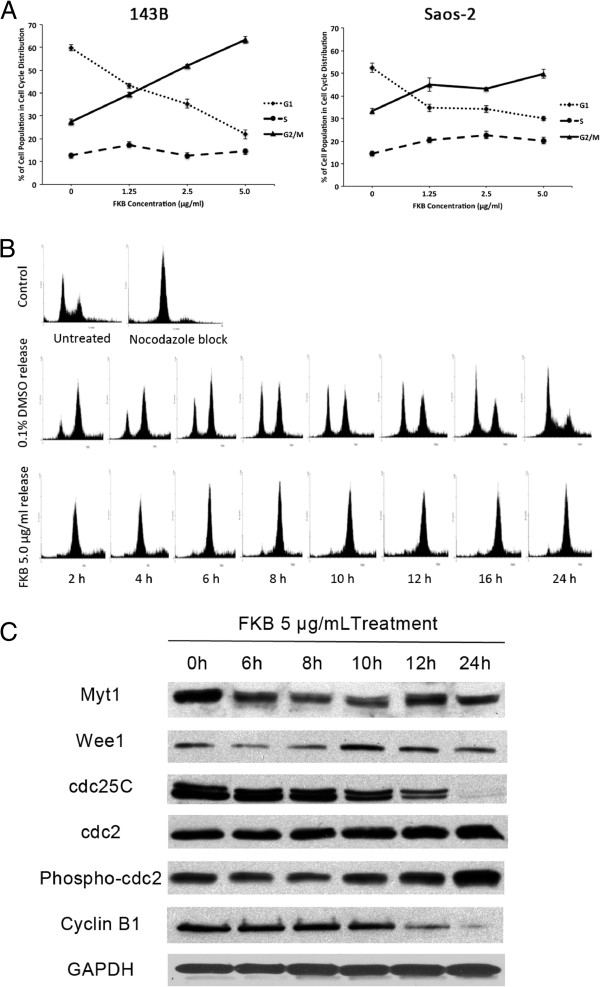
In the current study, we investigated the anti-proliferative and apoptotic effects of FKB against human osteosarcomas. Exposure of OS cells to FKB resulted in apoptosis, evidenced by loss of cell viability, morphological changes and the externalization of phosphatidylserine. Apoptosis induced by FKB resulted in activation of Caspase-3/7, -8 and -9 in OS cell lines, 143B and Saos-2. FKB also down-regulated inhibitory apoptotic markers, including Bcl-2 and Survivin and led to concomitant increases in apoptotic proteins, Bax, Puma and Fas. Therefore, the induction of apoptosis by FKB involved both extrinsic and intrinsic pathways. FKB also caused G2/M phase cell cycle arrest, which was observed through reductions in the levels of cyclin B1, cdc2 and cdc25c and increases in Myt1 levels. Furthermore, migration and invasion ability was decreased by FKB in a dose-dependent manner. The cytotoxicity profile showed FKB had significant lower side effects on bone marrow cells and small intestinal epithelial cells compared with Adriamycin.
Taken together, our evidence of apoptosis and cell cycle arrest by FKB treatment with less toxicity than the standard treatments provides an innovative argument for the use of FKB as a chemotherapeutic and chemopreventive compound. In vivo experiments utilizing FKB to reduce tumorigenesis and metastatic potential will be crucial to further justify clinical application.
骨肉瘤(OS)是最常见的原发性骨恶性肿瘤,具有很高的局部侵袭和远处转移倾向。受限于传统药物的严重毒性,骨肉瘤的治疗瓶颈仍未被攻克。卡瓦胡椒提取物 flavokawain B(FKB)已被报道在体外和体内对几种癌细胞系均具有显著的抗肿瘤作用。其疗效和低毒性特征使其成为一种有前途的新型化疗药物。
在本研究中,我们研究了 FKB 对人骨肉瘤的抗增殖和促凋亡作用。FKB 暴露于 OS 细胞可导致细胞活力丧失、形态变化和磷脂酰丝氨酸外化,从而导致细胞凋亡。FKB 诱导的凋亡导致 OS 细胞系 143B 和 Saos-2 中 Caspase-3/7、-8 和 -9 的激活。FKB 还下调抑制凋亡的标记物,包括 Bcl-2 和 Survivin,并导致促凋亡蛋白 Bax、Puma 和 Fas 的同时增加。因此,FKB 诱导的凋亡涉及外源性和内源性途径。FKB 还导致 G2/M 期细胞周期停滞,这通过降低 cyclin B1、cdc2 和 cdc25c 的水平和增加 Myt1 水平来观察到。此外,FKB 以剂量依赖的方式降低迁移和侵袭能力。细胞毒性谱显示,与阿霉素相比,FKB 对骨髓细胞和小肠上皮细胞的副作用明显较小。
总之,我们的证据表明,FKB 治疗可诱导凋亡和细胞周期停滞,且毒性低于标准治疗,为将 FKB 用作化疗和化学预防化合物提供了创新性论据。利用 FKB 减少肿瘤发生和转移潜力的体内实验对于进一步证明其临床应用至关重要。