Department of Psychiatry, Ribicoff Research Facility, Yale University, New Haven, Connecticut, United States of America.
PLoS One. 2013 Jun 12;8(6):e65088. doi: 10.1371/journal.pone.0065088. Print 2013.
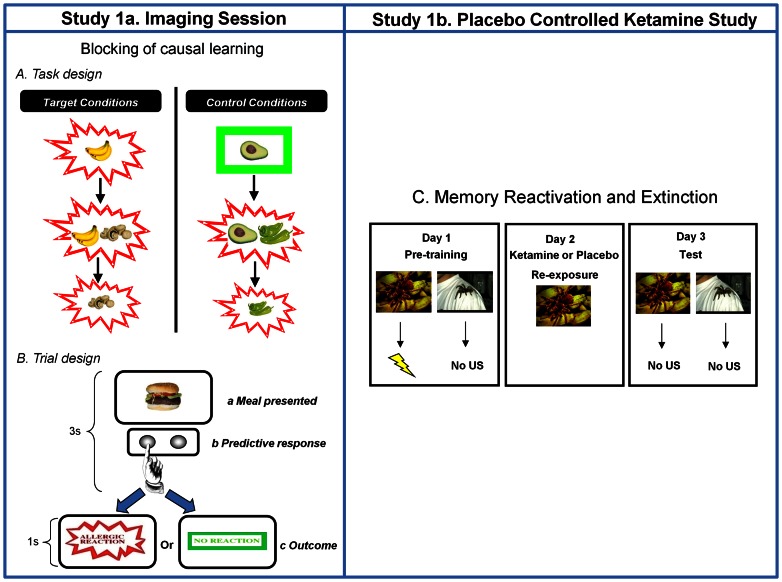
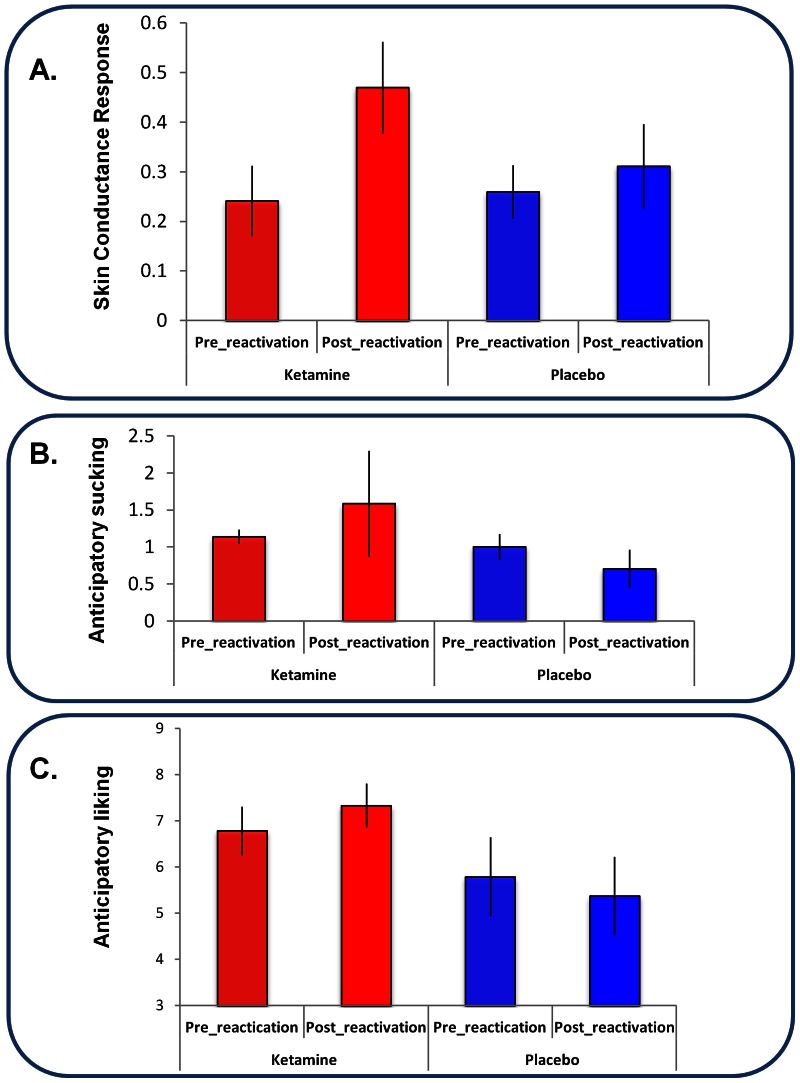
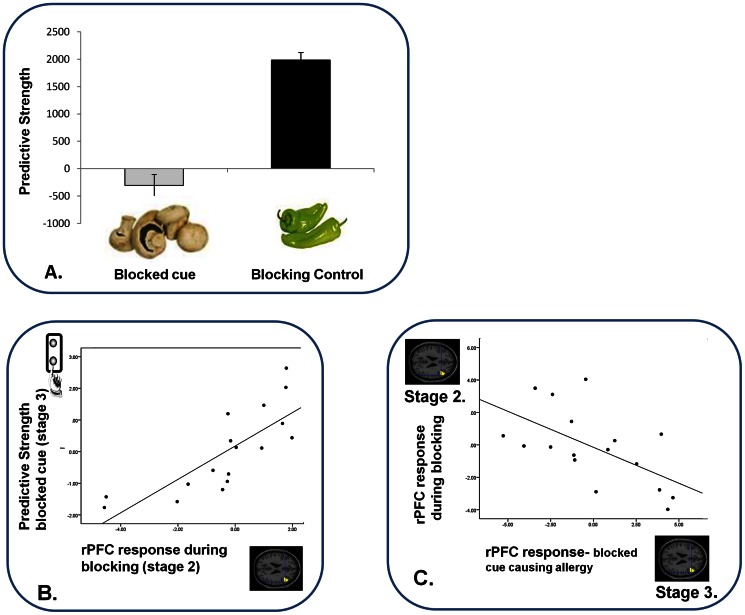
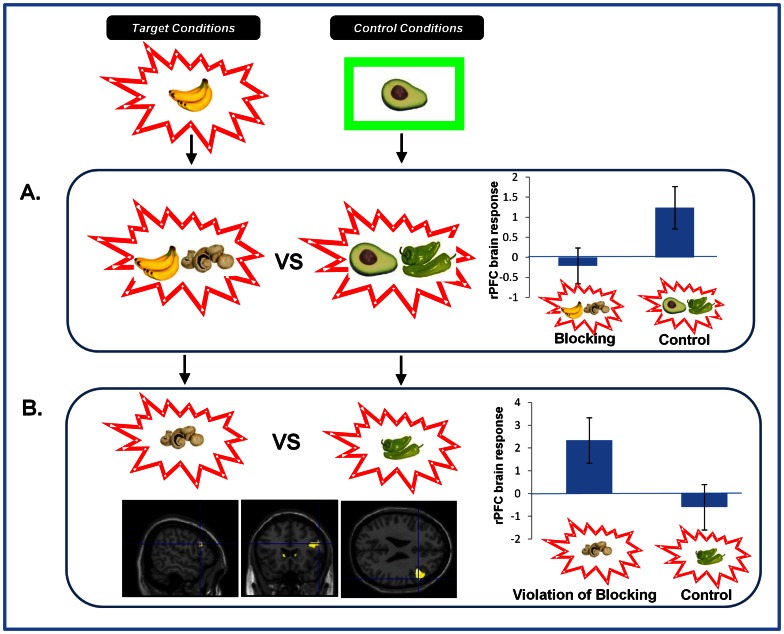
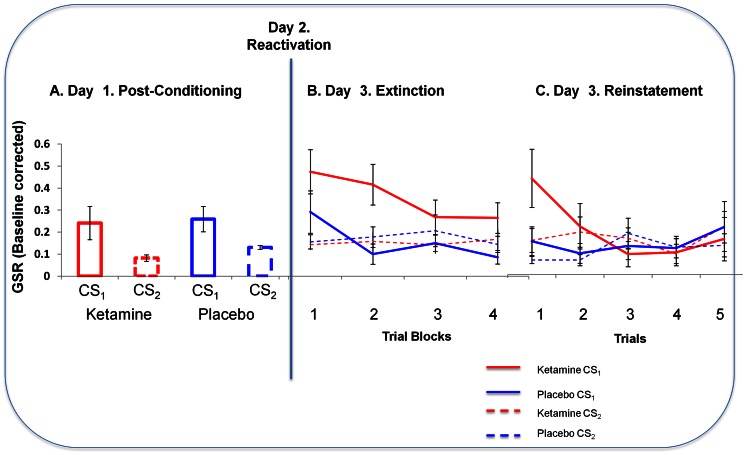
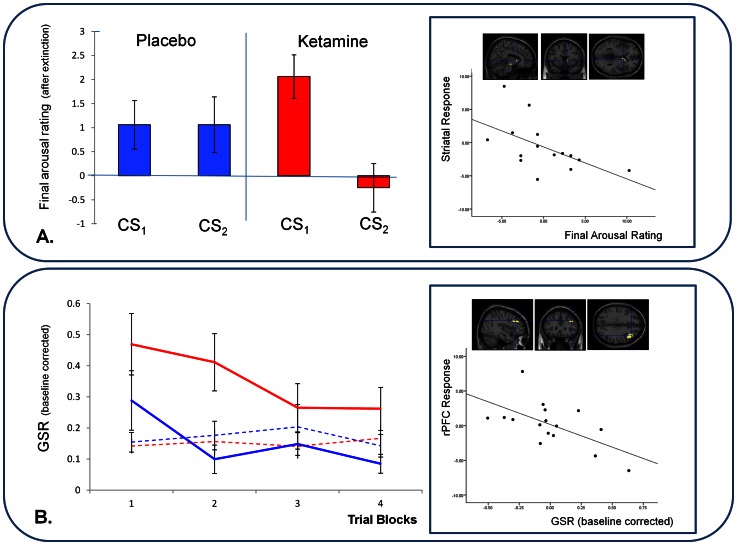
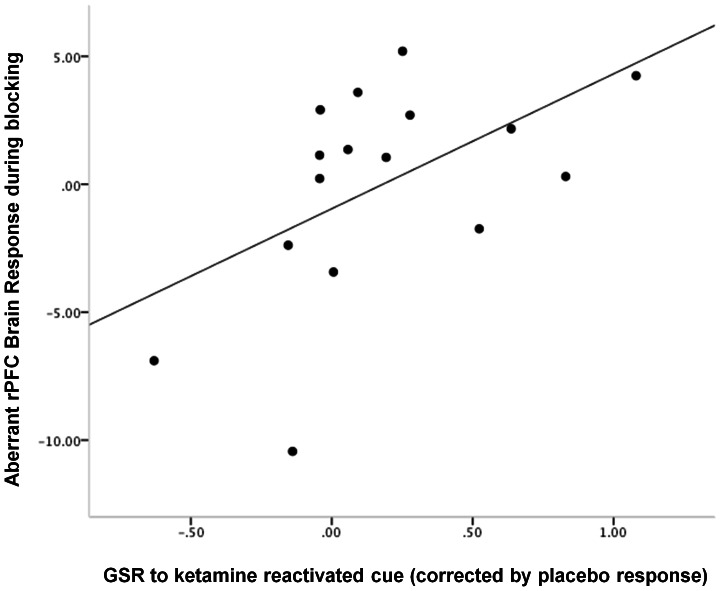
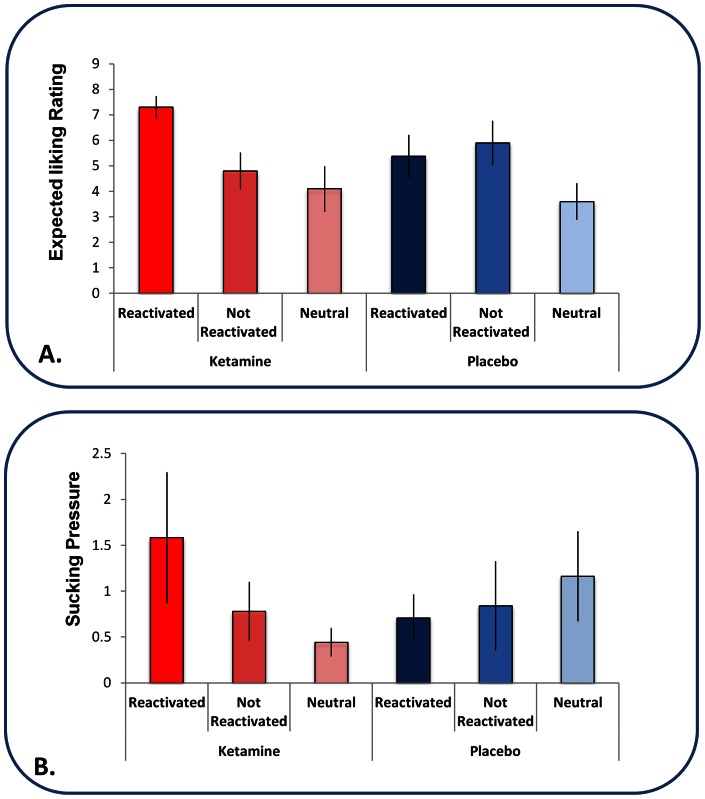
Delusions are the persistent and often bizarre beliefs that characterise psychosis. Previous studies have suggested that their emergence may be explained by disturbances in prediction error-dependent learning. Here we set up complementary studies in order to examine whether such a disturbance also modulates memory reconsolidation and hence explains their remarkable persistence. First, we quantified individual brain responses to prediction error in a causal learning task in 18 human subjects (8 female). Next, a placebo-controlled within-subjects study of the impact of ketamine was set up on the same individuals. We determined the influence of this NMDA receptor antagonist (previously shown to induce aberrant prediction error signal and lead to transient alterations in perception and belief) on the evolution of a fear memory over a 72 hour period: they initially underwent Pavlovian fear conditioning; 24 hours later, during ketamine or placebo administration, the conditioned stimulus (CS) was presented once, without reinforcement; memory strength was then tested again 24 hours later. Re-presentation of the CS under ketamine led to a stronger subsequent memory than under placebo. Moreover, the degree of strengthening correlated with individual vulnerability to ketamine's psychotogenic effects and with prediction error brain signal. This finding was partially replicated in an independent sample with an appetitive learning procedure (in 8 human subjects, 4 female). These results suggest a link between altered prediction error, memory strength and psychosis. They point to a core disruption that may explain not only the emergence of delusional beliefs but also their persistence.
妄想是一种持久且常常离奇的信念,是精神病的特征之一。先前的研究表明,它们的出现可能可以用预测误差相关学习的紊乱来解释。在此,我们进行了补充研究,以检验这种紊乱是否也会调节记忆再巩固,从而解释其显著的持续性。首先,我们在 18 名人类被试者(8 名女性)中量化了对因果学习任务中的预测误差的个体大脑反应。接下来,在同一批被试者中设计了一项关于氯胺酮影响的安慰剂对照的、内-被试者研究。我们确定了这种 NMDA 受体拮抗剂(先前已显示会引起异常的预测误差信号,并导致短暂的知觉和信念改变)对恐惧记忆在 72 小时内的演变的影响:他们最初接受了条件反射恐惧训练;24 小时后,在氯胺酮或安慰剂给药期间,条件刺激(CS)呈现一次,没有强化;然后在 24 小时后再次测试记忆强度。在氯胺酮下重新呈现 CS 会导致比在安慰剂下更强的后续记忆。此外,强化程度与个体对氯胺酮致精神病作用的易感性以及预测误差大脑信号相关。在具有奖励学习程序的独立样本中(8 名人类被试者,4 名女性),部分复制了这一发现。这些结果表明,改变的预测误差、记忆强度和精神病之间存在关联。它们指向一种核心破坏,这不仅可以解释妄想信念的出现,还可以解释其持续性。