Institute for Microbiology and Archaea Center, University of Regensburg, Regensburg, Germany.
PLoS One. 2013 Jun 12;8(6):e65388. doi: 10.1371/journal.pone.0065388. Print 2013.
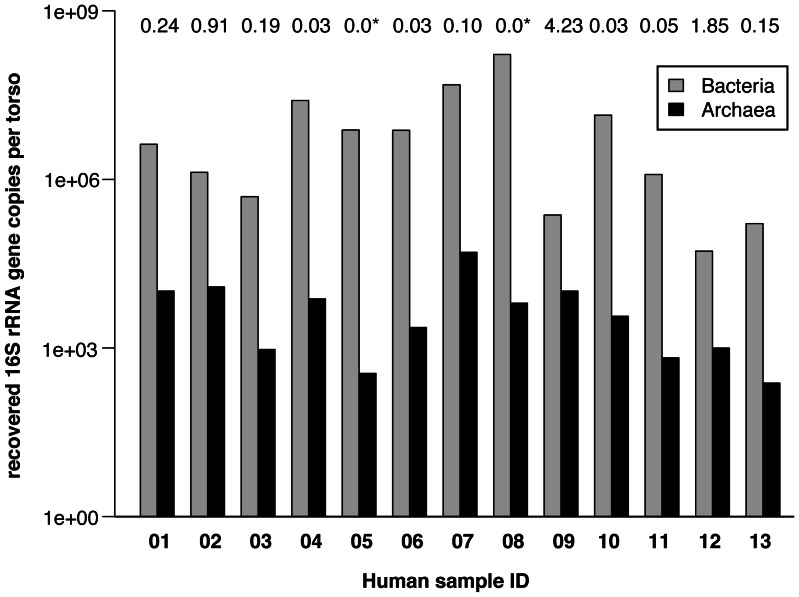
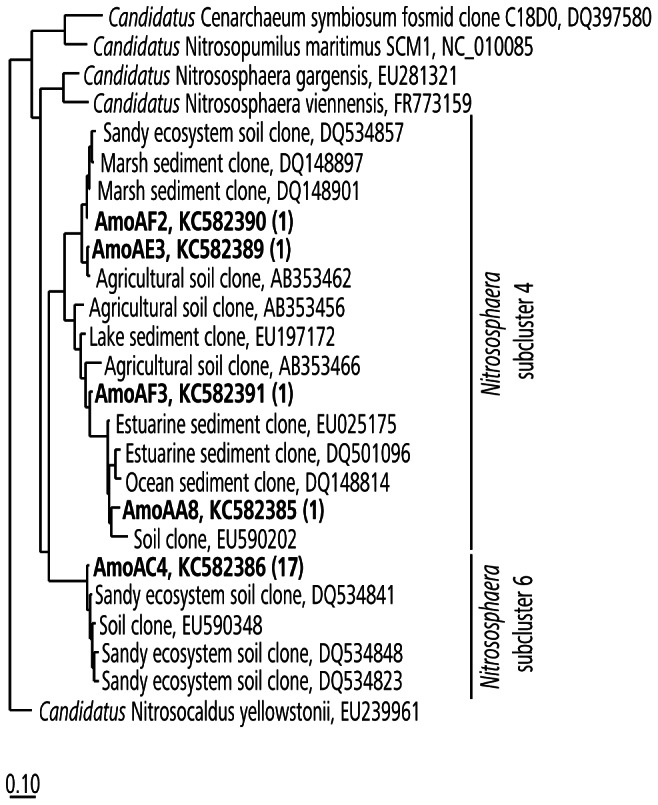
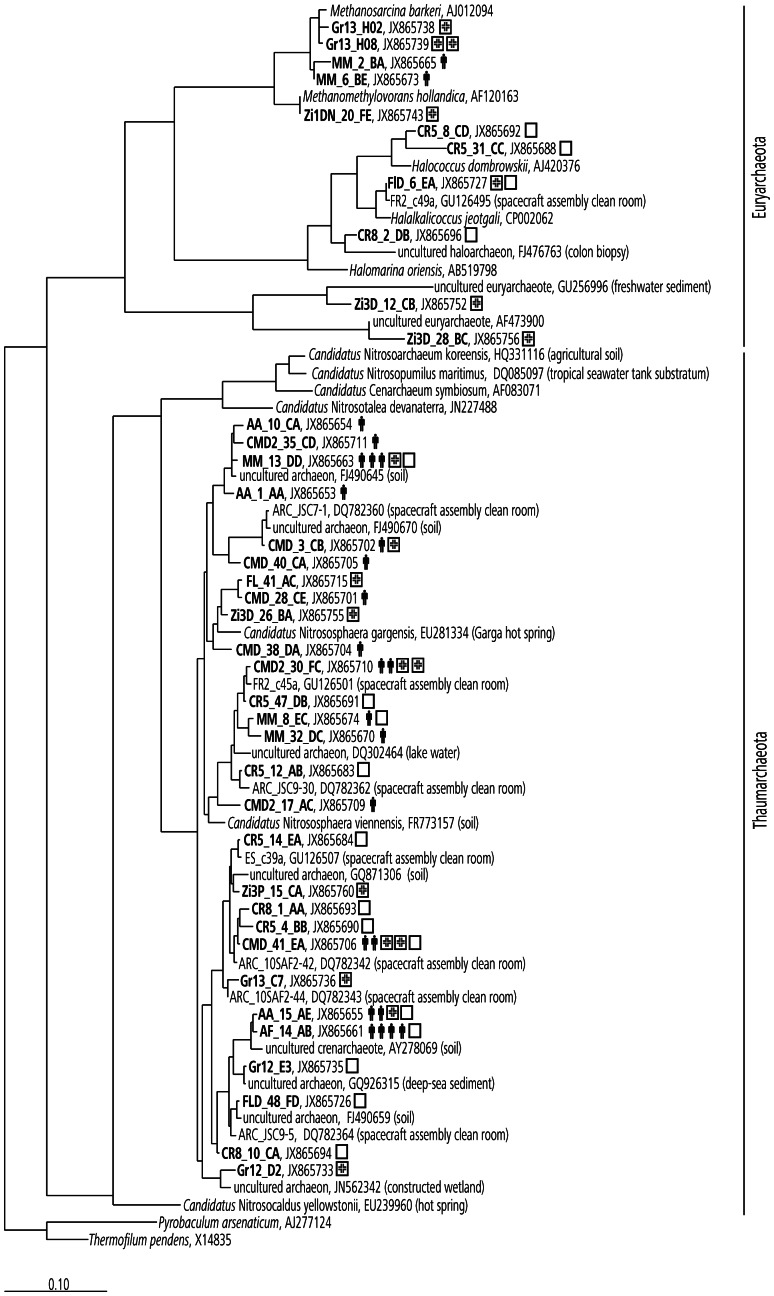
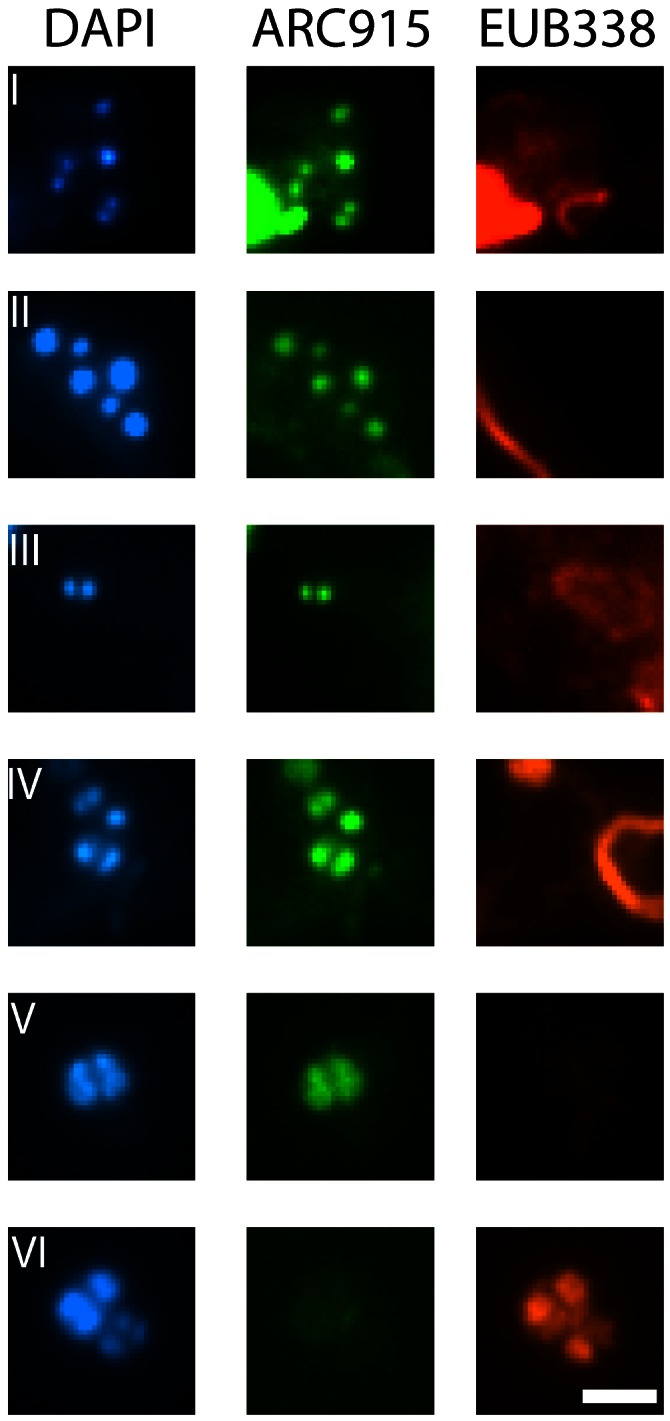
The recent era of exploring the human microbiome has provided valuable information on microbial inhabitants, beneficials and pathogens. Screening efforts based on DNA sequencing identified thousands of bacterial lineages associated with human skin but provided only incomplete and crude information on Archaea. Here, we report for the first time the quantification and visualization of Archaea from human skin. Based on 16 S rRNA gene copies Archaea comprised up to 4.2% of the prokaryotic skin microbiome. Most of the gene signatures analyzed belonged to the Thaumarchaeota, a group of Archaea we also found in hospitals and clean room facilities. The metabolic potential for ammonia oxidation of the skin-associated Archaea was supported by the successful detection of thaumarchaeal amoA genes in human skin samples. However, the activity and possible interaction with human epithelial cells of these associated Archaea remains an open question. Nevertheless, in this study we provide evidence that Archaea are part of the human skin microbiome and discuss their potential for ammonia turnover on human skin.
最近探索人类微生物组的时代提供了有关微生物居民、有益菌和病原体的有价值信息。基于 DNA 测序的筛选工作鉴定出了数千种与人类皮肤相关的细菌谱系,但仅提供了有关古菌的不完整和粗略信息。在这里,我们首次报告了从人类皮肤中定量和可视化古菌。基于 16S rRNA 基因拷贝,古菌占皮肤原核微生物组的比例高达 4.2%。分析的大多数基因特征属于泉古菌门,这是我们在医院和洁净室设施中也发现的一组古菌。皮肤相关古菌的氨氧化代谢潜力得到了成功检测到人类皮肤样本中古菌 amoA 基因的支持。然而,这些相关古菌的活性及其与人类上皮细胞的可能相互作用仍然是一个悬而未决的问题。尽管如此,在这项研究中,我们提供了证据表明古菌是人类皮肤微生物组的一部分,并讨论了它们在人类皮肤上氨转化的潜力。