Departments of Medicine, Pharmacology and Physiology, New York Medical College, Valhalla, New York, United States of America.
PLoS One. 2013 Jun 11;8(6):e65458. doi: 10.1371/journal.pone.0065458. Print 2013.
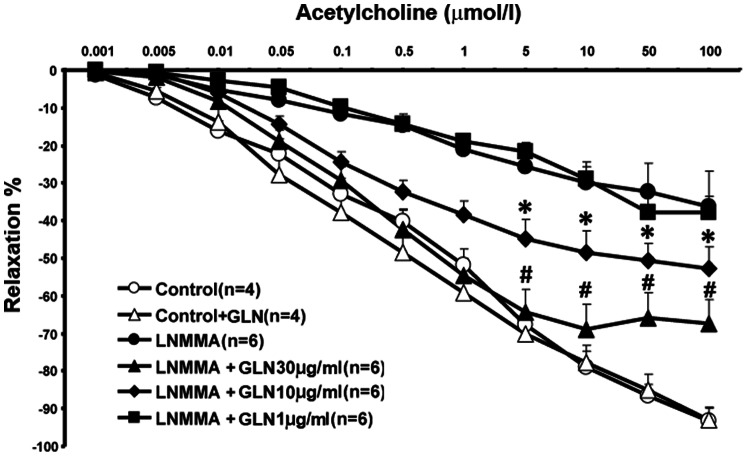
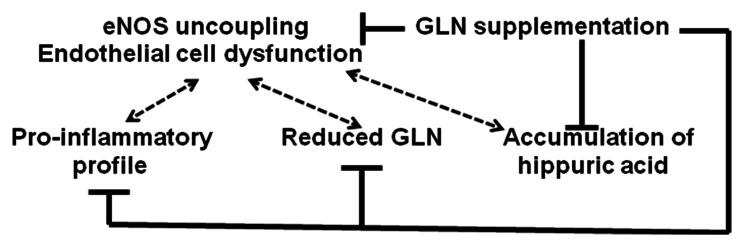
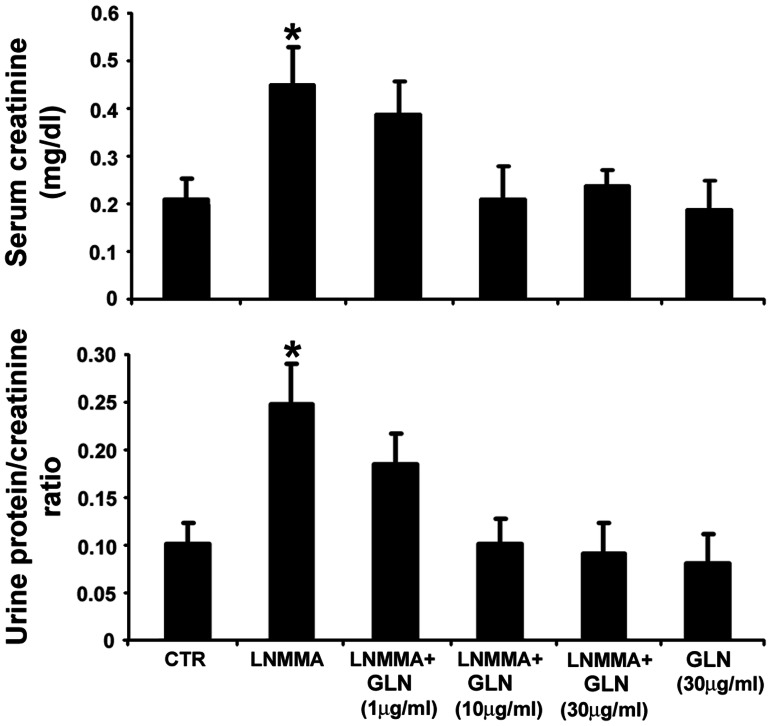
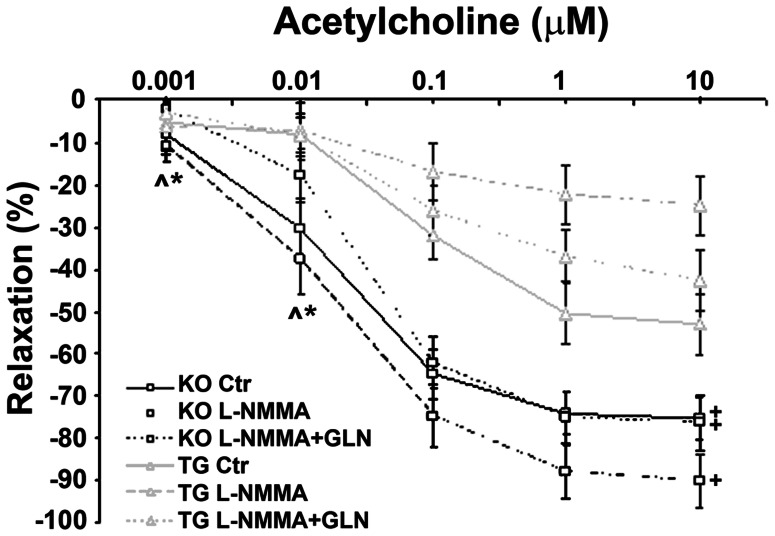
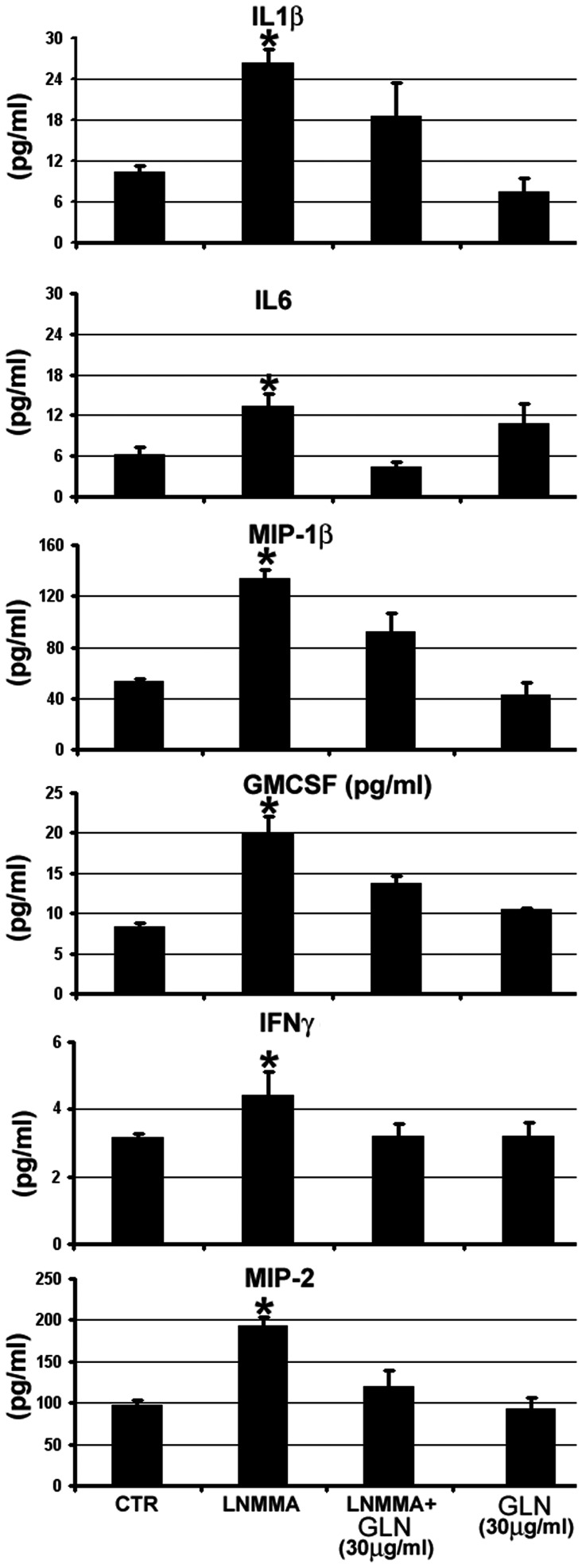
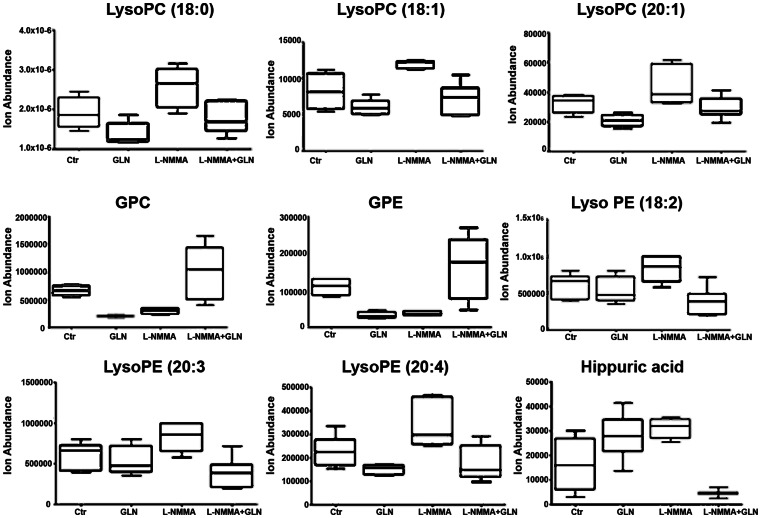
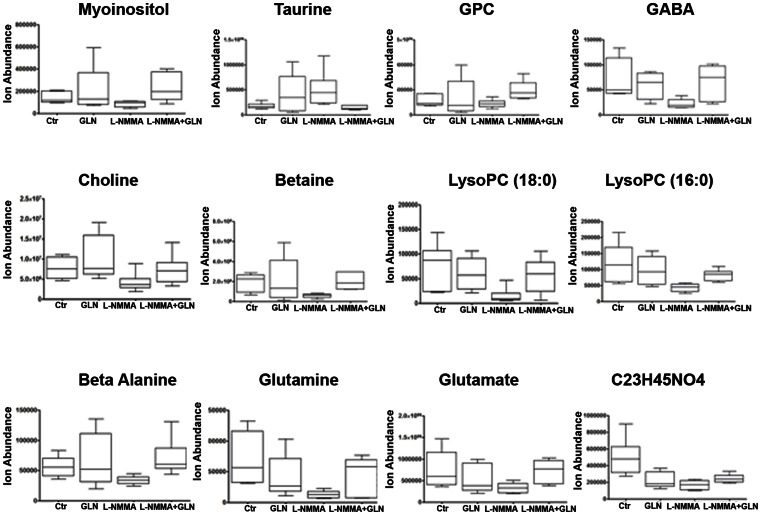
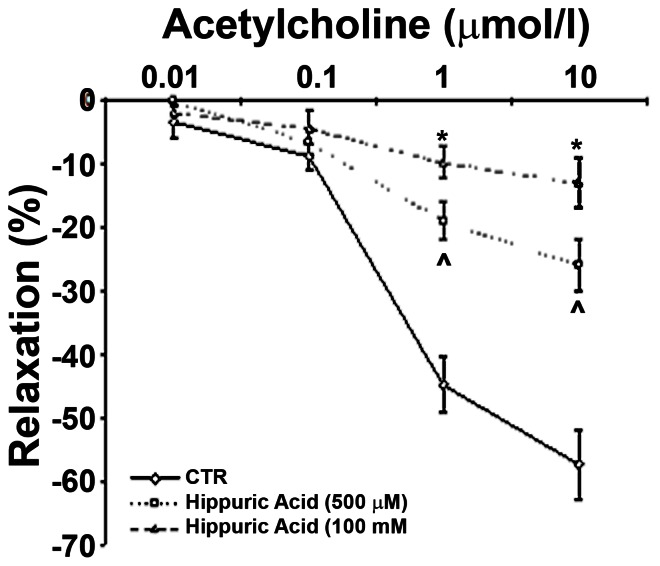
Endothelial Cell Dysfunction (ECD) is a recognized harbinger of a host of chronic cardiovascular diseases. Using a mouse model of ECD triggered by treatment with L-Nω-methylarginine (L-NMMA), we previously demonstrated that renal microvasculature displays a perturbed protein profile, including diminished expression of two key enzymes of the Krebs cycle associated with a Warburg-type suppression of mitochondrial metabolism. We hypothesized that supplementation with L-glutamine (GLN), that can enter the Krebs cycle downstream this enzymatic bottleneck, would normalize vascular function and alleviate mitochondrial dysfunction. To test this hypothesis, mice with chronic L-NMMA-induced ECD were co-treated with GLN at different concentrations for 2 months. Results confirmed that L-NMMA led to a defect in acetylcholine-induced relaxation of aortic rings that was dose-dependently prevented by GLN. In caveolin-1 transgenic mice characterized by eNOS inactivation, L-NMMA further impaired vasorelaxation which was partially rescued by GLN co-treatment. Pro-inflammatory profile induced by L-NMMA was blunted in mice co-treated with GLN. Using an LC/MS platform for metabolite profiling, we sought to identify metabolic perturbations associated with ECD and offset by GLN supplementation. 3453 plasma molecules could be detected with 100% frequency in mice from at least one treatment group. Among these, 37 were found to be differentially expressed in a 4-way comparison of control vs. LNMMA both with and without GLN. One of such molecules, hippuric acid, an "uremic toxin" was found to be elevated in our non-uremic mice receiving L-NMMA, but normalized by treatment with GLN. Ex vivo analysis of hippuric acid effects on vasomotion demonstrated that it significantly reduced acetylcholine-induced vasorelaxation of vascular rings. In conclusion, functional and metabolic profiling of animals with early ECD revealed macrovasculopathy and that supplementation GLN is capable of improving vascular function. Metabolomic analyses reveal elevation of hippuric acid, which may further exacerbate vasculopathy even before the development of uremia.
内皮细胞功能障碍(ECD)是多种慢性心血管疾病的公认先兆。我们之前使用 L-Nω-甲基精氨酸(L-NMMA)治疗引发的 ECD 小鼠模型,证明肾脏微血管显示出蛋白质谱紊乱,包括与三羧酸循环(Krebs 循环)中的两种关键酶表达减少有关,这与线粒体代谢的瓦博格(Warburg)抑制有关。我们假设补充 L-谷氨酰胺(GLN),它可以进入该酶促瓶颈的 Krebs 循环下游,将使血管功能正常化并缓解线粒体功能障碍。为了验证这一假设,用不同浓度的 GLN 对慢性 L-NMMA 诱导的 ECD 小鼠进行了 2 个月的联合治疗。结果证实,L-NMMA 导致乙酰胆碱诱导的主动脉环松弛缺陷,该缺陷可被 GLN 剂量依赖性地预防。在 eNOS 失活的 caveolin-1 转基因小鼠中,L-NMMA 进一步损害了血管舒张,GLN 联合治疗部分挽救了这种损害。GLN 联合治疗可减轻 L-NMMA 诱导的促炎表型。我们使用 LC/MS 代谢组学平台,试图确定与 ECD 相关的代谢紊乱,并通过 GLN 补充来纠正。在至少一个治疗组的小鼠中,可以以 100%的频率检测到 3453 种血浆分子。在对照与 LNMMA 的 4 种比较中,其中 37 种在没有 GLN 和有 GLN 的情况下差异表达。在我们未接受 L-NMMA 的非尿毒症小鼠中,一种这样的分子,即马尿酸(hippuric acid)被发现升高,这是一种“尿毒症毒素”,但经 GLN 治疗后可恢复正常。马尿酸对血管舒缩作用的体外分析表明,它显著降低了血管环中乙酰胆碱诱导的血管舒张。总之,早期 ECD 动物的功能和代谢谱分析显示出大血管病变,GLN 补充能够改善血管功能。代谢组学分析显示马尿酸升高,即使在尿毒症发生之前,它也可能进一步加重血管病变。