BMC Cancer. 2013 Jun 18;13:295. doi: 10.1186/1471-2407-13-295.
Gene expression profiling (GEP) is increasingly used in the rapidly evolving field of personalized medicine. We sought to evaluate the association between GEP-assessed of breast cancer recurrence risk and patients' well-being.
Participants were Dutch women from 10 hospitals being treated for early stage breast cancer who were enrolled in the MINDACT trial (Microarray In Node-negative and 1 to 3 positive lymph node Disease may Avoid ChemoTherapy). As part of the trial, they received a disease recurrence risk estimate based on a 70-gene signature and on standard clinical criteria as scored via a modified version of Adjuvant! Online. \Women completed a questionnaire 6-8 weeks after surgery and after their decision regarding adjuvant chemotherapy. The questionnaire assessed perceived understanding, knowledge, risk perception, satisfaction, distress, cancer worry and health-related quality of life (HRQoL), 6-8 weeks after surgery and decision regarding adjuvant chemotherapy.
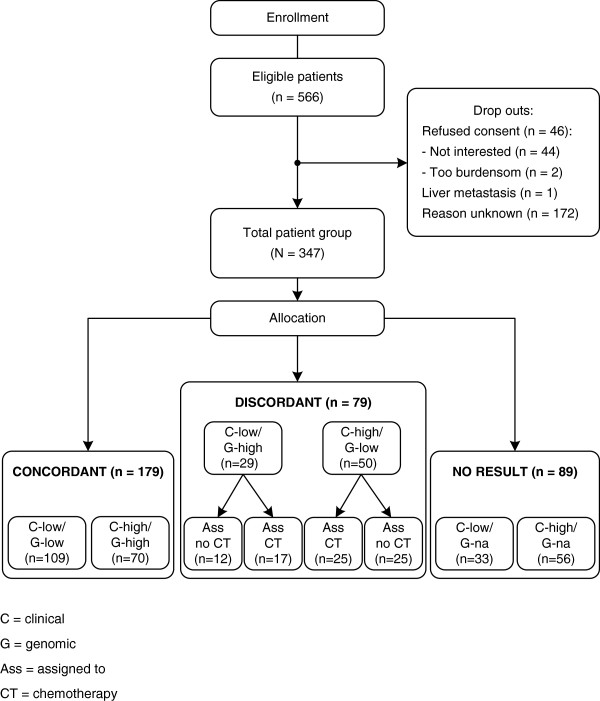
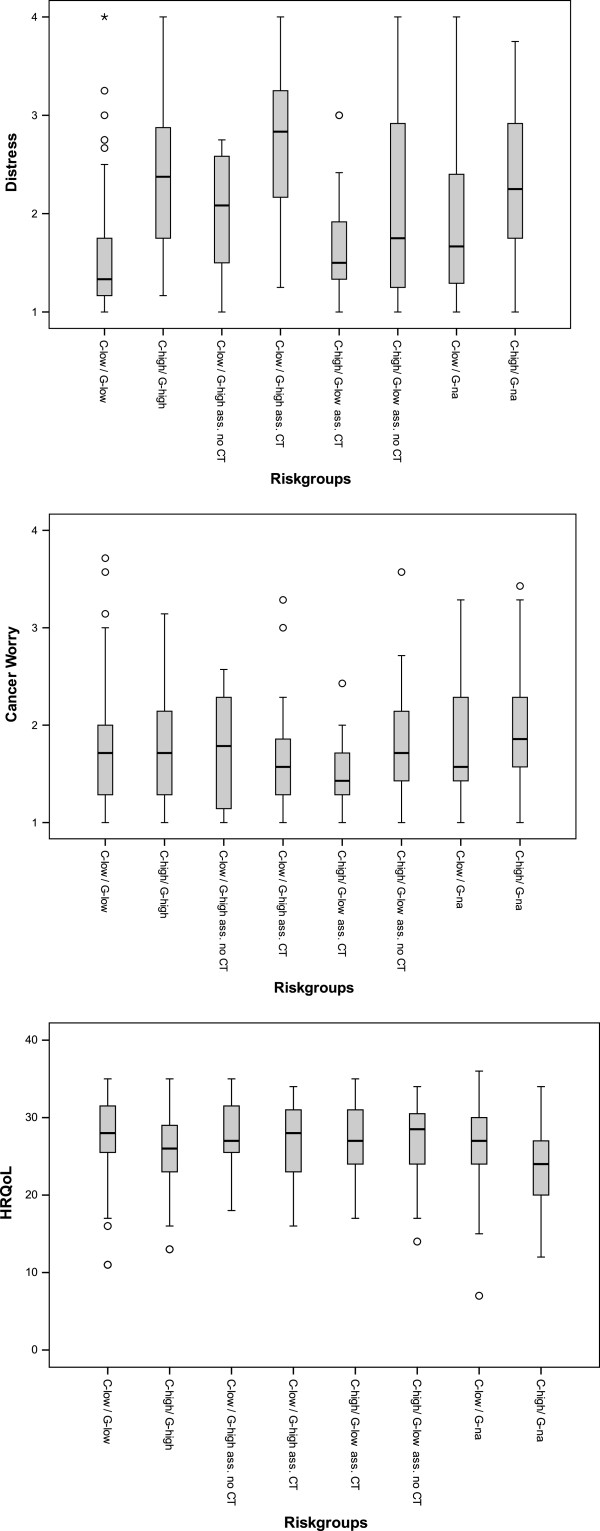
Women (n = 347, response rate 62%) reported high satisfaction with and a good understanding of the GEP information they received. Women with low risk estimates from both the standard and genomic tests reported the lowest distress levels. Distress was higher predominately among patients who had received high genomic risk estimates, who did not receive genomic risk estimates, or who received conflicting estimates based on genomic and clinical criteria. Cancer worry was highest for patients with higher risk perceptions and lower satisfaction. Patients with concordant high-risk profiles and those for whom such profiles were not available reported lower quality of life.
Patients were generally satisfied with the information they received about recurrence risk based on genomic testing. Some types of genomic test results were associated with greater distress levels, but not with cancer worry or HRQoL.
ISRCTN18543567.
基因表达谱(GEP)越来越多地用于快速发展的个体化医学领域。我们试图评估 GEP 评估的乳腺癌复发风险与患者健康之间的关系。
参与者是来自 10 家医院的荷兰女性,她们正在接受早期乳腺癌治疗,参加了 MINDACT 试验(微阵列在淋巴结阴性和 1 至 3 个阳性淋巴结疾病中可能避免化疗)。作为试验的一部分,她们根据 70 个基因特征和通过改良版 Adjuvant! Online 评分的标准临床标准获得疾病复发风险估计。\女性在手术后 6-8 周并在决定辅助化疗后完成了一份问卷。该问卷评估了手术后 6-8 周和决定辅助化疗后的感知理解、知识、风险感知、满意度、困扰、癌症担忧和健康相关生活质量(HRQoL)。
女性(n=347,响应率 62%)报告对他们收到的 GEP 信息非常满意并理解透彻。来自标准和基因组测试的低风险估计的女性报告的困扰水平最低。困扰主要出现在接受高基因组风险估计、未接受基因组风险估计或基于基因组和临床标准接受冲突估计的患者中。癌症担忧对于风险感知较高且满意度较低的患者最高。具有一致性高风险特征的患者和没有此类特征的患者报告的生活质量较低。
患者通常对基于基因组检测获得的复发风险信息感到满意。某些类型的基因组测试结果与较高的困扰水平相关,但与癌症担忧或 HRQoL 无关。
ISRCTN:ISRCTN85245026。