Institute of Molecular, Cell and Systems Biology, College of Medical, Veterinary and Life Sciences, University of Glasgow, Scotland, UK.
Biochem J. 2013 Sep 1;454(2):283-93. doi: 10.1042/BJ20130481.
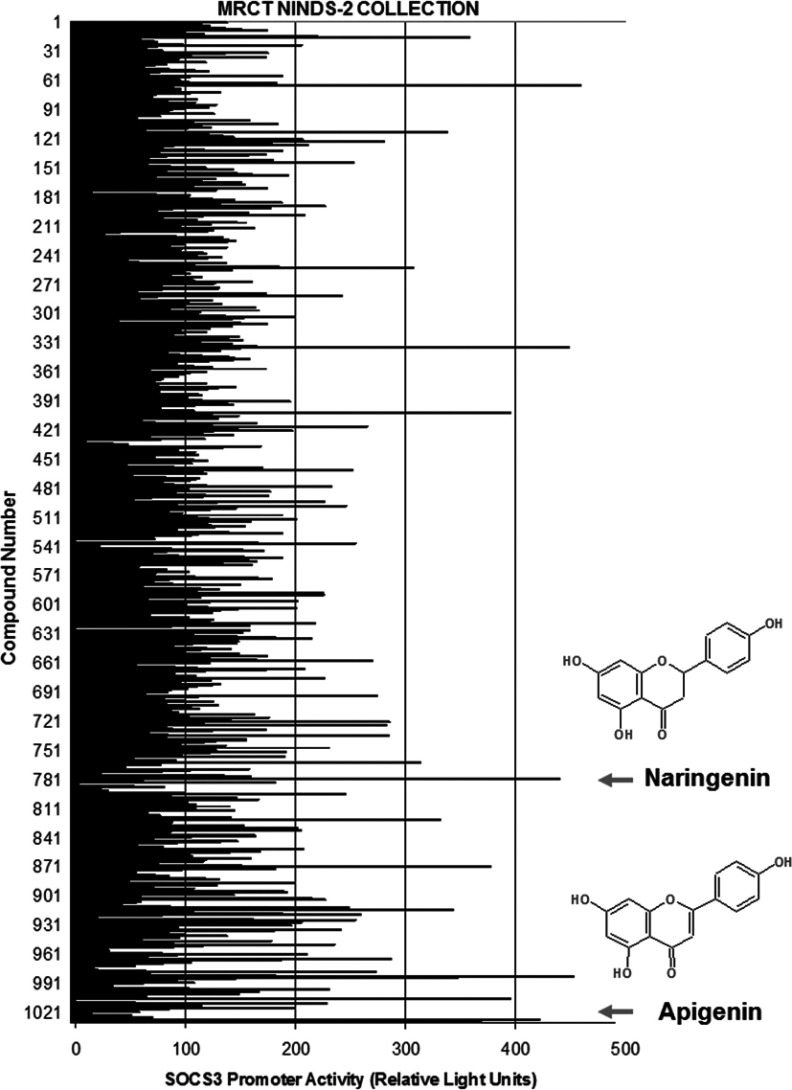
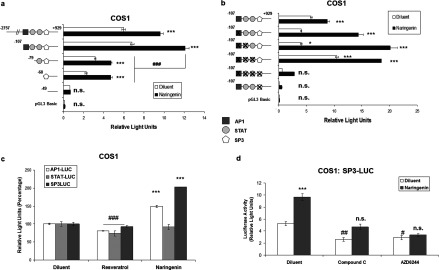
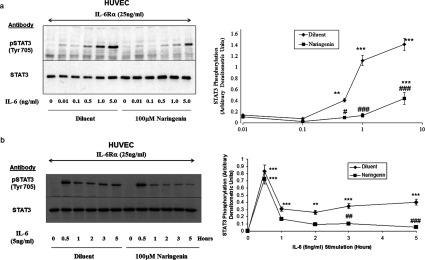
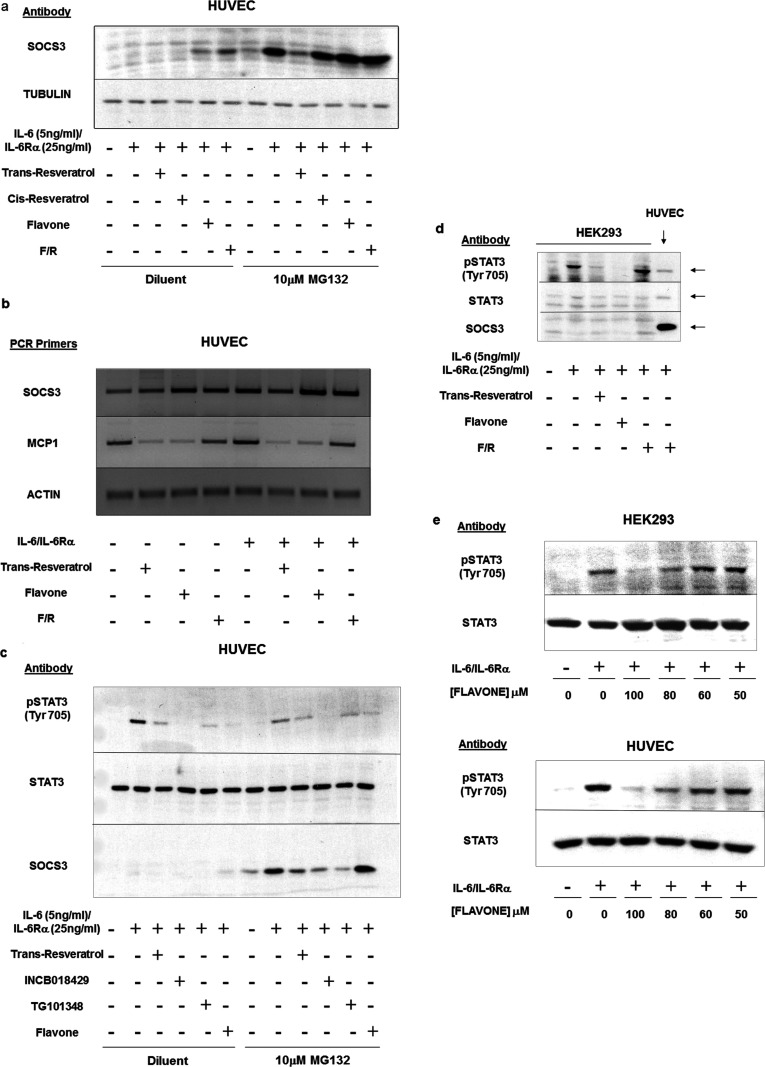
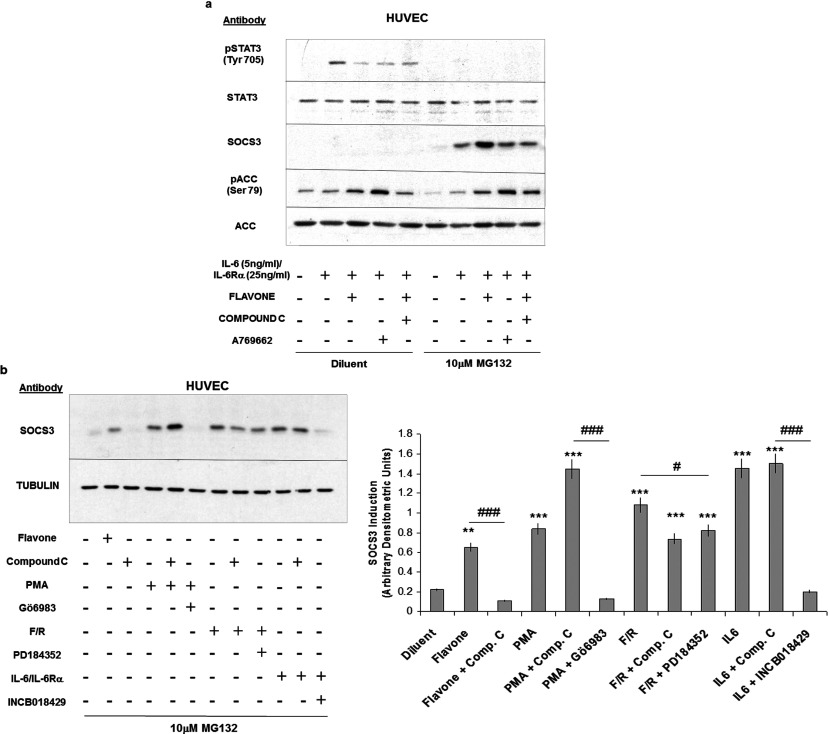
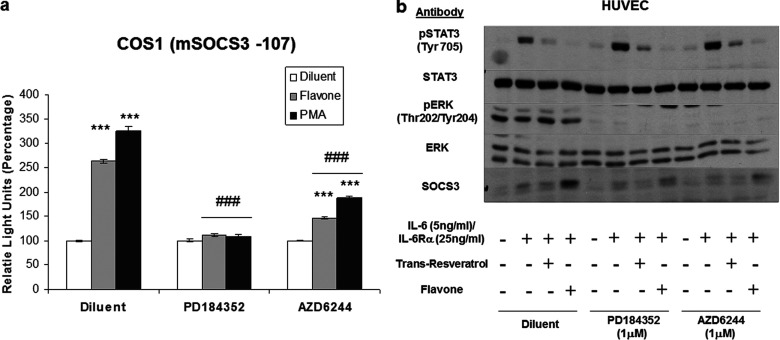
The atherogenic cytokine IL-6 (interleukin-6) induces pro-inflammatory gene expression in VECs (vascular endothelial cells) by activating the JAK (Janus kinase)/STAT3 (signal transducer and activator of transcription 3) signalling pathway, which is normally down-regulated by the STAT3-dependent induction of the E3 ubiquitin ligase component SOCS3 (suppressor of cytokine signalling 3). Novel treatments based on the regulation of SOCS3 protein levels could therefore have value in the treatment of diseases with an inflammatory component, such as atherosclerosis. To this end we carried out a screen of 1031 existing medicinal compounds to identify inducers of SOCS3 gene expression and identified the flavanoids naringenin and flavone as effective inducers of SOCS3 protein, mRNA and promoter activity. This was in contrast with the action of traditional JAK/STAT3 inhibitors and the polyphenol resveratrol, which effectively suppress SOCS3 gene expression. Both naringenin and flavone also effectively suppressed IL-6-stimulated phosphorylation of STAT3 (Tyr⁷⁰⁵) which led to suppression of IL-6-induction of the atherogenic STAT3 target gene MCP1 (monocyte chemotactic protein-1), suggesting that their ability to induce SOCS3 gene expression is STAT3-independent. Supporting this idea was the observation that the general kinase inhibitor compound C inhibits flavone- and cAMP-dependent, but not JAK-dependent, SOCS3 induction in VECs. Indeed, the ability of flavanoids to induce SOCS3 expression requires activation of the ERK (extracellular-signal-regulated kinase)-dependent transcription factor SP3, and not STAT3. In the present paper we therefore describe novel molecular actions of flavanoids, which control SOCS3 gene induction and suppression of STAT3 signalling in VECs. These mechanisms could potentially be exploited to develop novel anti-atherogenic therapies.
致炎细胞因子白细胞介素 6(IL-6)通过激活 JAK(Janus 激酶)/STAT3(信号转导和转录激活因子 3)信号通路诱导 VEC(血管内皮细胞)中促炎基因的表达,而 STAT3 依赖性诱导 E3 泛素连接酶成分 SOCS3(细胞因子信号转导抑制因子 3)可下调该通路。因此,基于 SOCS3 蛋白水平调节的新型治疗方法可能对具有炎症成分的疾病(如动脉粥样硬化)的治疗具有价值。为此,我们进行了 1031 种现有药用化合物的筛选,以鉴定 SOCS3 基因表达的诱导剂,并发现黄酮类化合物柚皮苷和黄酮是 SOCS3 蛋白、mRNA 和启动子活性的有效诱导剂。这与传统的 JAK/STAT3 抑制剂和多酚白藜芦醇的作用相反,后者有效抑制 SOCS3 基因表达。柚皮苷和黄酮类化合物也有效抑制了 IL-6 刺激的 STAT3(Tyr⁷⁰⁵)磷酸化,从而抑制了 IL-6 诱导的致动脉粥样硬化 STAT3 靶基因 MCP1(单核细胞趋化蛋白 1)的表达,这表明它们诱导 SOCS3 基因表达的能力与 STAT3 无关。支持这一观点的是观察到,通用激酶抑制剂化合物 C 抑制黄酮类和 cAMP 依赖性,但不抑制 JAK 依赖性 SOCS3 诱导 VEC。事实上,黄酮类化合物诱导 SOCS3 表达的能力需要激活 ERK(细胞外信号调节激酶)依赖性转录因子 SP3,而不是 STAT3。因此,在本文中,我们描述了黄酮类化合物的新分子作用,这些作用控制了 SOCS3 基因的诱导和 VEC 中 STAT3 信号的抑制。这些机制可能有潜力被开发为新型抗动脉粥样硬化疗法。