Department of Biology, University of New Mexico, Albuquerque, NM, USA.
Ecol Lett. 2013 Aug;16(8):985-94. doi: 10.1111/ele.12124. Epub 2013 Jun 20.
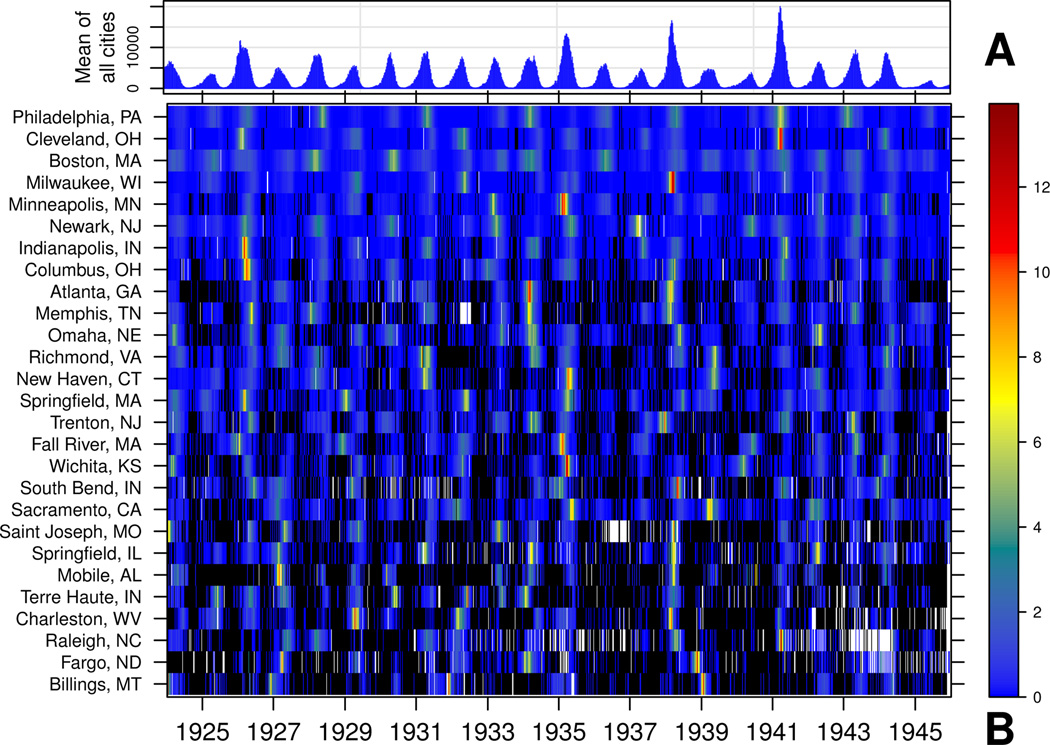
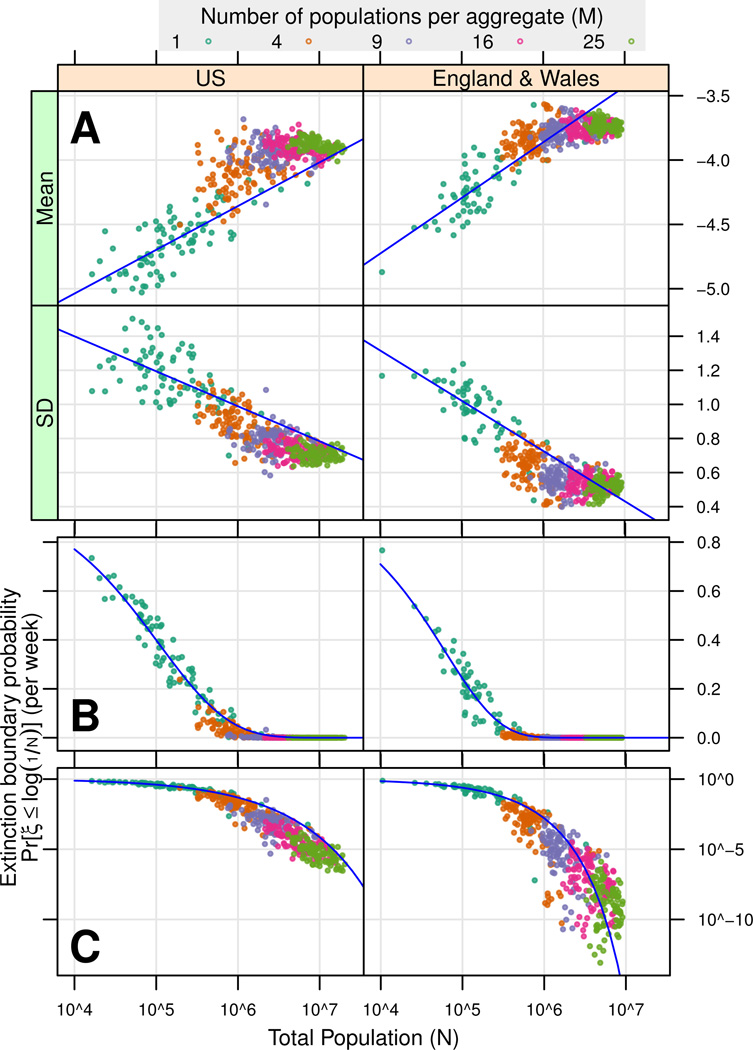
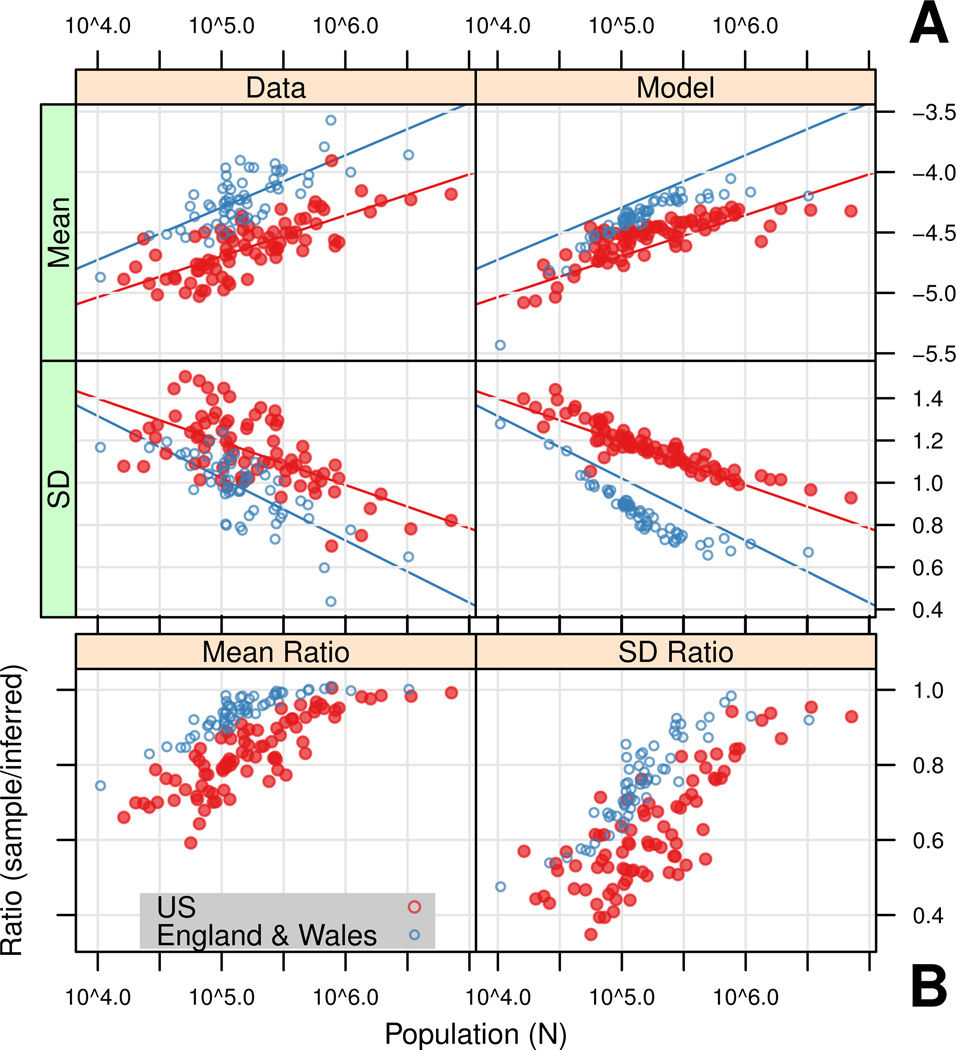
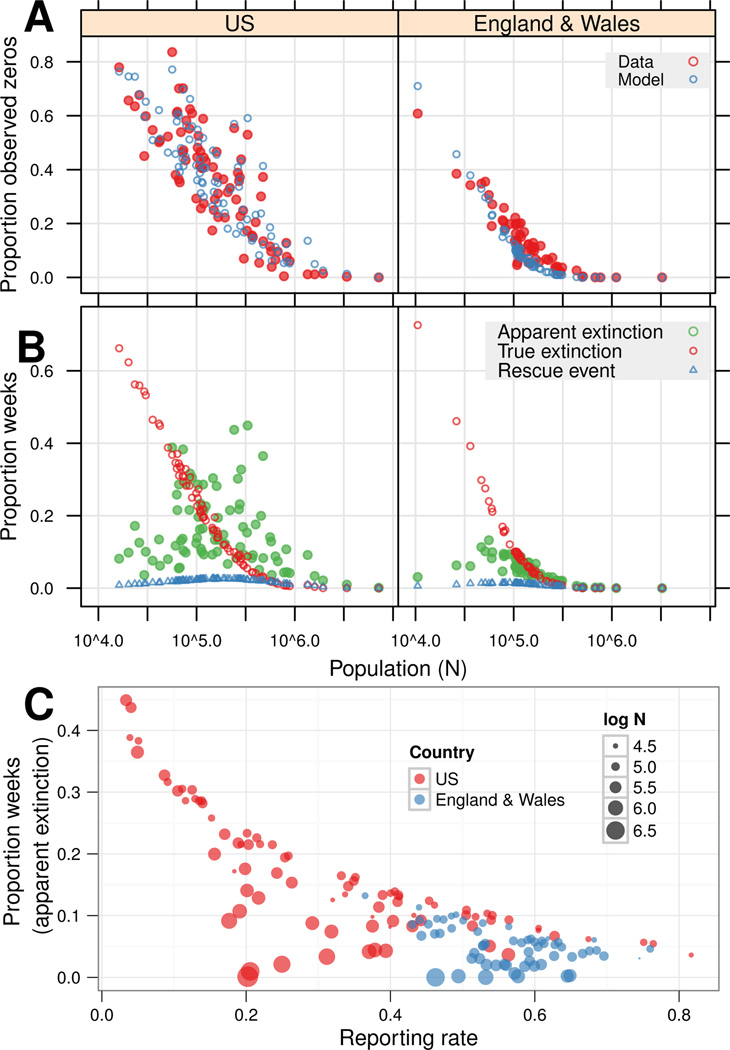
Persistence and extinction are fundamental processes in ecological systems that are difficult to accurately measure due to stochasticity and incomplete observation. Moreover, these processes operate on multiple scales, from individual populations to metapopulations. Here, we examine an extensive new data set of measles case reports and associated demographics in pre-vaccine era US cities, alongside a classic England & Wales data set. We first infer the per-population quasi-continuous distribution of log incidence. We then use stochastic, spatially implicit metapopulation models to explore the frequency of rescue events and apparent extinctions. We show that, unlike critical community size, the inferred distributions account for observational processes, allowing direct comparisons between metapopulations. The inferred distributions scale with population size. We use these scalings to estimate extinction boundary probabilities. We compare these predictions with measurements in individual populations and random aggregates of populations, highlighting the importance of medium-sized populations in metapopulation persistence.
持续性和灭绝性是生态系统中的基本过程,由于随机性和不完全观测,这些过程难以准确测量。此外,这些过程在多个尺度上运作,从个体种群到集合种群。在这里,我们研究了一个广泛的新麻疹病例报告数据集,以及疫苗前时代美国城市的相关人口统计学数据,以及经典的英格兰和威尔士数据集。我们首先推断出每人口准连续分布的对数发病率。然后,我们使用随机的、空间隐含的集合种群模型来探索救援事件和明显灭绝的频率。我们表明,与临界社区规模不同,推断出的分布考虑了观测过程,允许在集合种群之间进行直接比较。推断出的分布与种群规模成比例。我们使用这些比例来估计灭绝边界概率。我们将这些预测与个别种群和随机种群聚集的测量结果进行比较,突出了中等规模种群在集合种群持续性中的重要性。