Miami University, Oxford, OH, USA.
Behav Res Methods. 2013 Sep;45(3):613-22. doi: 10.3758/s13428-013-0364-8.
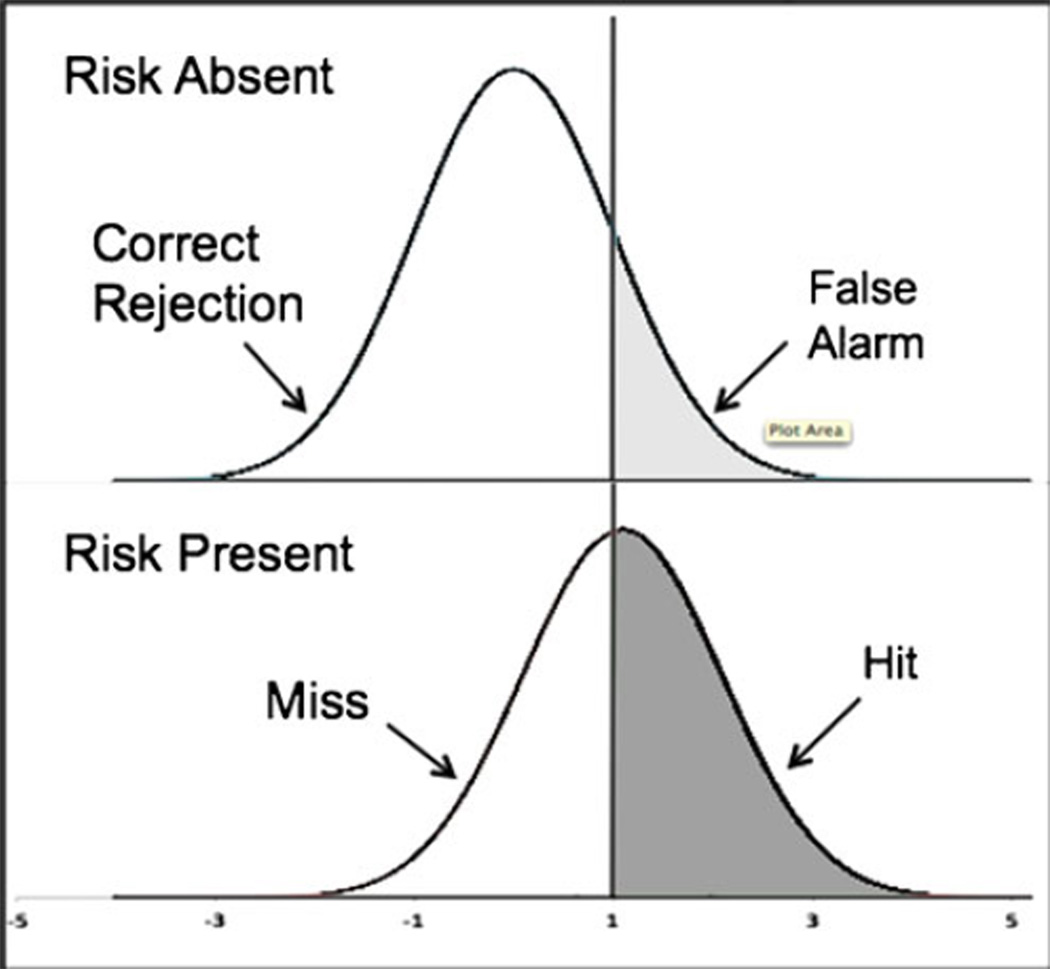
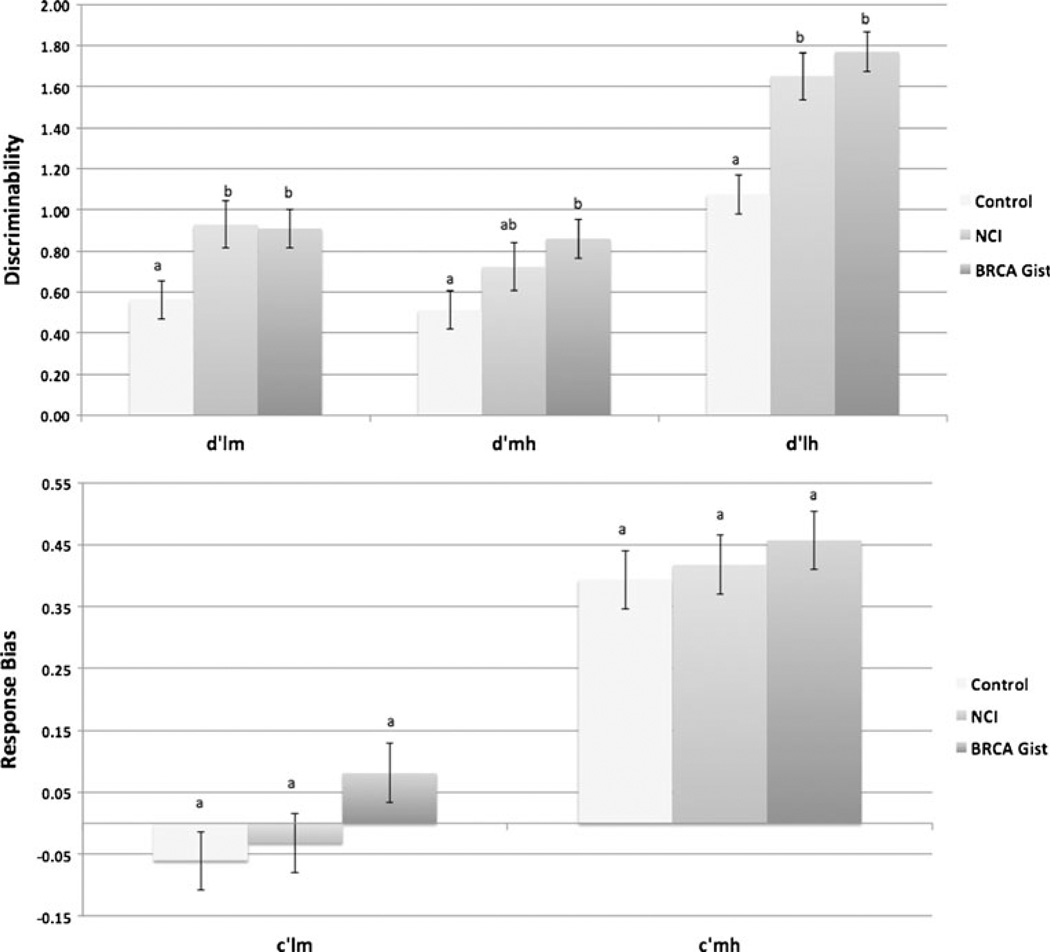
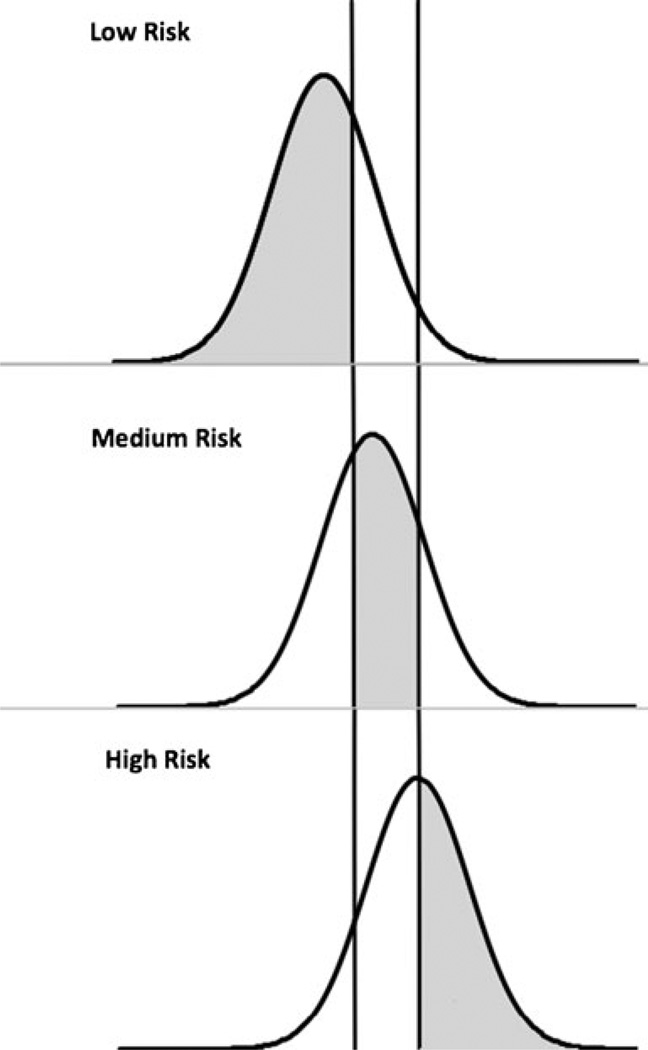
Pervasive biases in probability judgment render the probability scale a poor response mode for assessing risk judgments. By applying fuzzy trace theory, we used ordinal gist categories as a response mode, coupled with a signal detection model to assess risk judgments. The signal detection model is an extension of the familiar model used in binary choice paradigms. It provides three measures of discriminability-low versus medium risk, medium versus high risk, and low versus high risk-and two measures of response bias. We used the model to assess the effectiveness of BRCA Gist, an intelligent tutoring system designed to improve women's judgments and understanding of genetic risk for breast cancer. Participants were randomly assigned to the BRCA Gist intelligent tutoring system, the National Cancer Institute (NCI) Web pages, or a control group, and then they rated cases that had been developed using the Pedigree Assessment Tool and also vetted by medical experts. BRCA Gist participants demonstrated increased discriminability for all three risk categories, relative to the control group; the NCI group showed increased discriminability for two of the three levels. This result suggests that BRCA Gist best improved discriminability among genetic risk categories, and both BRCA Gist and the NCI website improved participants' ability to discriminate, rather than simply shifting their decision criterion. A spreadsheet that fits the model and compares parameters across the conditions can be downloaded from the Behavior Research Methods website and used in any research involving categorical responses.
概率判断中的普遍偏见使得概率量表成为评估风险判断的一种较差的反应模式。通过应用模糊跟踪理论,我们使用有序概要类别作为反应模式,并结合信号检测模型来评估风险判断。该信号检测模型是在二进制选择范式中使用的熟悉模型的扩展。它提供了三个可辨别性的度量值-低与中风险、中与高风险以及低与高风险-以及两个响应偏差的度量值。我们使用该模型评估了 BRCA 概要分析的有效性,BRCA 概要分析是一个旨在提高女性对乳腺癌遗传风险的判断和理解的智能辅导系统。参与者被随机分配到 BRCA 概要分析智能辅导系统、美国国家癌症研究所 (NCI) 网页或对照组,然后他们对使用家族评估工具开发并由医学专家审查的案例进行评分。BRCA 概要分析组的参与者在所有三个风险类别中都表现出了更高的可辨别性,与对照组相比;NCI 组在三个水平中的两个水平上表现出了更高的可辨别性。这一结果表明,BRCA 概要分析最能提高遗传风险类别之间的可辨别性,BRCA 概要分析和 NCI 网站都提高了参与者区分的能力,而不是简单地改变他们的决策标准。一个符合模型并比较条件下参数的电子表格可以从行为研究方法网站下载,并用于任何涉及类别响应的研究。