Department of Psychology and Program in Neuroscience, Florida State University, Tallahassee, Florida.
Biol Psychiatry. 2013 Nov 15;74(10):750-9. doi: 10.1016/j.biopsych.2013.04.027. Epub 2013 Jun 19.
Major depressive disorder afflicts up to 10% of adolescents. However, nearly 50% of those afflicted are considered nonresponsive to available treatments. Ketamine, a noncompetitive N-methyl-D-aspartate receptor antagonist has shown potential as a rapid-acting and long-lasting treatment for major depressive disorder in adults. Thus, the effectiveness and functional consequences of ketamine exposure during adolescence were explored.
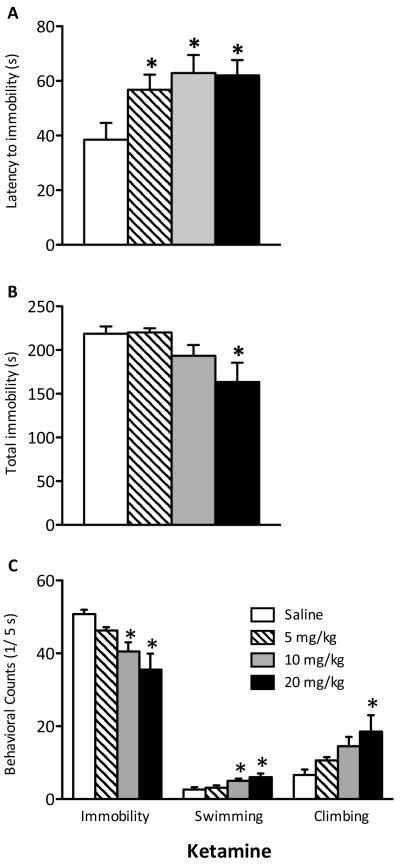
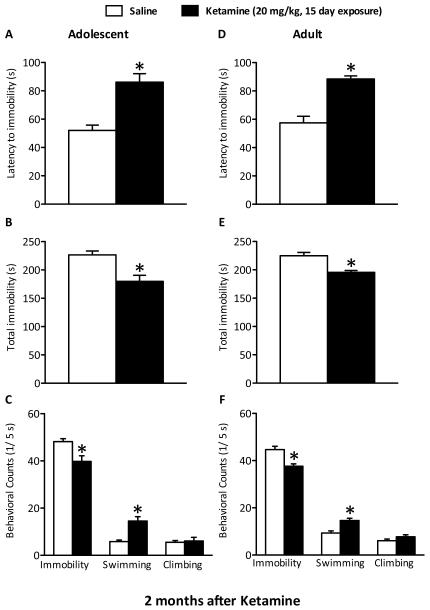
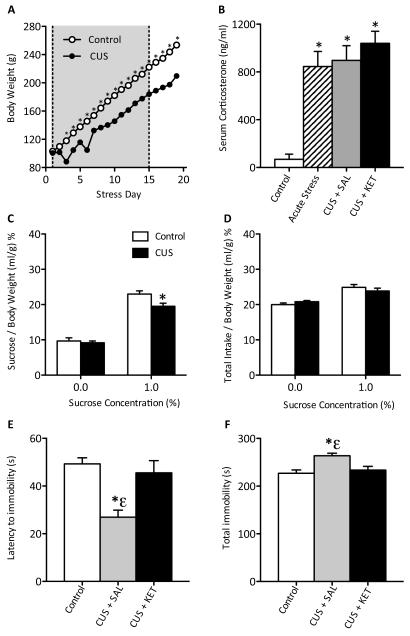
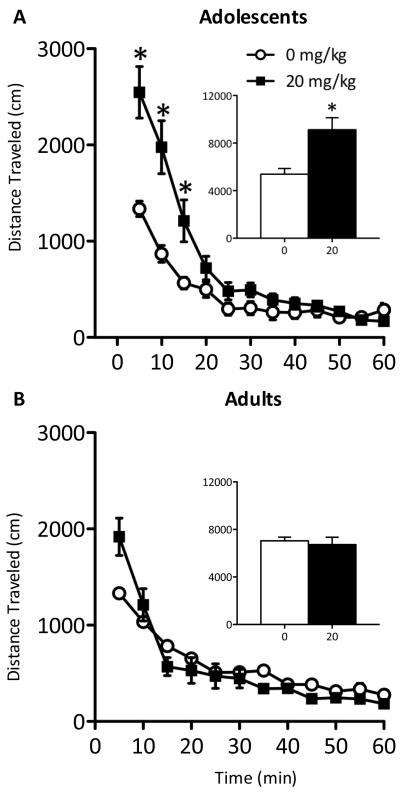
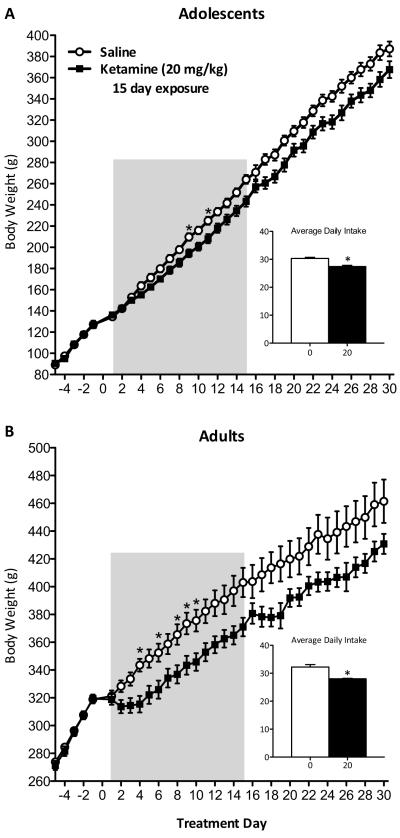
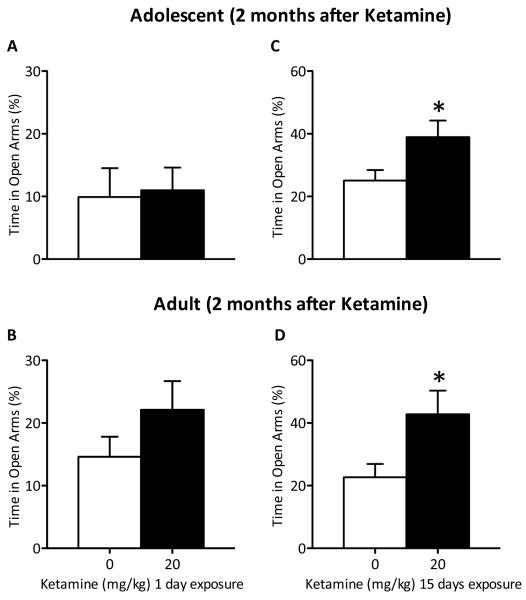
Adolescent male rats (postnatal day [PD] 35) received two ketamine (0, 5, 10, or 20 mg/kg) injections, 4 hours apart, after exposure to day 1 of the forced swim test (FST). The next day, rats were reexposed to the FST to assess ketamine-induced antidepressant-like responses. Separate groups were exposed to chronic unpredictable stress to confirm findings from the FST. After these initial experiments, adolescent naive rats were exposed to either 1 or 15 consecutive days (PD35-49) of ketamine (20 mg/kg) twice daily. Ketamine's influence on behavioral reactivity to rewarding (i.e., sucrose preference) and aversive (i.e., elevated plus-maze, FST) circumstances was then assessed 2 months after treatment. To control for age-dependent effects, adult rats (PD75-89) were exposed to identical experimental conditions.
Ketamine (20 mg/kg) reversed the chronic unpredictable stress-induced depression-like behaviors in the FST. Repeated ketamine exposure resulted in anxiolytic- and antidepressant-like responses 2 months after drug exposure. None of the ketamine doses used were capable of inducing drug-seeking behaviors as measured by place preference conditioning.
Repeated ketamine exposure induces enduring resilient-like responses regardless of age of exposure. These findings point to ketamine, and its repeated exposure, as a potentially useful antidepressant during adolescence.
重度抑郁症影响了多达 10%的青少年。然而,近 50%的患者被认为对现有治疗方法没有反应。氯胺酮是一种非竞争性 N-甲基-D-天冬氨酸受体拮抗剂,已显示出作为成人重度抑郁症快速起效和长效治疗的潜力。因此,研究了青春期接触氯胺酮的效果和功能后果。
青春期雄性大鼠(出生后第 35 天)在强迫游泳试验(FST)第 1 天暴露后 4 小时,接受两次氯胺酮(0、5、10 或 20mg/kg)注射,间隔 4 小时。第二天,大鼠再次暴露于 FST 中,以评估氯胺酮引起的抗抑郁样反应。单独的组暴露于慢性不可预测的应激中,以确认 FST 中的发现。在这些初步实验之后,青春期未处理的大鼠接受 1 或 15 天(PD35-49)的氯胺酮(20mg/kg)每日两次。然后评估氯胺酮对奖赏(即蔗糖偏好)和惩罚(即高架十字迷宫、FST)环境的行为反应的影响。2 个月后进行治疗。为了控制年龄相关的影响,成年大鼠(PD75-89)暴露于相同的实验条件下。
氯胺酮(20mg/kg)逆转了慢性不可预测应激引起的 FST 中的抑郁样行为。重复氯胺酮暴露导致药物暴露 2 个月后出现抗焦虑和抗抑郁样反应。使用的氯胺酮剂量均不能诱导药物寻求行为,如位置偏好条件。
重复氯胺酮暴露会产生持久的类似弹性的反应,而与暴露年龄无关。这些发现表明氯胺酮及其重复暴露可能是青春期有用的抗抑郁药。