Perlmutter Jason D, Qiao Cong, Hagan Michael F
Martin A Fisher School of Physics , Brandeis University , Waltham , United States.
Elife. 2013 Jun 14;2:e00632. doi: 10.7554/eLife.00632.
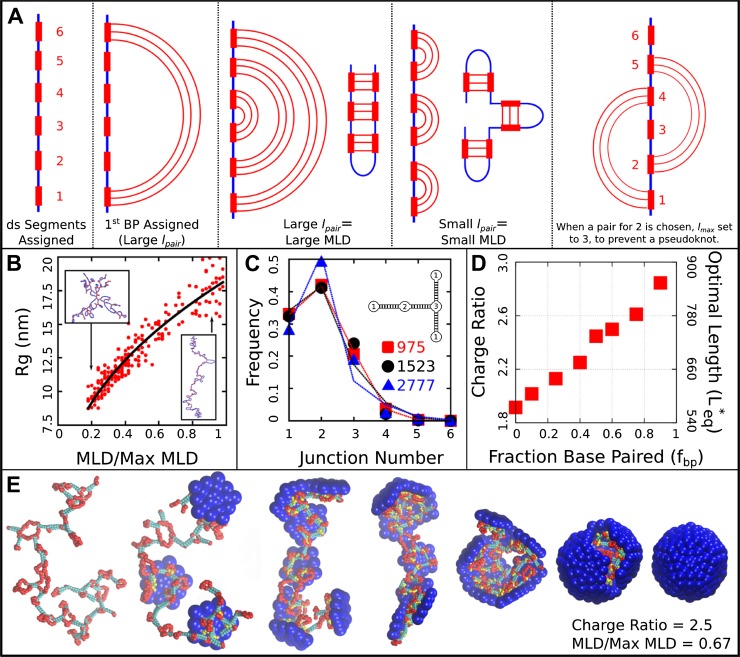
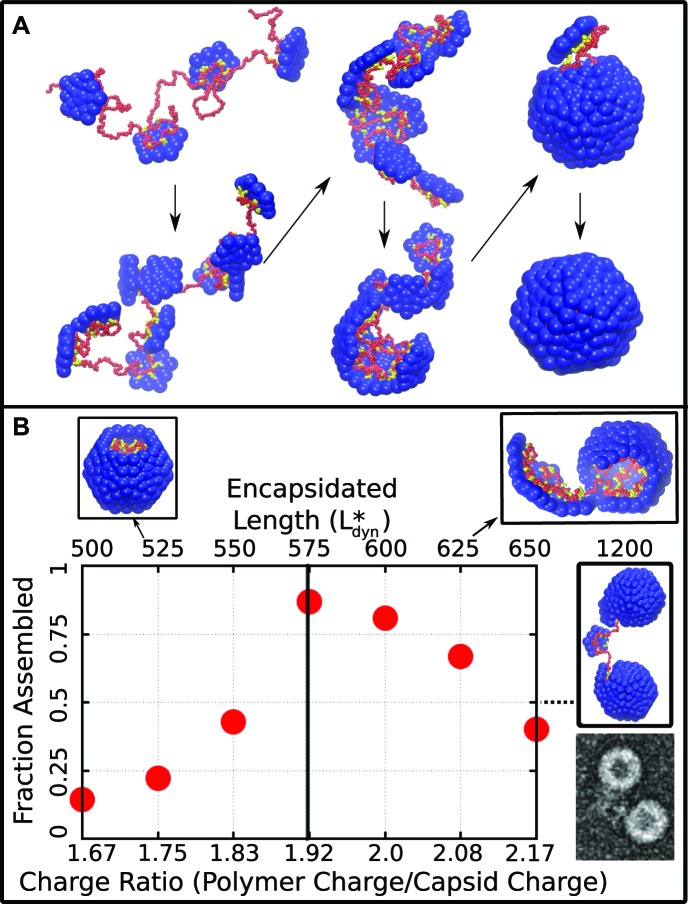
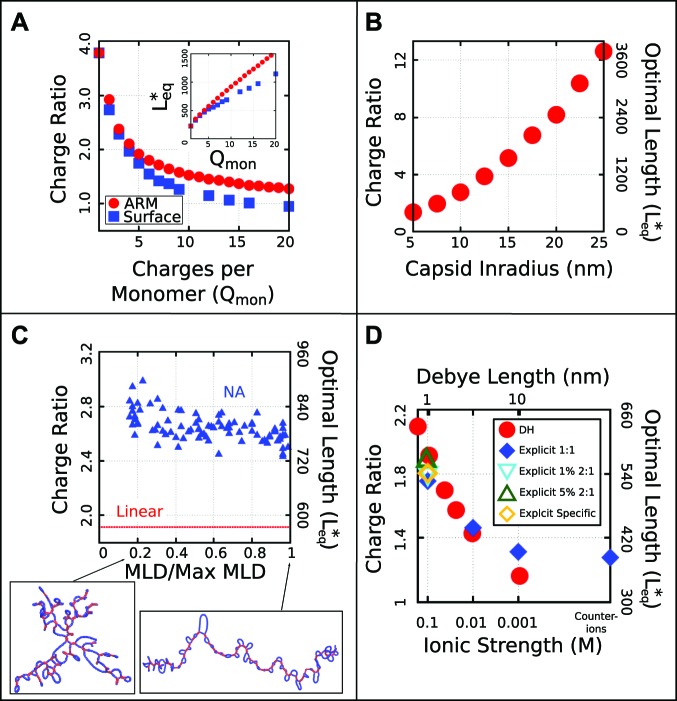
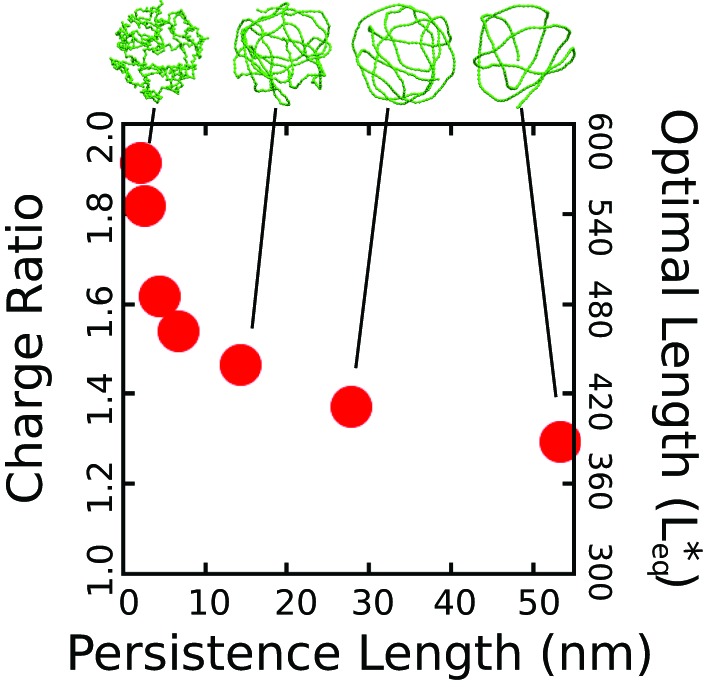
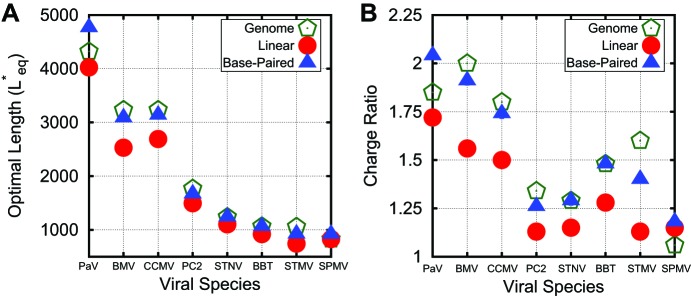
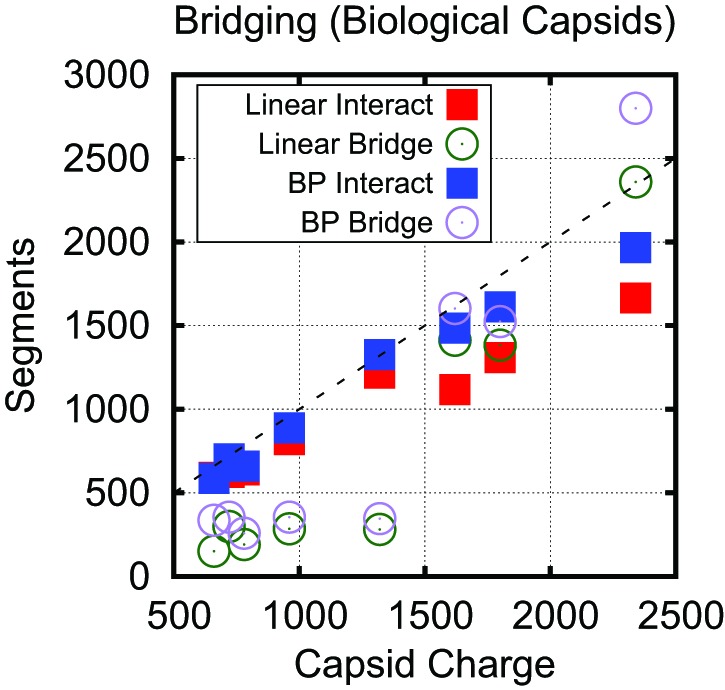
Understanding how virus capsids assemble around their nucleic acid (NA) genomes could promote efforts to block viral propagation or to reengineer capsids for gene therapy applications. We develop a coarse-grained model of capsid proteins and NAs with which we investigate assembly dynamics and thermodynamics. In contrast to recent theoretical models, we find that capsids spontaneously 'overcharge'; that is, the negative charge of the NA exceeds the positive charge on capsid. When applied to specific viruses, the optimal NA lengths closely correspond to the natural genome lengths. Calculations based on linear polyelectrolytes rather than base-paired NAs underpredict the optimal length, demonstrating the importance of NA structure to capsid assembly. These results suggest that electrostatics, excluded volume, and NA tertiary structure are sufficient to predict assembly thermodynamics and that the ability of viruses to selectively encapsidate their genomic NAs can be explained, at least in part, on a thermodynamic basis. DOI:http://dx.doi.org/10.7554/eLife.00632.001.
了解病毒衣壳如何围绕其核酸(NA)基因组组装,有助于推动阻止病毒传播或重新设计用于基因治疗的衣壳的相关研究。我们构建了一个衣壳蛋白和核酸的粗粒度模型,用以研究组装动力学和热力学。与近期的理论模型不同,我们发现衣壳会自发地“过度带电”,即核酸的负电荷超过衣壳上的正电荷。将该模型应用于特定病毒时,最佳核酸长度与天然基因组长度紧密对应。基于线性聚电解质而非碱基配对核酸的计算结果低估了最佳长度,这表明核酸结构对衣壳组装具有重要意义。这些结果表明,静电作用、排除体积和核酸三级结构足以预测组装热力学,并且病毒选择性包裹其基因组核酸的能力至少部分可以从热力学角度得到解释。DOI:http://dx.doi.org/10.7554/eLife.00632.001 。