School of Life Sciences, The Chinese University of Hong Kong, Shatin, Hong Kong.
PLoS One. 2013 Jun 14;8(6):e66426. doi: 10.1371/journal.pone.0066426. Print 2013.
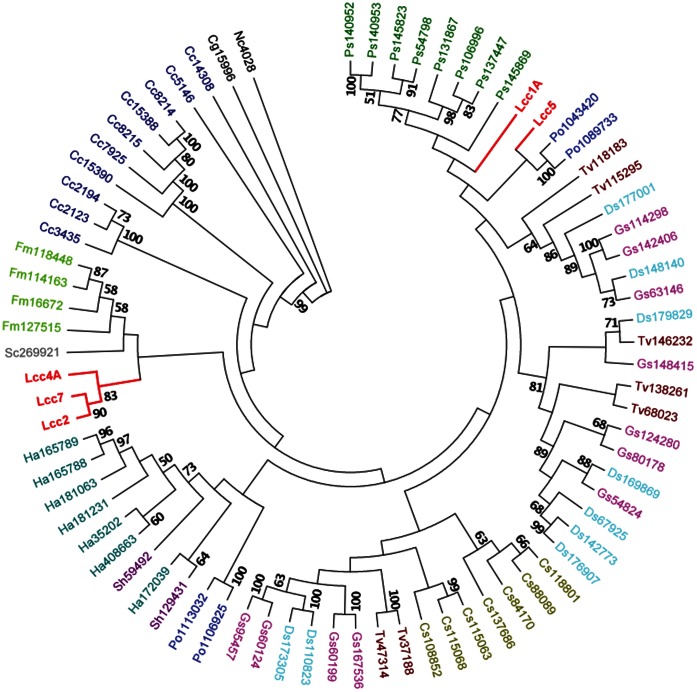
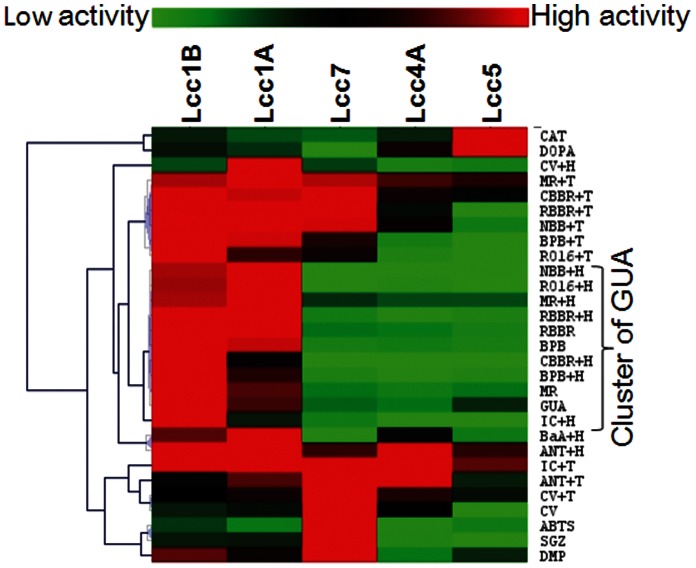
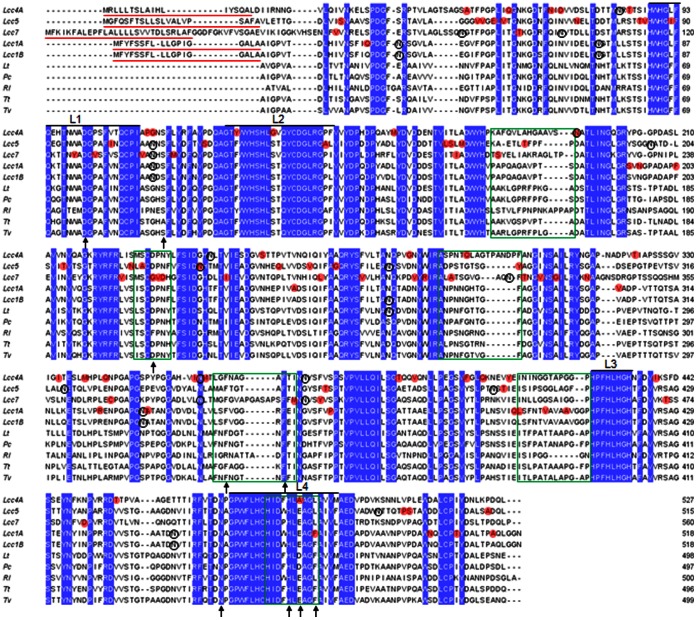
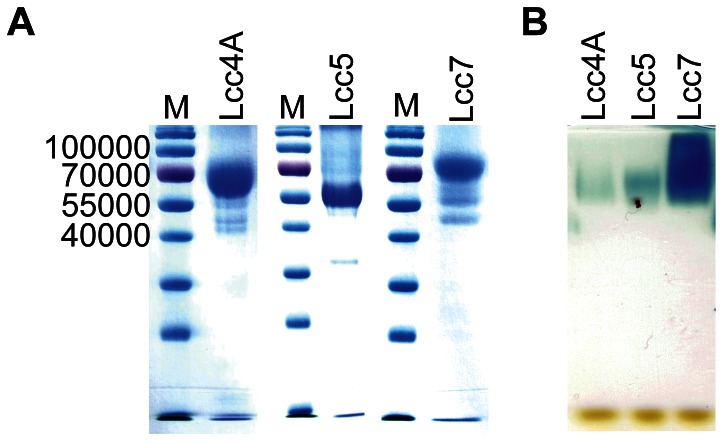
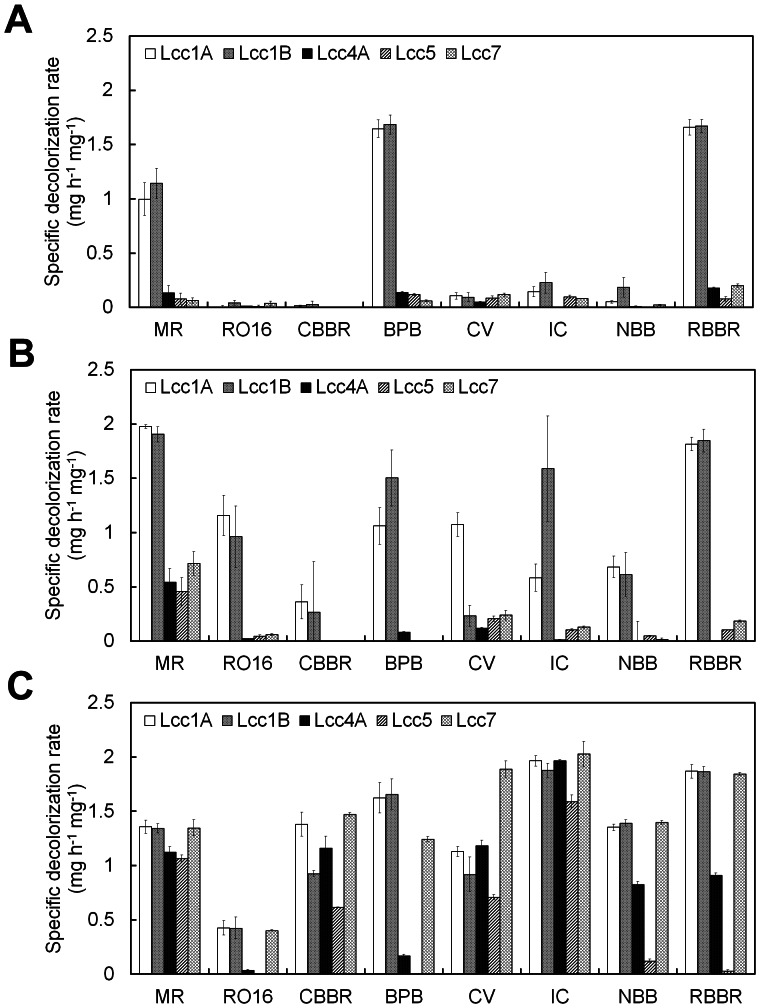
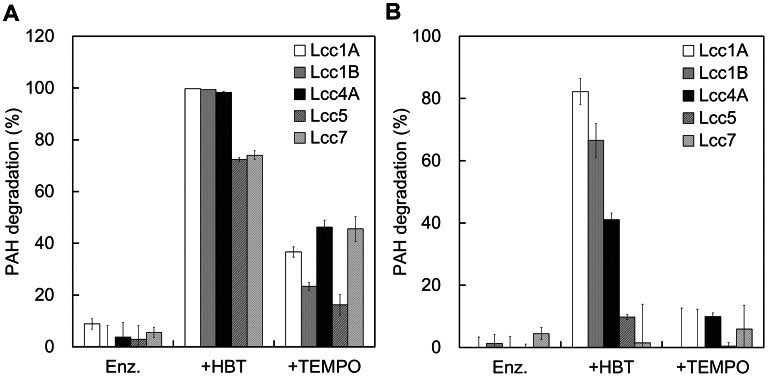
Laccases are versatile biocatalysts for the bioremediation of various xenobiotics, including dyes and polyaromatic hydrocarbons. However, current sources of new enzymes, simple heterologous expression hosts and enzymatic information (such as the appropriateness of common screening substrates on laccase engineering) remain scarce to support efficient engineering of laccase for better "green" applications. To address the issue, this study began with cloning the laccase family of Lentinula edodes. Three laccases perfectio sensu stricto (Lcc4A, Lcc5, and Lcc7) were then expressed from Pichia pastoris, characterized and compared with the previously reported Lcc1A and Lcc1B in terms of kinetics, stability, and degradation of dyes and polyaromatic hydrocarbons. Lcc7 represented a novel laccase, and it exhibited both the highest catalytic efficiency (assayed with 2,2'-azino-bis(3-ethylbenzothiazoline-6-sulfonic acid) [ABTS]) and thermostability. However, its performance on "green" applications surprisingly did not match the activity on the common screening substrates, namely, ABTS and 2,6-dimethoxyphenol. On the other hand, correlation analyses revealed that guaiacol is much better associated with the decolorization of multiple structurally different dyes than are the two common screening substrates. Comparison of the oxidation chemistry of guaiacol and phenolic dyes, such as azo dyes, further showed that they both involve generation of phenoxyl radicals in laccase-catalyzed oxidation. In summary, this study concluded a robust expression platform of L. edodes laccases, novel laccases, and an indicative screening substrate, guaiacol, which are all essential fundamentals for appropriately driving the engineering of laccases towards more efficient "green" applications.
漆酶是一种多功能生物催化剂,可用于生物修复各种异源生物,包括染料和多环芳烃。然而,目前新酶的来源、简单的异源表达宿主和酶学信息(例如在漆酶工程中常用筛选底物的适宜性)仍然稀缺,无法支持对漆酶进行有效的工程改造,以实现更好的“绿色”应用。为了解决这个问题,本研究首先从香菇中克隆了漆酶家族。然后,从毕赤酵母中表达了三种漆酶(Lcc4A、Lcc5 和 Lcc7),并对其进行了表征,并与之前报道的 Lcc1A 和 Lcc1B 在动力学、稳定性和染料及多环芳烃的降解方面进行了比较。Lcc7 是一种新型漆酶,具有最高的催化效率(用 2,2'-联氮-双(3-乙基苯并噻唑啉-6-磺酸)[ABTS]测定)和热稳定性。然而,它在“绿色”应用方面的表现却出人意料地与常用的筛选底物 ABTS 和 2,6-二甲氧基苯酚不匹配。另一方面,相关分析表明,与两种常用的筛选底物相比,愈创木酚与多种结构不同的染料的脱色更为相关。愈创木酚和酚类染料(如偶氮染料)的氧化化学比较进一步表明,它们都涉及漆酶催化氧化中生成苯氧自由基。综上所述,本研究得出了一个稳健的香菇漆酶表达平台、新型漆酶和一个指示性的筛选底物愈创木酚,这些都是适当推动漆酶工程向更高效的“绿色”应用发展的必要基础。