Centre de Recherche, Institut Universitaire de Cardiologie et de Pneumologie de Québec, and Laval University, Quebec City, Quebec, Canada.
PLoS One. 2013 Jun 14;8(6):e66433. doi: 10.1371/journal.pone.0066433. Print 2013.
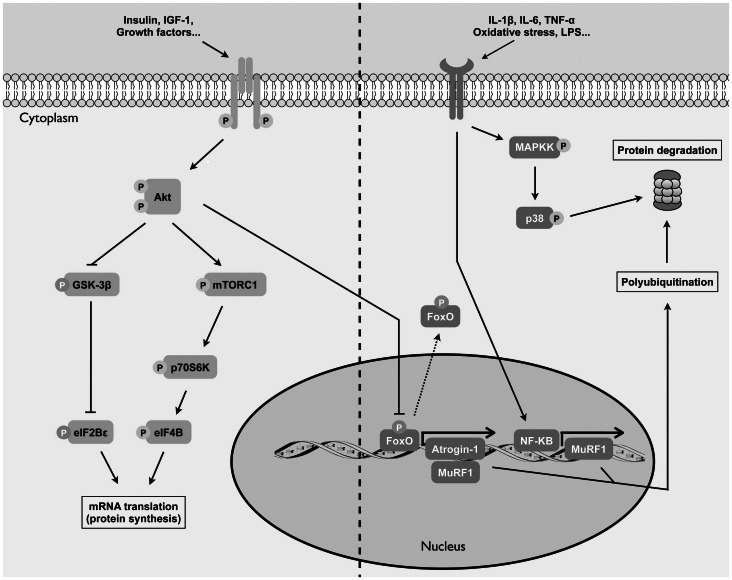
Skeletal muscle dysfunction is common in chronic obstructive pulmonary disease (COPD), a disease mainly caused by chronic cigarette use. An important proportion of patients with COPD have decreased muscle mass, suggesting that chronic cigarette smoke exposure may interfere with skeletal muscle cellular equilibrium. Therefore, the main objective of this study was to investigate the kinetic of the effects that cigarette smoke exposure has on skeletal muscle cell signaling involved in protein homeostasis and to assess the reversibility of these effects.
A mouse model of cigarette smoke exposure was used to assess skeletal muscle changes. BALB/c mice were exposed to cigarette smoke or room air for 8 weeks, 24 weeks or 24 weeks followed by 60 days of cessation. The gastrocnemius and soleus muscles were collected and the activation state of key mediators involved in protein synthesis and degradation was assessed.
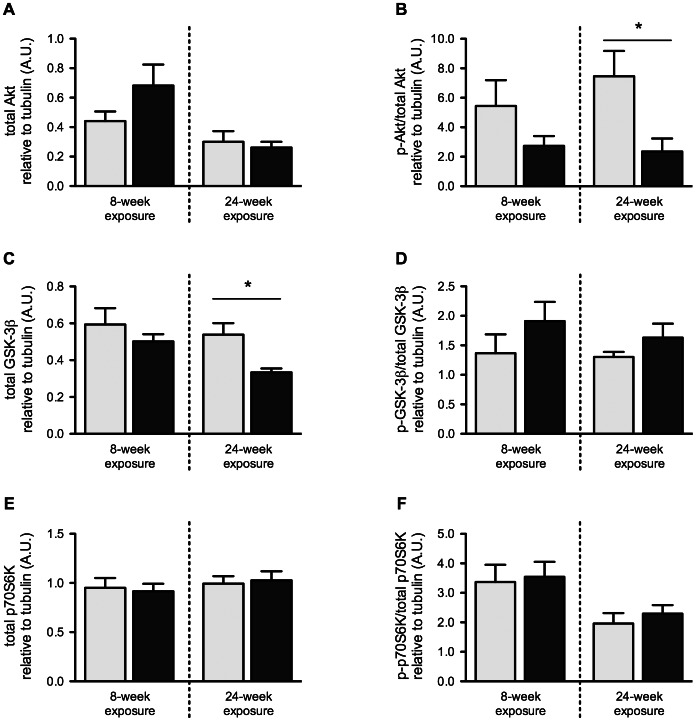
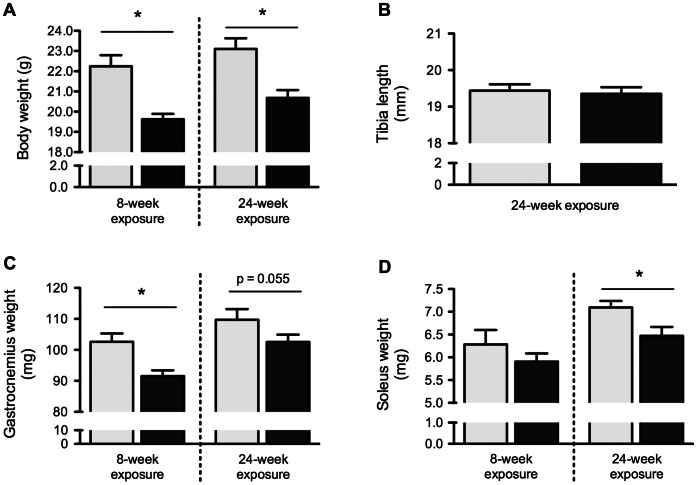
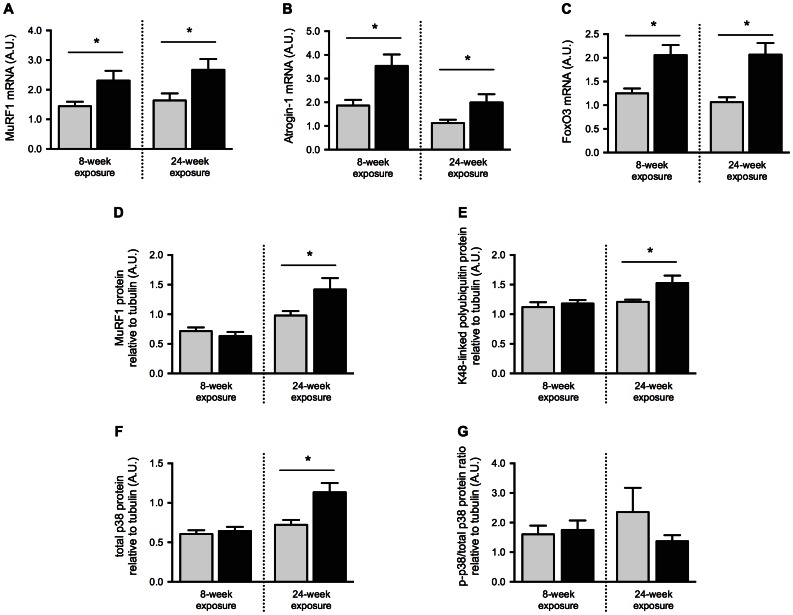
Gastrocnemius and soleus were smaller in mice exposed to cigarette smoke for 8 and 24 weeks compared to room air exposed animals. Pro-degradation proteins were induced at the mRNA level after 8 and 24 weeks. Twenty-four weeks of cigarette smoke exposure induced pro-degradation proteins and reduced Akt phosphorylation and glycogen synthase kinase-3β quantity. A 60-day smoking cessation period reversed the cell signaling alterations induced by cigarette smoke exposure.
Repeated cigarette smoke exposure induces reversible muscle signaling alterations that are dependent on the duration of the cigarette smoke exposure. These results highlights a beneficial aspect associated with smoking cessation.
骨骼肌功能障碍在慢性阻塞性肺疾病(COPD)中很常见,这种疾病主要由慢性吸烟引起。相当一部分 COPD 患者的肌肉量减少,这表明慢性吸烟可能会干扰骨骼肌细胞的平衡。因此,本研究的主要目的是研究吸烟暴露对涉及蛋白质平衡的骨骼肌细胞信号的影响的动力学,并评估这些影响的可逆性。
使用吸烟暴露的小鼠模型来评估骨骼肌变化。BALB/c 小鼠暴露于香烟烟雾或室内空气 8 周、24 周或 24 周后再停止 60 天。收集腓肠肌和比目鱼肌,并评估参与蛋白质合成和降解的关键介质的激活状态。
与暴露于室内空气的动物相比,暴露于香烟烟雾 8 周和 24 周的小鼠的腓肠肌和比目鱼肌更小。8 周和 24 周后,促降解蛋白在 mRNA 水平上被诱导。24 周的吸烟暴露诱导了促降解蛋白,降低了 Akt 磷酸化和糖原合酶激酶-3β的数量。60 天的戒烟期逆转了吸烟暴露引起的细胞信号改变。
反复吸烟暴露会引起可逆转的肌肉信号改变,这取决于吸烟暴露的持续时间。这些结果突出了与戒烟相关的有益方面。