Mechanobiology Institute, National University of Singapore, Singapore.
Liver Int. 2013 Oct;33(9):1386-97. doi: 10.1111/liv.12231. Epub 2013 Jun 26.
BACKGROUND & AIMS: A fenestrated phenotype is characteristic of liver sinusoidal endothelial cells (LSECs), but liver sinusoids become defenestrated during fibrosis and other liver diseases. Thrombospondin-1 (TSP1) is a matrix glycoprotein with pro-fibrotic effects, and the CD47-binding fragment of TSP1 also has anti-angiogenic effects in endothelial cells. We hypothesized that the CD47-binding fragment of TSP1 could induce defenestration in LSECs through the Rho-Rho kinase (ROCK)-myosin pathway.
Freshly isolated rat LSECs were treated with TSP1 or CD47-binding peptides of TSP1. LSEC fenestration was assessed with scanning electron microscopy, and myosin phosphorylation was assessed with immuno-fluorescence.
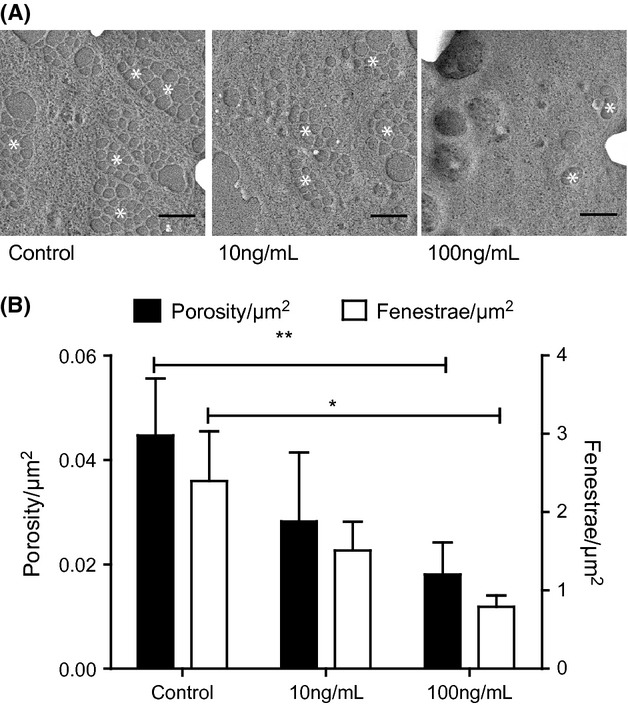
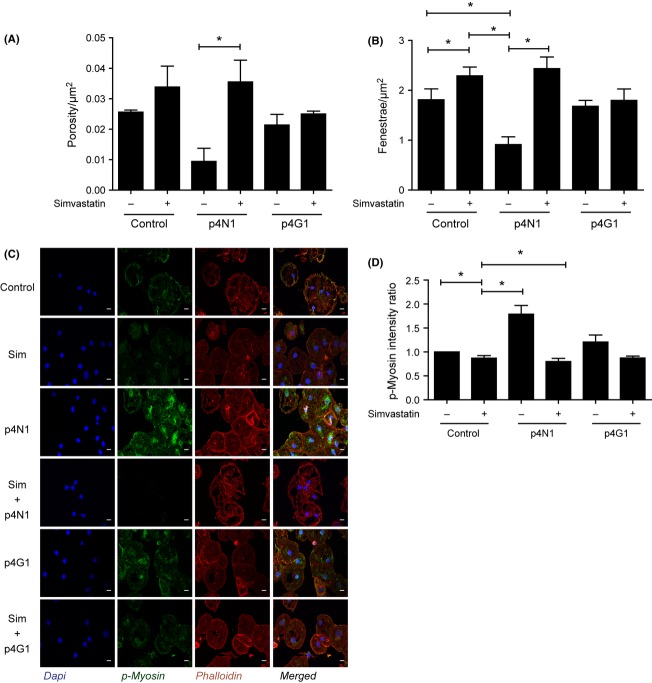
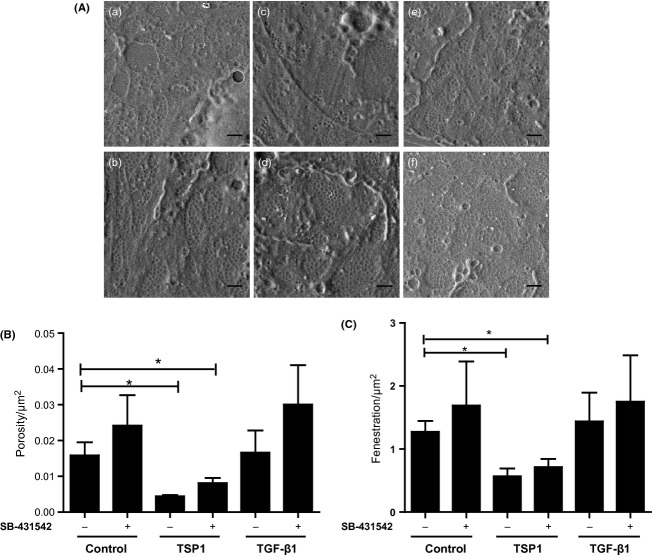
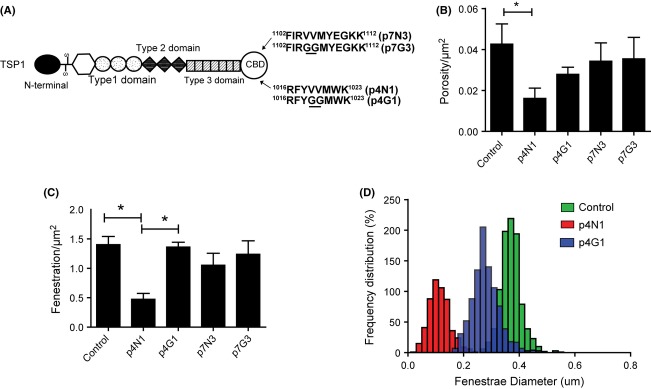
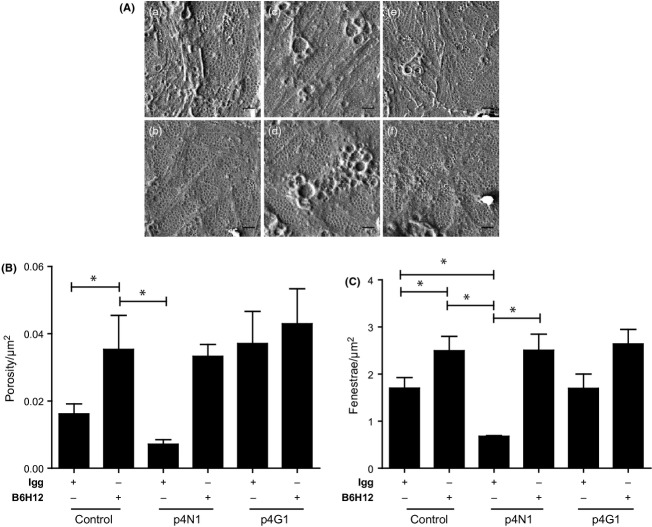
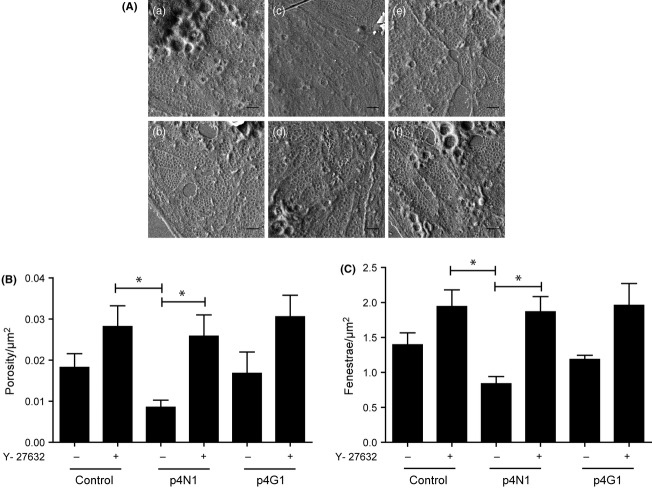
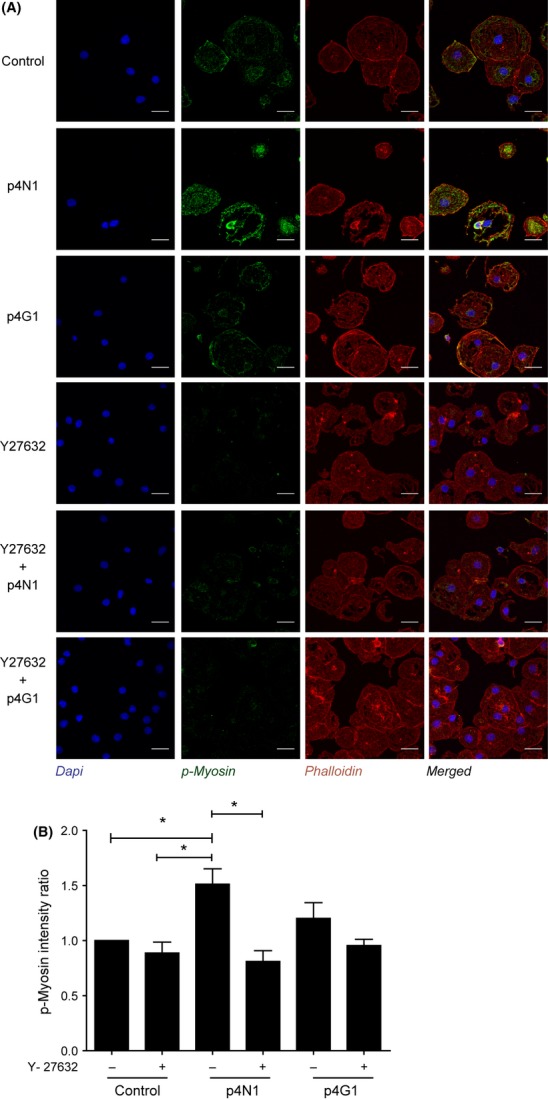
Treating LSECs with TSP1 caused a dose-dependent loss of fenestrae, and this effect could not be blocked by SB-431542, the TGF-β1 receptor inhibitor. A CD47-binding fragment of TSP1, p4N1, was able to induce defenestration, and a CD47-blocking antibody, B6H12, was able to suppress p4N1-induced defenestration. The p4N1 fragment also caused contraction of fenestra size, correlated with an increase in myosin activation. Pretreatment with Y-237642 (a ROCK inhibitor) prevented p4N1-induced myosin activation and fenestrae decrease. Simvastatin has also been shown to antagonize Rho-ROCK signalling, and we found that simvastatin pretreatment protected LSECs from p4N1-induced myosin activation and defenestration.
We conclude that CD47 signals through the Rho-ROCK-myosin pathway to induce defenestration in LSECs. In addition, our results show that simvastatin and Y-237642 have a beneficial impact on fenestration in vitro, providing an additional explanation for the efficacy of these compounds for regression of liver fibrosis.
窗孔表型是肝窦内皮细胞(LSEC)的特征,但在纤维化和其他肝病中,肝窦会失去窗孔。血小板反应蛋白-1(TSP1)是一种具有促纤维化作用的基质糖蛋白,TSP1 的 CD47 结合片段在血管内皮细胞中也具有抗血管生成作用。我们假设 TSP1 的 CD47 结合片段可以通过 Rho- Rho 激酶(ROCK)-肌球蛋白途径诱导 LSEC 去窗孔化。
用 TSP1 或 TSP1 的 CD47 结合肽处理新鲜分离的大鼠 LSEC。用扫描电子显微镜评估 LSEC 的窗孔化,用免疫荧光法评估肌球蛋白磷酸化。
用 TSP1 处理 LSEC 会导致窗孔的剂量依赖性丧失,而这种作用不能被 TGF-β1 受体抑制剂 SB-431542 阻断。TSP1 的 CD47 结合片段 p4N1 能够诱导去窗孔化,而 CD47 阻断抗体 B6H12 能够抑制 p4N1 诱导的去窗孔化。p4N1 片段还导致窗孔大小收缩,与肌球蛋白激活增加相关。用 Y-237642(ROCK 抑制剂)预处理可防止 p4N1 诱导的肌球蛋白激活和窗孔减少。辛伐他汀也已被证明可拮抗 Rho-ROCK 信号转导,我们发现辛伐他汀预处理可防止 p4N1 诱导的肌球蛋白激活和去窗孔化。
我们的结论是,CD47 通过 Rho-ROCK-肌球蛋白途径信号传导诱导 LSEC 去窗孔化。此外,我们的结果表明,辛伐他汀和 Y-237642 对体外窗孔化具有有益影响,为这些化合物在肝纤维化消退中的疗效提供了额外的解释。