Phillips Rhiannon, Spears Melissa R, Montgomery Alan A, Millings Abigail, Sayal Kapil, Stallard Paul
Department for Health, University of Bath, 22-23 Eastwood, Claverton Down, Bath BA2 7AY, UK.
BMC Public Health. 2013 Jun 22;13:604. doi: 10.1186/1471-2458-13-604.
Self-harm is common in adolescents, but it is often unreported and undetected. Available screening tools typically ask directly about self-harm and suicidal ideation. Although in an ideal world, direct enquiry and open discussion around self-harm would be advocated, non-psychiatric professionals in community settings are often reluctant to ask about this directly and disclosure can be met with feeling of intense anxiety. Training non-specialist staff to directly ask about self-harm has limited effects suggesting that alternative approaches are required. This study investigated whether a targeted analysis of negative emotions and self-esteem could identify young adolescents at risk of self-harm in community settings.
Data were collected as part of a clinical trial from young people in school years 8-11 (aged 12-16) at eight UK secondary schools (N = 4503 at baseline, N = 3263 in prospective analysis). The Short Mood and Feelings Questionnaire, Revised Child Anxiety and Depression Scale, Rosenberg Self-Esteem Scale, personal failure (Children's Automatic Thoughts Scale), and two items on self-harm were completed at baseline, 6 and 12 months.
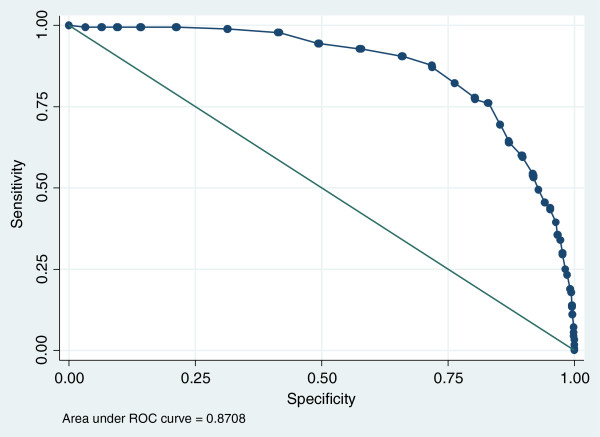
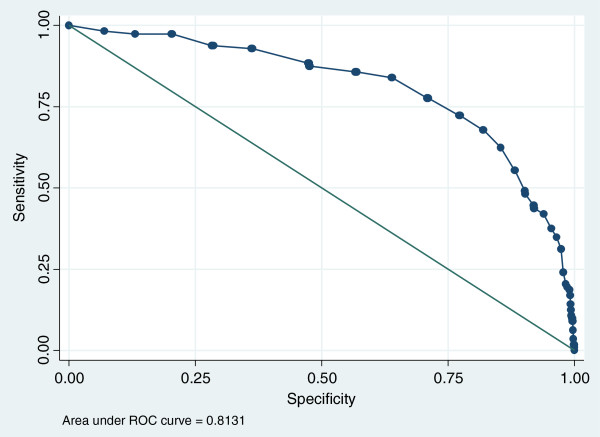
Following a process of Principal Components Analysis, item reduction, and logistic regression analysis, three internally reliable factors were identified from the original measures that were independently associated with current and future self-harm; personal failure (3 items), physical symptoms of depression/anxiety (6 items), positive self-esteem (5 items). The summed score of these 14 items had good accuracy in identifying current self-harm (AUC 0.87 girls, 0.81 boys) and at six months for girls (0.81), and fair accuracy at six months for boys (AUC 0.74) and 12 months for girls (AUC 0.77).
A brief and targeted assessment of negative emotions and self-esteem, focusing on factors that are strongly associated with current and future self-harm, could potentially be used to help identify adolescents who are at risk in community settings. Further research should assess the psychometric properties of the items identified and test this approach in more diverse community contexts.
青少年自残行为很常见,但往往未被报告和发现。现有的筛查工具通常直接询问自残和自杀意念。虽然在理想情况下,提倡围绕自残进行直接询问和公开讨论,但社区环境中的非精神科专业人员往往不愿直接询问此事,而披露这一问题可能会引发强烈的焦虑情绪。培训非专业工作人员直接询问自残问题效果有限,这表明需要采用其他方法。本研究调查了对负面情绪和自尊进行有针对性的分析是否能够识别社区环境中存在自残风险的青少年。
作为一项临床试验的一部分,收集了英国八所中学8至11年级(年龄12至16岁)青少年的数据(基线时N = 4503,前瞻性分析时N = 3263)。在基线、6个月和12个月时,完成了简版情绪与感受问卷、修订版儿童焦虑抑郁量表、罗森伯格自尊量表、个人失败感(儿童自动思维量表)以及两个关于自残的项目。
经过主成分分析、项目简化和逻辑回归分析过程,从原始测量中识别出三个内部可靠的因素,它们与当前和未来的自残行为独立相关;个人失败感(3个项目)、抑郁/焦虑的身体症状(6个项目)、积极自尊(5个项目)。这14个项目的总分在识别当前自残行为方面具有良好的准确性(女孩的曲线下面积为0.87,男孩为0.81),女孩在6个月时的准确性良好(0.81),男孩在6个月时的准确性一般(曲线下面积为0.74),女孩在12个月时的准确性一般(曲线下面积为0.77)。
对负面情绪和自尊进行简短且有针对性的评估,关注与当前和未来自残行为密切相关的因素,可能有助于识别社区环境中处于风险的青少年。进一步的研究应评估所识别项目的心理测量特性,并在更多样化的社区环境中测试这种方法。