Chester Rachel, Shepstone Lee, Lewis Jeremy S, Jerosch-Herold Christina
BMC Musculoskelet Disord. 2013 Jun 21;14:192. doi: 10.1186/1471-2474-14-192.
Shoulder pain affects all ages, with a lifetime prevalence of one in three. The most effective treatment is not known. Physiotherapy is often recommended as the first choice of treatment. At present, it is not possible to identify, from the initial physiotherapy assessment, which factors predict the outcome of physiotherapy for patients with shoulder pain. The primary objective of this study is to identify which patient characteristics and baseline measures, typically assessed at the first physiotherapy appointment, are related to the functional outcome of shoulder pain 6 weeks and 6 months after starting physiotherapy treatment.
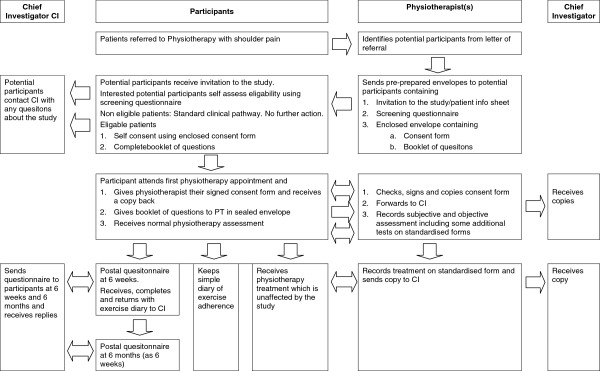
METHODS/DESIGN: Participants with musculoskeletal shoulder pain of any duration will be recruited from participating physiotherapy departments. For this longitudinal cohort study, the participants care pathway, including physiotherapy treatment will be therapist determined.
This study may offer service users and providers with guidance to help identify whether or not physiotherapy is likely to be of benefit. Clinicians may have some direction as to what key factors indicate a patient's likely response to physiotherapy.
肩痛影响所有年龄段的人群,终生患病率为三分之一。目前尚不清楚最有效的治疗方法。物理治疗常被推荐为首选治疗方法。目前,从最初的物理治疗评估中,无法确定哪些因素可预测肩痛患者物理治疗的效果。本研究的主要目的是确定哪些患者特征和基线测量指标(通常在首次物理治疗预约时进行评估)与开始物理治疗后6周和6个月时肩痛的功能结局相关。
方法/设计:将从参与研究的物理治疗科室招募患有任何持续时间的肌肉骨骼性肩痛的参与者。对于这项纵向队列研究,参与者的护理路径,包括物理治疗,将由治疗师确定。
本研究可能为服务使用者和提供者提供指导,以帮助确定物理治疗是否可能有益。临床医生可能会得到一些关于哪些关键因素表明患者可能对物理治疗有反应的指导。