Department of Psychology and Neuroscience, University of Colorado Boulder, CO, USA.
Front Psychol. 2013 Jun 19;4:355. doi: 10.3389/fpsyg.2013.00355. eCollection 2013.
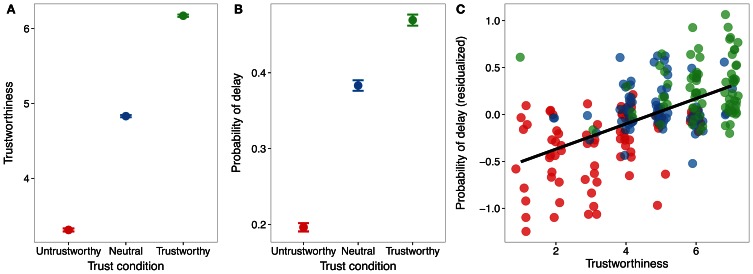
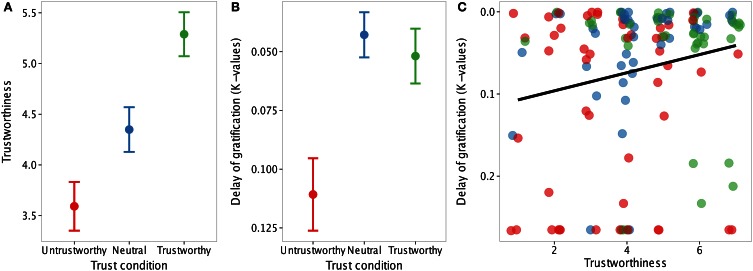
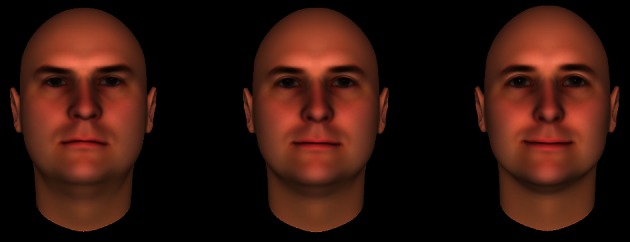
Delaying gratification is hard, yet predictive of important life outcomes, such as academic achievement and physical health. Prominent theories focus on the role of self-control, hypersensitivity to immediate rewards, and the cost of time spent waiting. However, delaying gratification may also require trust in people delivering future rewards as promised. To test the role of social trust, participants were presented with character vignettes and faces that varied in trustworthiness, and then choose between hypothetical smaller immediate or larger delayed rewards from those characters. Across two experiments, participants were less willing to wait for delayed rewards from less trustworthy characters, and perceived trustworthiness predicted willingness to delay gratification. These findings provide the first demonstration of a causal role for social trust in willingness to delay gratification, independent of other relevant factors, such as self-control or reward history. Thus, delaying gratification requires choosing not only a later reward, but a reward that is potentially less likely to be delivered, when there is doubt about the person promising it. Implications of this work include the need to revise prominent theories of delay of gratification, and new directions for interventions with populations characterized by impulsivity.
延迟满足感是困难的,但它可以预测重要的生活结果,例如学业成就和身体健康。有影响力的理论侧重于自我控制的作用、对即时奖励的过度敏感以及等待所花费的时间成本。然而,延迟满足感也可能需要信任那些承诺给予未来奖励的人。为了测试社会信任的作用,参与者被呈现了具有不同可信度的角色小插曲和面孔,然后从这些角色中选择假设的较小即时奖励或较大延迟奖励。在两项实验中,参与者不太愿意等待来自不太值得信赖的角色的延迟奖励,并且感知到的可信度预测了延迟满足感的意愿。这些发现首次证明了社会信任在延迟满足感意愿中的因果作用,独立于其他相关因素,例如自我控制或奖励历史。因此,延迟满足感不仅需要选择一个更晚的奖励,还需要选择一个可能不太可能兑现的奖励,当对承诺者存在疑虑时。这项工作的意义包括需要修改延迟满足感的主流理论,以及针对冲动型人群的干预措施的新方向。