Imam Shahnawaz, Elagin Raya B, Jaume Juan Carlos
Division of Endocrinology, Diabetes and Metabolism, Department of Medicine, School of Medicine and Veterans Affairs Medical Center, University of Wisconsin-Madison, Madison, WI, USA.
Mol Vis. 2013 Jun 8;19:1259-67. Print 2013.
Patients with Type 1 Diabetes (T1D) are at high risk of developing lacrimal gland dysfunction. We have developed a new model of human T1D using double-transgenic mice carrying HLA-DQ8 diabetes-susceptibility haplotype instead of mouse MHC-class II and expressing the human beta cell autoantigen Glutamic Acid Decarboxylase in pancreatic beta cells. We report here the development of dry eye syndrome (DES) after diabetes induction in our humanized transgenic model.
Double-transgenic mice were immunized with DNA encoding human GAD65, either naked or in adenoviral vectors, to induce T1D. Mice monitored for development of diabetes developed lacrimal gland dysfunction.
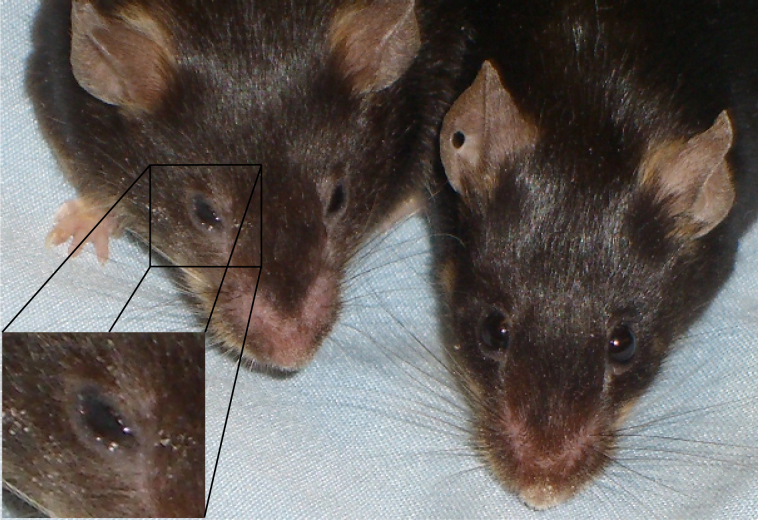
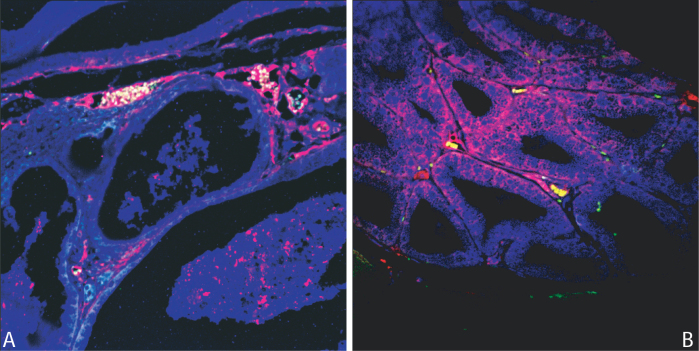
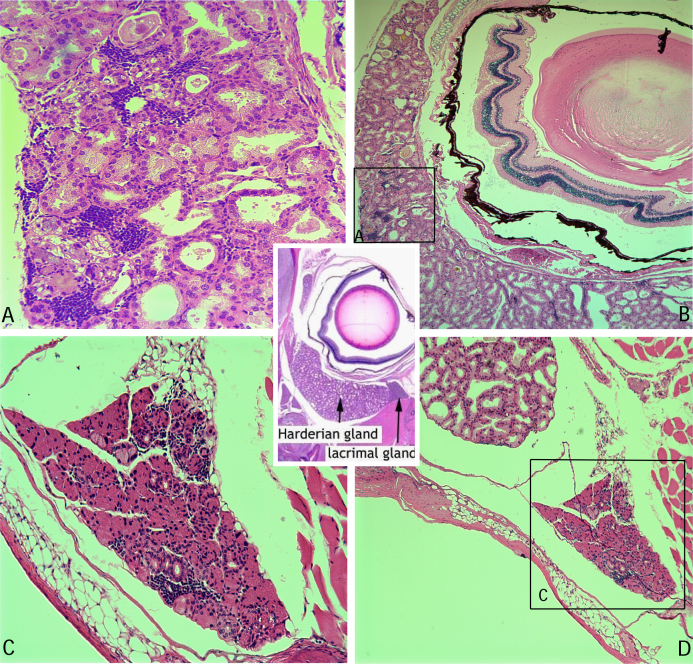
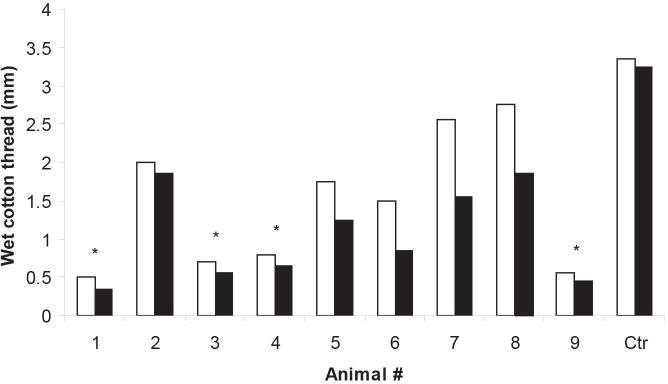
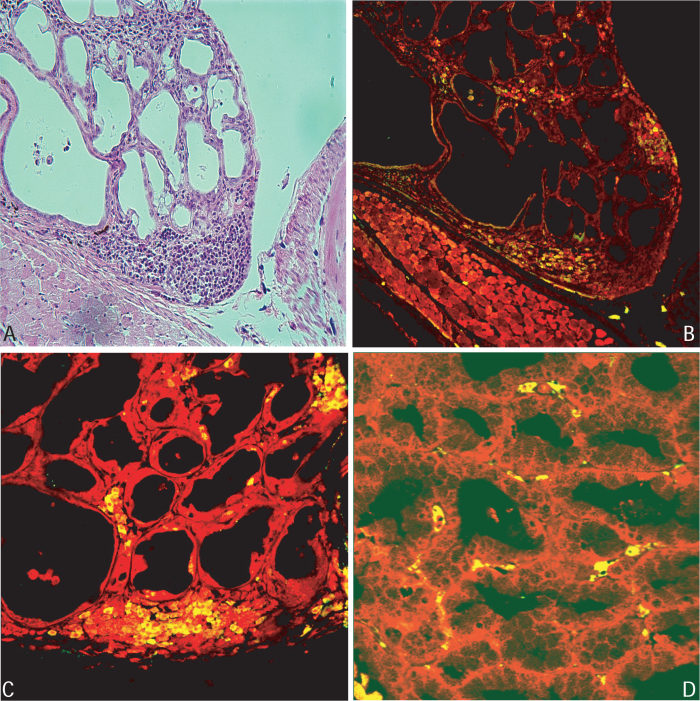
Animals developed lacrimal gland disease (classically associated with diabetes in Non Obese Diabetic [NOD] mice and with T1D in humans) as they developed glucose intolerance and diabetes. Animals manifested obvious clinical signs of dry eye syndrome (DES), from corneal erosions to severe keratitis. Histological studies of peri-bulbar areas revealed lymphocytic infiltration of glandular structures. Indeed, infiltrative lesions were observed in lacrimal/Harderian glands within weeks following development of glucose intolerance. Lesions ranged from focal lymphocytic infiltration to complete acinar destruction. We observed a correlation between the severity of the pancreatic infiltration and the severity of the ocular disease.
Our results demonstrate development of DES in association with antigen-specific insulitis and diabetes following immunization with clinically relevant human autoantigen concomitantly expressed in pancreatic beta cells of diabetes-susceptible mice. As in the NOD mouse model and as in human T1D, our animals developed diabetes-associated DES. This specific finding stresses the relevance of our model for studying these human diseases. We believe our model will facilitate studies to prevent/treat diabetes-associated DES as well as human diabetes.
1型糖尿病(T1D)患者发生泪腺功能障碍的风险很高。我们利用携带HLA - DQ8糖尿病易感单倍型而非小鼠MHC - II类分子且在胰腺β细胞中表达人β细胞自身抗原谷氨酸脱羧酶的双转基因小鼠,开发了一种新的人类T1D模型。我们在此报告在我们的人源化转基因模型中诱导糖尿病后干眼症综合征(DES)的发生情况。
用编码人GAD65的DNA(裸DNA或腺病毒载体形式)免疫双转基因小鼠以诱导T1D。监测糖尿病发生情况的小鼠出现了泪腺功能障碍。
随着动物出现葡萄糖不耐受和糖尿病,它们发生了泪腺疾病(经典地与非肥胖糖尿病[ NOD ]小鼠的糖尿病以及人类的T1D相关)。动物表现出干眼症综合征(DES)的明显临床体征,从角膜糜烂到严重角膜炎。球周区域的组织学研究显示腺结构有淋巴细胞浸润。事实上,在出现葡萄糖不耐受后的数周内,在泪腺/哈德氏腺中观察到浸润性病变。病变范围从局灶性淋巴细胞浸润到腺泡完全破坏。我们观察到胰腺浸润的严重程度与眼部疾病的严重程度之间存在相关性。
我们的结果表明,在用在糖尿病易感小鼠的胰腺β细胞中同时表达的临床相关人自身抗原免疫后,DES与抗原特异性胰岛炎和糖尿病相关联地发生。与NOD小鼠模型和人类T1D一样,我们的动物发生了与糖尿病相关的DES。这一特定发现强调了我们的模型对于研究这些人类疾病的相关性。我们相信我们的模型将有助于开展预防/治疗与糖尿病相关的DES以及人类糖尿病的研究。