Gui Jiang, Moore Jason H, Williams Scott M, Andrews Peter, Hillege Hans L, van der Harst Pim, Navis Gerjan, Van Gilst Wiek H, Asselbergs Folkert W, Gilbert-Diamond Diane
Institute for Quantitative Biomedical Sciences, Geisel School of Medicine, Lebanon, New Hampshire, United States of America ; Section of Biostatistics and Epidemiology, Departments of Community and Family Medicine, Geisel School of Medicine, Lebanon, New Hampshire, United States of America.
PLoS One. 2013 Jun 21;8(6):e66545. doi: 10.1371/journal.pone.0066545. Print 2013.
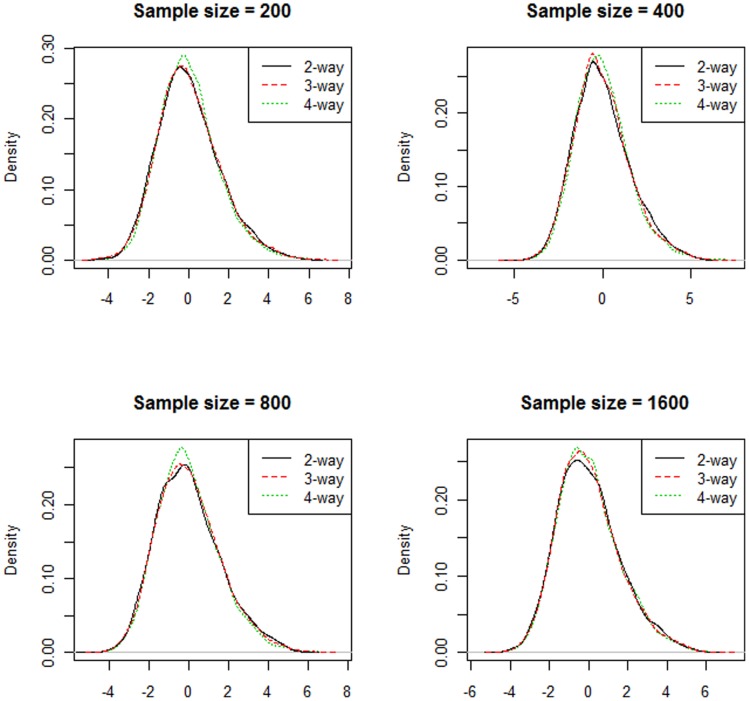
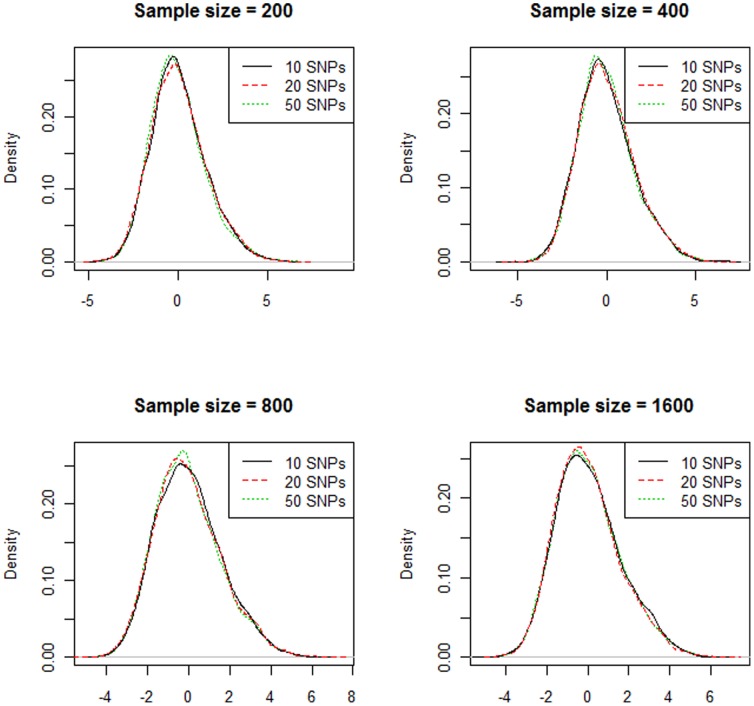
We present an extension of the two-class multifactor dimensionality reduction (MDR) algorithm that enables detection and characterization of epistatic SNP-SNP interactions in the context of a quantitative trait. The proposed Quantitative MDR (QMDR) method handles continuous data by modifying MDR's constructive induction algorithm to use a T-test. QMDR replaces the balanced accuracy metric with a T-test statistic as the score to determine the best interaction model. We used a simulation to identify the empirical distribution of QMDR's testing score. We then applied QMDR to genetic data from the ongoing prospective Prevention of Renal and Vascular End-Stage Disease (PREVEND) study.
我们提出了一种两类多因素降维(MDR)算法的扩展方法,该方法能够在数量性状的背景下检测上位性单核苷酸多态性(SNP)-SNP相互作用并对其进行特征描述。所提出的定量MDR(QMDR)方法通过修改MDR的构造性归纳算法以使用T检验来处理连续数据。QMDR用T检验统计量取代平衡准确度指标作为分数,以确定最佳相互作用模型。我们通过模拟确定了QMDR检验分数的经验分布。然后,我们将QMDR应用于正在进行的前瞻性预防终末期肾病和血管疾病(PREVEND)研究的遗传数据。