Department of Pharmacoeconomics and Pharmaceutical Administration, Faculty of Pharmacy, Tehran University of Medical Sciences, P,O, Box 14155-6451, Tehran 14174, Iran.
Daru. 2013 Jun 28;21(1):52. doi: 10.1186/2008-2231-21-52.
So far, no detailed study of the Iranian pharmaceutical market has been conducted, and only a few studies have analyzed medicine consumption and expenditure in Iran. Pharmaceutical market trend analysis remains one of the most useful instruments to evaluate the pharmaceutical systems efficiency. An increase in imports of medicines, and a simultaneous decrease in domestic production prompted us to investigate the pharmaceutical expenditure structure. On the other hand, analyzing statistics provides a suitable method to assess the outcomes of national pharmaceutical policies and regulations.
This is a descriptive and cross-sectional study which investigates the Iranian pharmaceutical market over a 13-year period (1997-2010). This study used the Iranian pharmaceutical statistical datasheet published by the Iranian Ministry of Health. Systematic searches of the relevant Persian and English research literature were made. In addition, official government documents were analyzed as sources of both data and detailed statements of policy.
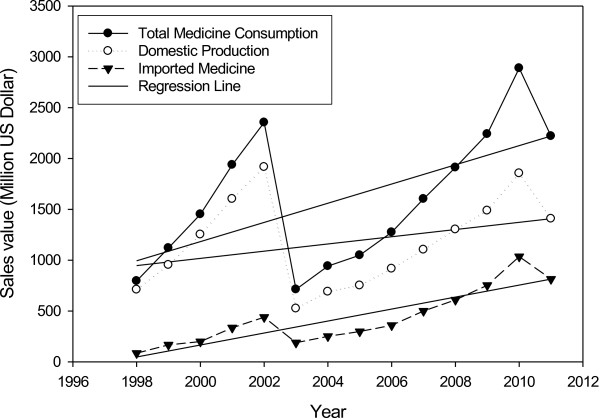
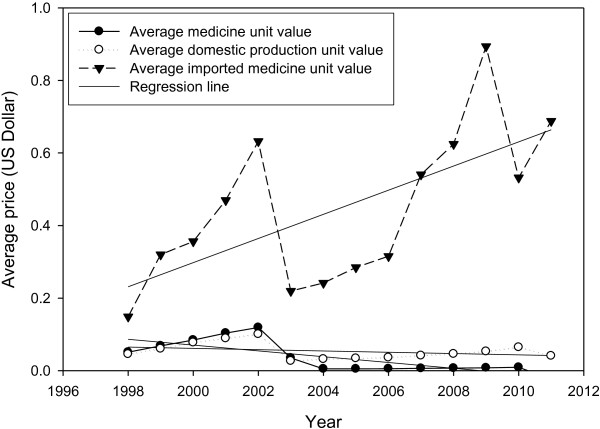
Analysis of the Iranian pharmaceutical market in the 13-year period shows that medicine consumption sales value growth has been 28.38% annually. Determination of domestic production and import reveals that 9.3% and 42.3% annual growth, respectively, have been experienced.
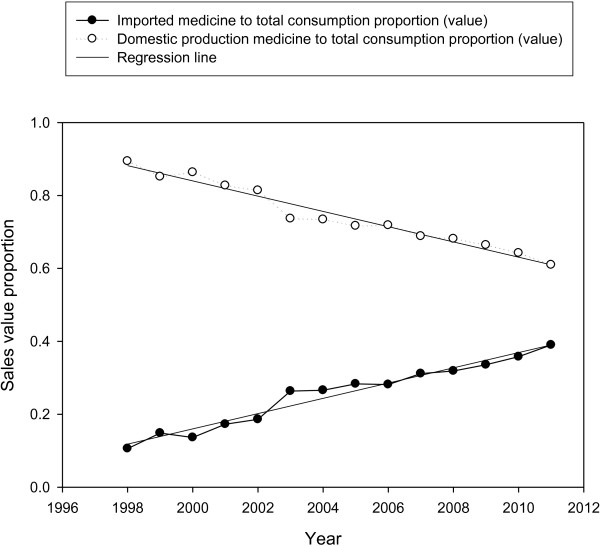
The Iranian pharmaceutical market has undergone great growth in comparison with developing countries and the pharmerging group, and the market is expanding quickly while a major share goes to biotechnology drugs, which implies the need to commercialization activities in novel fields like pharmaceutical biotechnology. This market expansion has been in favor of imported medicine in sales terms, caused by the reinforcement of suspicious policies of policy makers that necessitates fundamental rearrangements.
迄今为止,尚无针对伊朗医药市场的详细研究,仅有少数研究分析了伊朗的药品消费和支出。药品市场趋势分析仍然是评估医药系统效率的最有用工具之一。药品进口的增加和国内生产的同时减少促使我们调查药品支出结构。另一方面,分析统计数据为评估国家医药政策和法规的结果提供了一种合适的方法。
这是一项描述性和跨学科研究,调查了 13 年来(1997-2010 年)的伊朗医药市场。本研究使用了伊朗卫生部发布的伊朗医药统计数据表。对相关的波斯语和英语研究文献进行了系统检索。此外,还分析了官方政府文件,将其作为数据和政策详细说明的来源。
对 13 年来伊朗医药市场的分析表明,药品消费销售额的年增长率为 28.38%。对国内生产和进口的测定表明,年增长率分别为 9.3%和 42.3%。
与发展中国家和新兴医药市场国家相比,伊朗医药市场增长巨大,市场快速扩张,而生物技术药物占据了很大份额,这意味着需要在医药生物技术等新领域开展商业化活动。由于政策制定者加强了可疑政策,进口药品在销售额方面处于有利地位,这需要进行根本性的重新安排。