Biomedical Sciences Research Complex, University of St Andrews, St Andrews, Fife KY16 9ST, UK.
Biochem J. 2013 Jul 15;453(2):155-66. doi: 10.1042/BJ20130316.
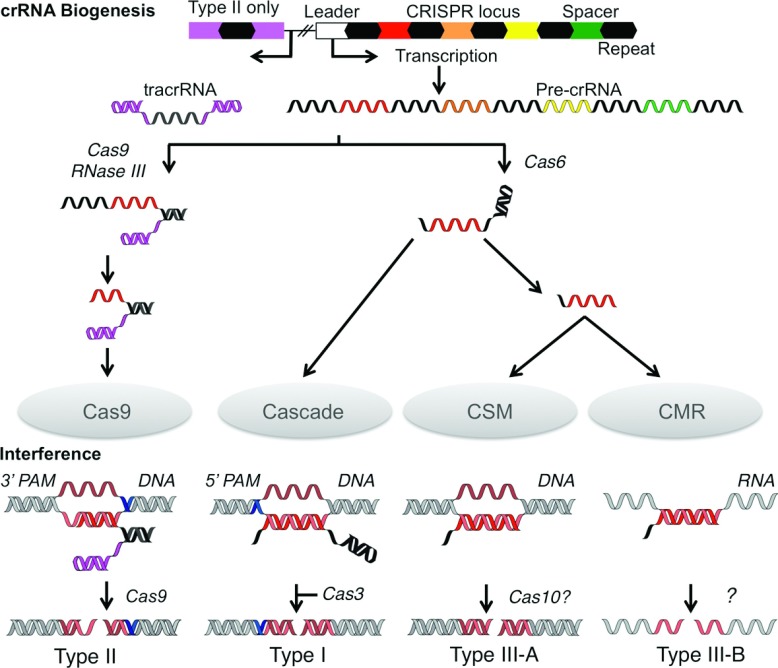
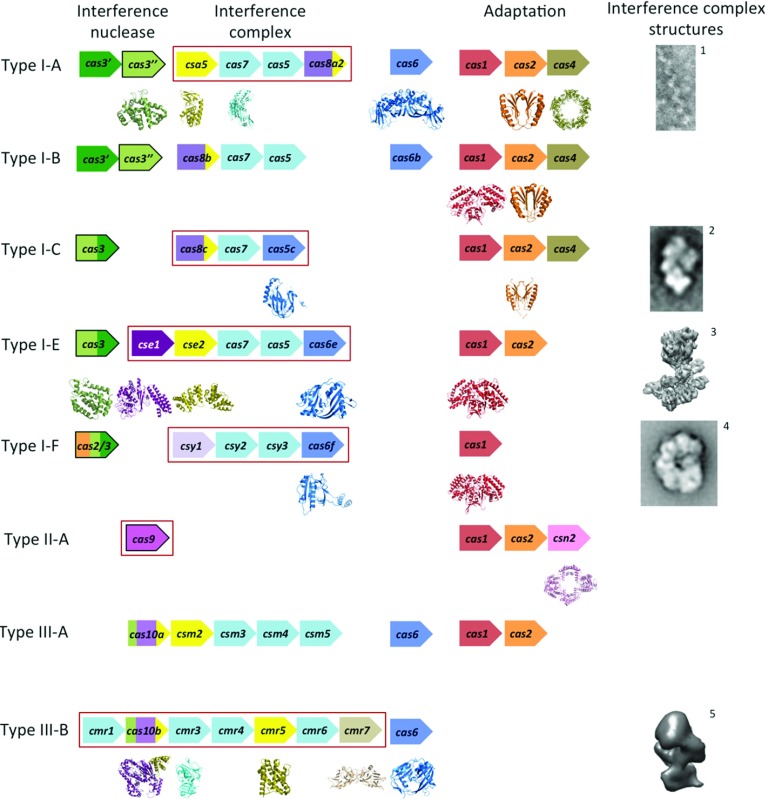
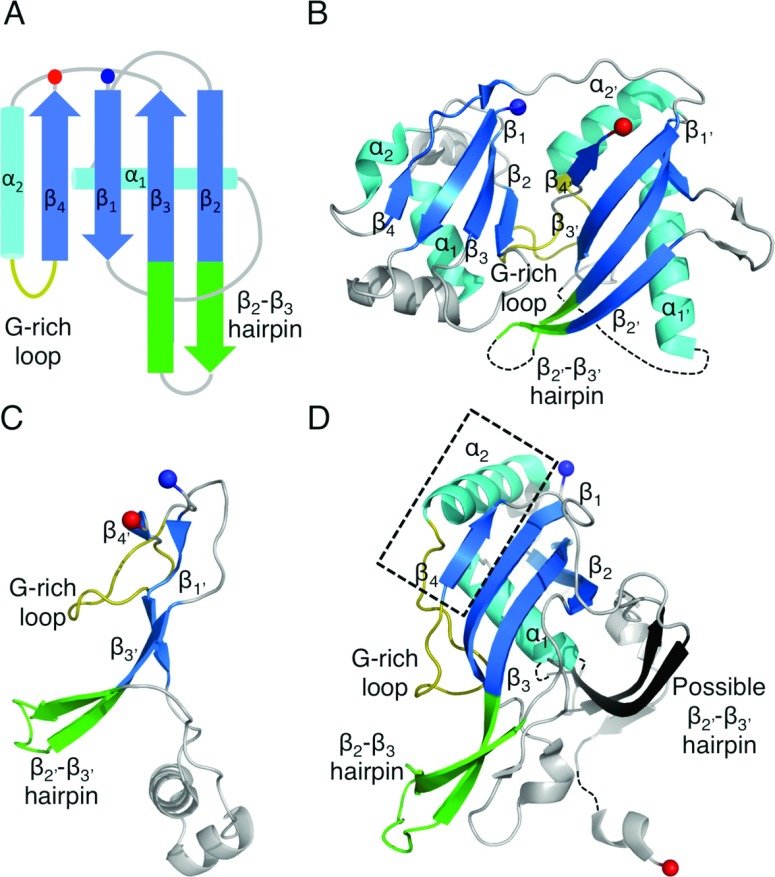
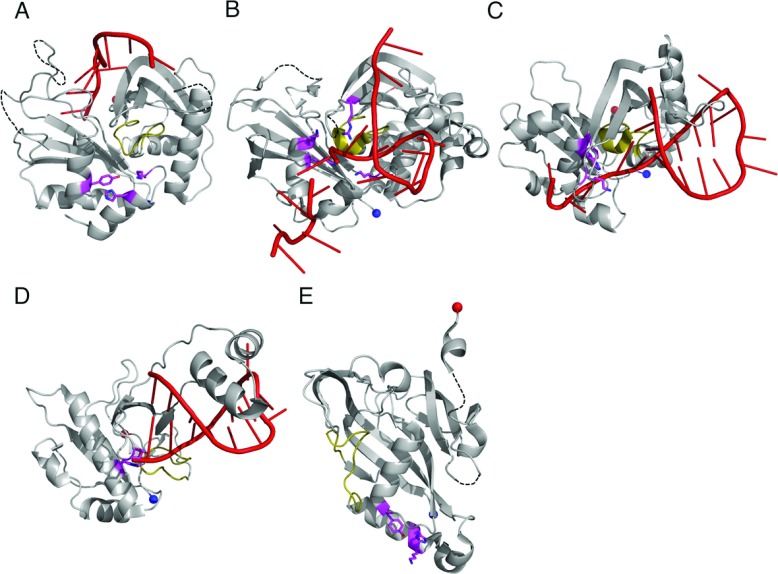
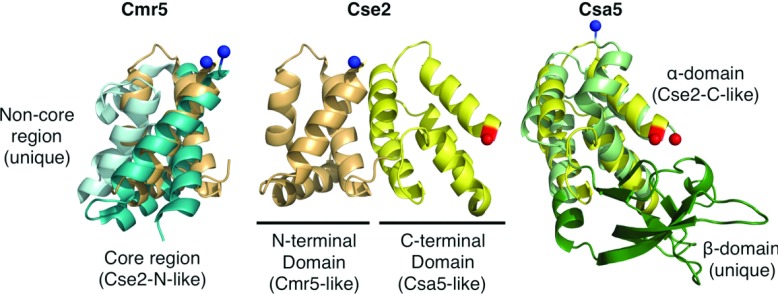
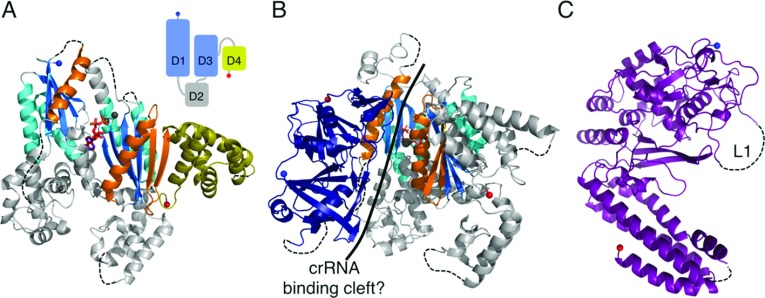
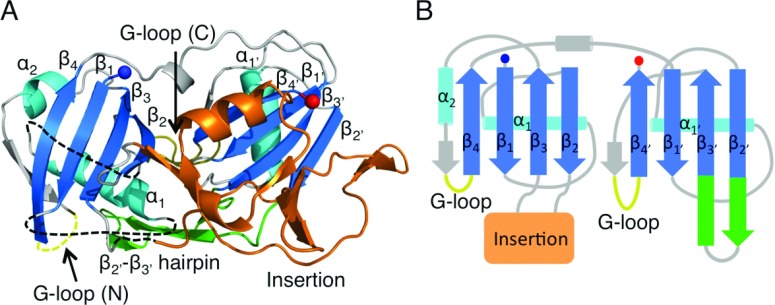
CRISPR (cluster of regularly interspaced palindromic repeats) is a prokaryotic adaptive defence system, providing immunity against mobile genetic elements such as viruses. Genomically encoded crRNA (CRISPR RNA) is used by Cas (CRISPR-associated) proteins to target and subsequently degrade nucleic acids of invading entities in a sequence-dependent manner. The process is known as 'interference'. In the present review we cover recent progress on the structural biology of the CRISPR/Cas system, focusing on the Cas proteins and complexes that catalyse crRNA biogenesis and interference. Structural studies have helped in the elucidation of key mechanisms, including the recognition and cleavage of crRNA by the Cas6 and Cas5 proteins, where remarkable diversity at the level of both substrate recognition and catalysis has become apparent. The RNA-binding RAMP (repeat-associated mysterious protein) domain is present in the Cas5, Cas6, Cas7 and Cmr3 protein families and RAMP-like domains are found in Cas2 and Cas10. Structural analysis has also revealed an evolutionary link between the small subunits of the type I and type III-B interference complexes. Future studies of the interference complexes and their constituent components will transform our understanding of the system.
CRISPR(成簇规律间隔短回文重复序列)是一种原核适应性防御系统,为抵抗病毒等移动遗传元件提供免疫力。Cas(CRISPR 相关)蛋白利用基因组编码的 crRNA(CRISPR RNA)以序列依赖性方式靶向并随后降解入侵实体的核酸。该过程被称为“干扰”。在本综述中,我们涵盖了 CRISPR/Cas 系统结构生物学的最新进展,重点介绍了催化 crRNA 生物发生和干扰的 Cas 蛋白和复合物。结构研究有助于阐明关键机制,包括 Cas6 和 Cas5 蛋白对 crRNA 的识别和切割,其中在底物识别和催化水平上的显著多样性变得明显。Cas5、Cas6、Cas7 和 Cmr3 蛋白家族中存在 RNA 结合 RAMP(重复相关神秘蛋白)结构域,Cas2 和 Cas10 中存在 RAMP 样结构域。结构分析还揭示了 I 型和 III-B 型干扰复合物的小亚基之间的进化联系。对干扰复合物及其组成成分的未来研究将改变我们对该系统的理解。