Pereira Valéria Cataneli, Martins André, de Souza Rugolo Lígia Maria Suppo, de Lourdes Ribeiro de Souza da Cunha Maria
Department of Microbiology and Immunology-Botucatu Biosciences Institute, UNESP, Brazil.
Clin Med Pediatr. 2009 Mar 18;3:23-31. doi: 10.4137/cmped.s2085. Print 2009.
To determine, by phenotypic and genotypic methods, oxacillin susceptibility in Staphylococcus aureus strains isolated from pediatric and neonatal intensive care unit patients seen at the University Hospital of the Botucatu School of Medicine.
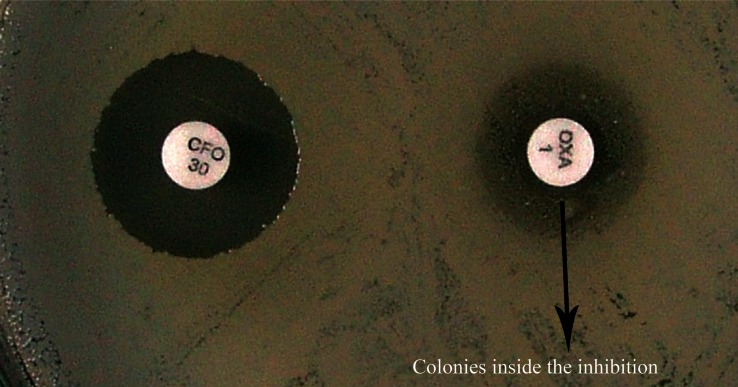
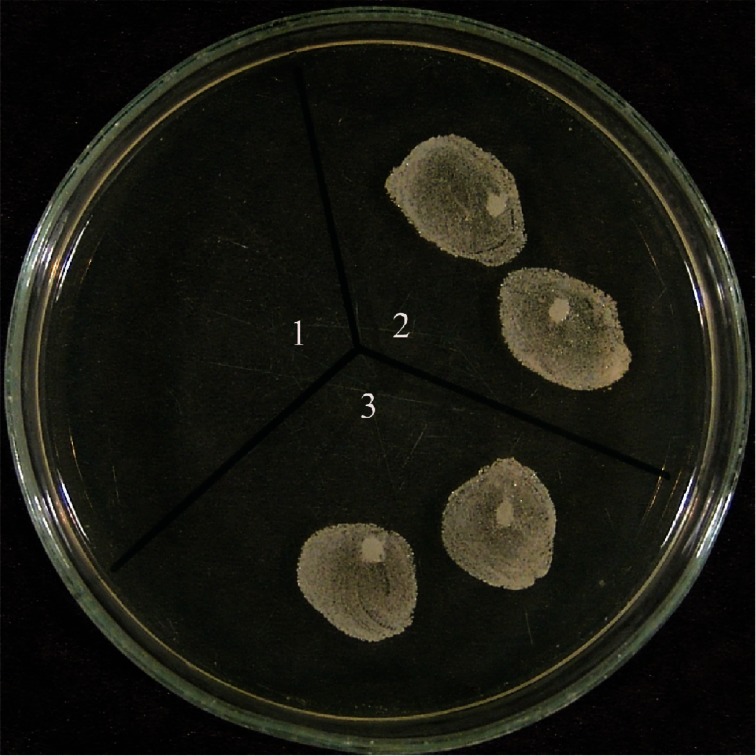
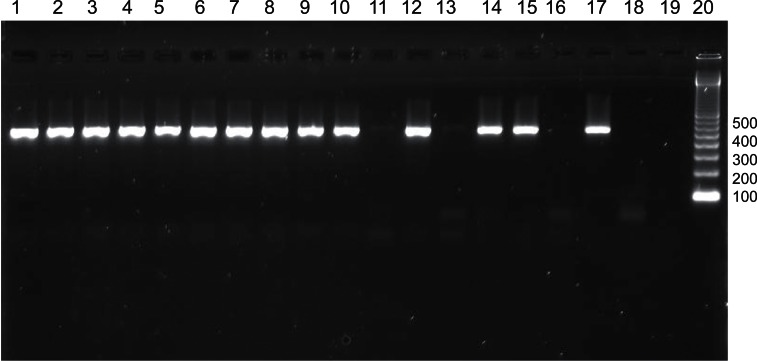
A total of 100 S. aureus strains isolated from the following materials were studied: 25 blood cultures, 21 secretions, 12 catheters, 3 cannulae and one chest drain from 62 patients in the neonatal unit, and 36 blood cultures, one pleural fluid sample and one peritoneal fluid sample from 38 patients in the pediatric unit. Resistance of the S. aureus isolates to oxacillin was evaluated by the disk diffusion method with oxacillin (1 μg) and cefoxitin (30 μg), agar screening test using Mueller-Hinton agar supplemented with 6 μg/ml oxacillin and 4% NaCl, and detection of the mecA gene by PCR. In addition, the isolates were tested for β-lactamase production using disks impregnated with Nitrocefin and hyperproduction of β-lactamase using amoxicillin (20 μg) and clavulanic acid (10 μg) disks.
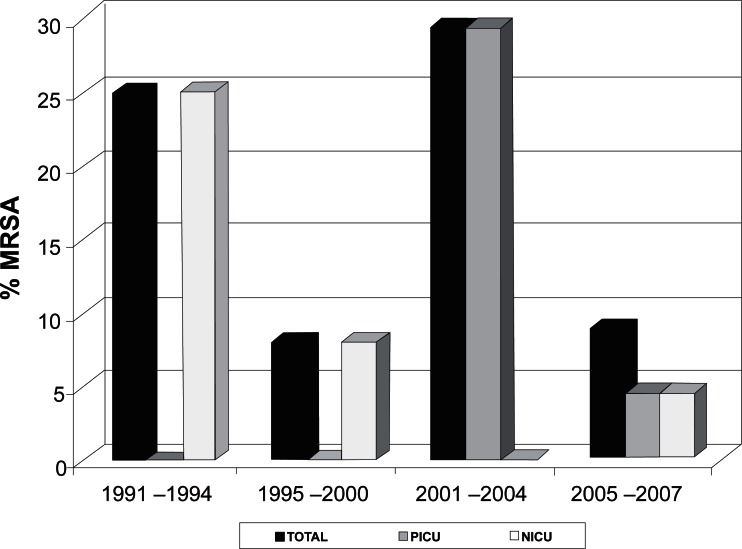
Among the 100 S. aureus strains included in the study, 18.0% were resistant to oxacillin, with 16.1% MRSA being detected in the neonatal unit and 21.0% in the pediatric unit. The oxacillin (1 μg) and cefoxitin (30 μg) disk diffusion methods presented 94.4% and 100% sensitivity, respectively, and 98.8% specificity. The screening test showed 100% sensitivity and 98.8% specificity. All isolates produced β-lactamase and one of these strains was considered to be a hyperproducer.
The 30 μg cefoxitin disk diffusion method presented the best result when compared to the 1 μg oxacillin disk. The sensitivity of the agar screening test was similar to that of the cefoxitin disk diffusion method and higher than that of the oxacillin disk diffusion method. We observed variations in the percentage of oxacillin-resistant isolates during the study period, with a decline over the last years which might be related to improved nosocomial infection control and the rational use of antibiotics.
通过表型和基因型方法,确定从Botucatu医学院大学医院的儿科和新生儿重症监护病房患者中分离出的金黄色葡萄球菌菌株对苯唑西林的敏感性。
共研究了从以下材料中分离出的100株金黄色葡萄球菌菌株:新生儿病房62例患者的25份血培养物、21份分泌物、12根导管、3根套管和1根胸腔引流管,以及儿科病房38例患者的36份血培养物、1份胸水样本和1份腹水样本。采用含1 μg苯唑西林和30 μg头孢西丁的纸片扩散法、使用补充有6 μg/ml苯唑西林和4%氯化钠的Mueller-Hinton琼脂进行琼脂筛选试验以及通过PCR检测mecA基因,评估金黄色葡萄球菌分离株对苯唑西林的耐药性。此外,使用含Nitrocefin的纸片检测分离株的β-内酰胺酶产生情况,并使用含20 μg阿莫西林和10 μg克拉维酸的纸片检测β-内酰胺酶的高产情况。
在纳入研究的100株金黄色葡萄球菌菌株中,18.0%对苯唑西林耐药,新生儿病房检测到16.1%的耐甲氧西林金黄色葡萄球菌(MRSA),儿科病房为21.0%。苯唑西林(1 μg)和头孢西丁(30 μg)纸片扩散法的敏感性分别为94.4%和100%,特异性为98.8%。筛选试验的敏感性为100%,特异性为98.8%。所有分离株均产生β-内酰胺酶,其中一株被认为是高产株。
与1 μg苯唑西林纸片相比,30 μg头孢西丁纸片扩散法的结果最佳。琼脂筛选试验的敏感性与头孢西丁纸片扩散法相似,高于苯唑西林纸片扩散法。在研究期间,我们观察到耐苯唑西林分离株的百分比存在变化,近年来有所下降,这可能与医院感染控制的改善和抗生素的合理使用有关。