Osmundson Joseph, Darst Seth A
The Rockefeller University; New York, NY USA.
Bacteriophage. 2013 Jan 1;3(1):e24767. doi: 10.4161/bact.24767.
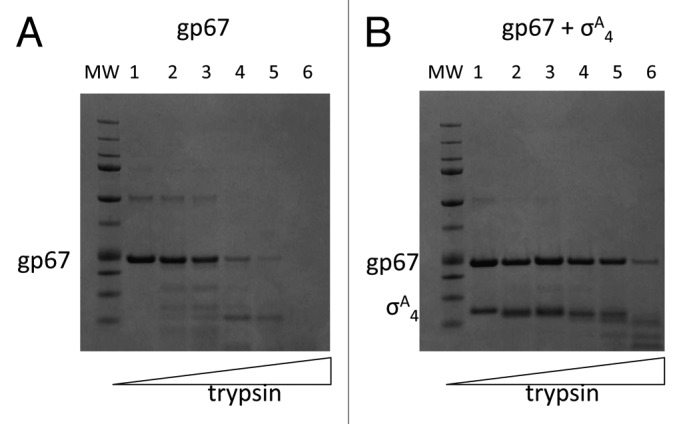
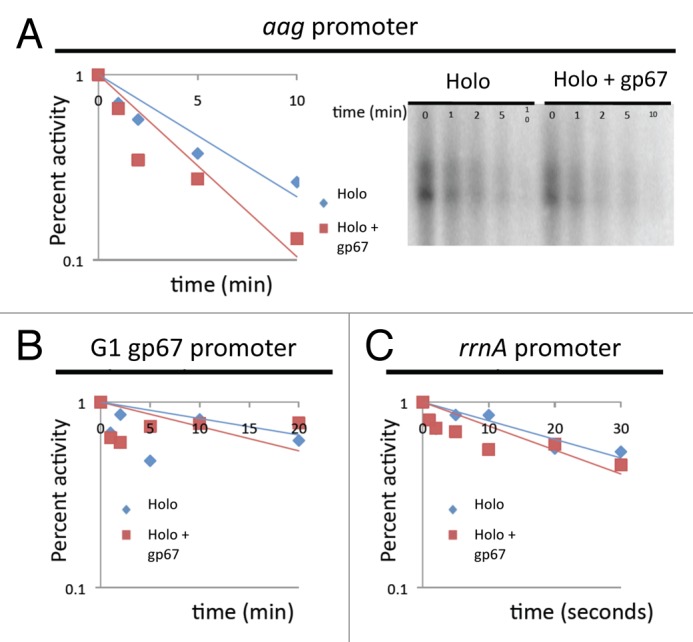
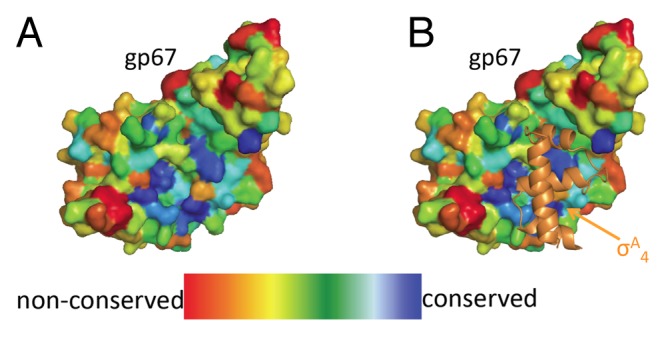
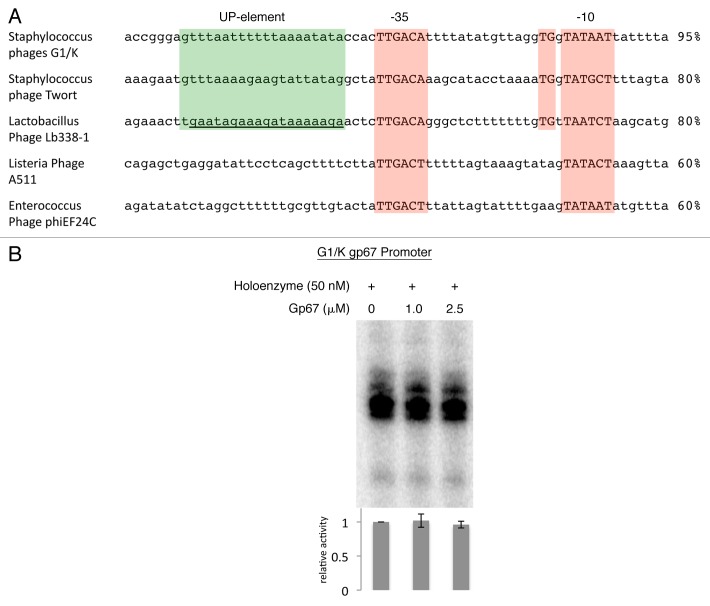
Bacteriophage (phage) are among the most diverse and abundant life forms on Earth. Studies have recently used phage diversity to identify novel antimicrobial peptides and proteins. We showed that one such phage protein, () phage G1 gp67, inhibits cell growth in by an unusual mechanism. Gp67 binds to the host RNA polymerase (RNAP) through an interaction with the promoter specificity σ subunit, but unlike many other σ-binding phage proteins, gp67 does not disrupt transcription at most promoters. Rather, gp67 prevents binding of another RNAP domain, the α-C-terminal domain, to upstream A/T-rich elements required for robust transcription at rRNA promoters. Here, we discuss additional biochemical insights on gp67, how phage promoters escape the inhibitory function of gp67, and methodological advancements that were foundational to our work.
噬菌体是地球上最多样化且数量丰富的生命形式之一。最近的研究利用噬菌体多样性来鉴定新型抗菌肽和蛋白质。我们发现,一种这样的噬菌体蛋白,即噬菌体G1的gp67,通过一种不同寻常的机制抑制细胞生长。Gp67通过与启动子特异性σ亚基相互作用而结合到宿主RNA聚合酶(RNAP)上,但与许多其他结合σ的噬菌体蛋白不同,gp67在大多数启动子处不会破坏转录。相反,gp67会阻止另一个RNAP结构域,即α-羧基末端结构域,与rRNA启动子处强大转录所需的上游富含A/T的元件结合。在这里,我们讨论关于gp67的更多生化见解、噬菌体启动子如何逃避gp67的抑制功能以及作为我们工作基础的方法学进展。