PATH OWH, A-9, Qutub Institutional area, USO Road, New Delhi, India.
Parasit Vectors. 2013 Jul 2;6:196. doi: 10.1186/1756-3305-6-196.
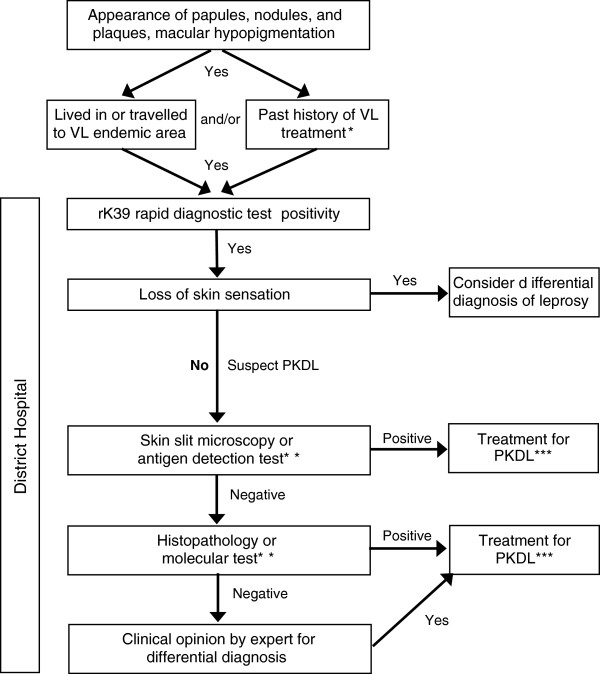
Post kala-azar dermal leishmaniasis (PKDL) is a neglected complication of visceral leishmaniasis (VL)-a deadly, infectious disease that claims approximately 20,000 to 40,000 lives every year. PKDL is thought to be a reservoir for transmission of VL, thus, adequate control of PKDL plays a key role in the ongoing effort to eliminate VL. Over the past few years, several expert meetings have recommended that a greater focus on PKDL was needed, especially in South Asia. This report summarizes the Post Kala-Azar Dermal Leishmaniasis Consortium Meeting held in New Delhi, India, 27-29 June 2012. The PKDL Consortium is committed to promote and facilitate activities that lead to better understanding of all aspects of PKDL that are needed for improved clinical management and to achieve control of PKDL and VL. Fifty clinicians, scientists, policy makers, and advocates came together to discuss issues relating to PKDL epidemiology, diagnosis, pathogenesis, clinical presentation, treatment, and control. Colleagues who were unable to attend participated during drafting of the consortium meeting report.
内脏利什曼病(VL)是一种致命的传染病,每年约有 2 万至 4 万人因此丧生,而皮肤利什曼病(PKDL)是 VL 的一种被忽视的并发症。PKDL 被认为是 VL 传播的一个储存库,因此,对 PKDL 的充分控制对正在进行的消除 VL 的努力起着关键作用。在过去的几年里,几次专家会议都建议需要更加重视 PKDL,特别是在南亚地区。本报告总结了 2012 年 6 月 27 日至 29 日在印度新德里举行的 PKDL 联合会议。PKDL 联合组织致力于促进和促进各项活动,以更好地了解 PKDL 的各个方面,这些方面对于改善临床管理和控制 PKDL 和 VL 是必要的。50 名临床医生、科学家、政策制定者和倡导者聚集在一起,讨论与 PKDL 流行病学、诊断、发病机制、临床表现、治疗和控制有关的问题。未能出席会议的同事在起草该会议报告时参与了讨论。