Centre for Infectious Disease Research in Zambia, Zambia.
BMC Health Serv Res. 2013;13 Suppl 2(Suppl 2):S9. doi: 10.1186/1472-6963-13-S2-S9. Epub 2013 May 31.
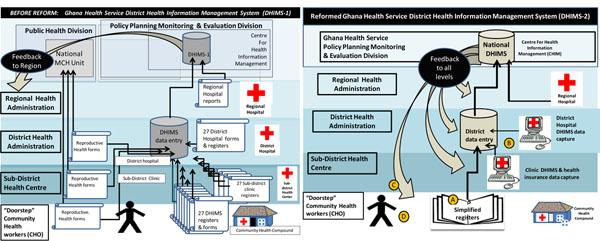
Weak health information systems (HIS) are a critical challenge to reaching the health-related Millennium Development Goals because health systems performance cannot be adequately assessed or monitored where HIS data are incomplete, inaccurate, or untimely. The Population Health Implementation and Training (PHIT) Partnerships were established in five sub-Saharan African countries (Ghana, Mozambique, Rwanda, Tanzania, and Zambia) to catalyze advances in strengthening district health systems. Interventions were tailored to the setting in which activities were planned.
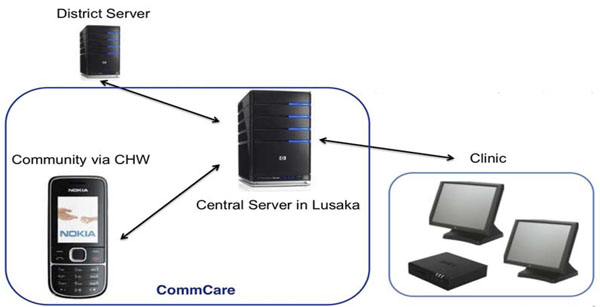
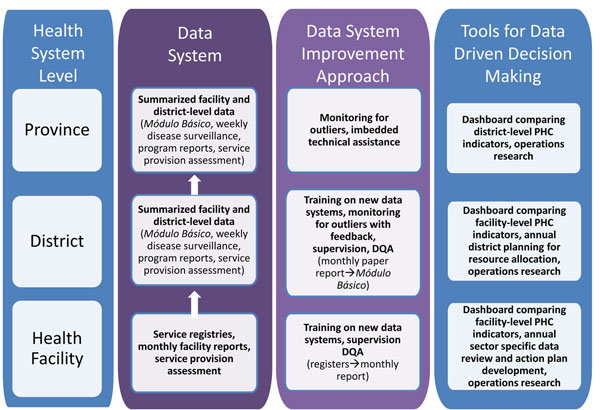
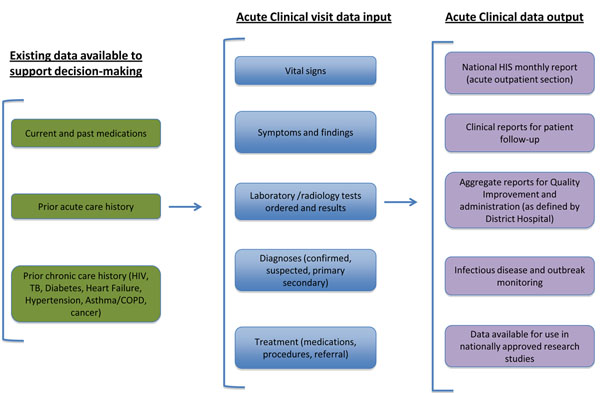
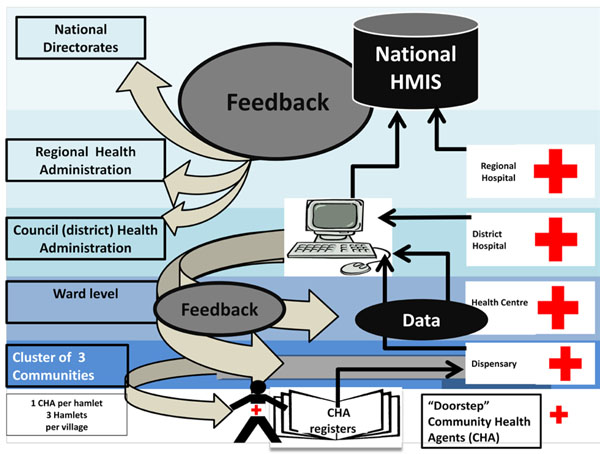
All five PHIT Partnerships share a common feature in their goal of enhancing HIS and linking data with improved decision-making, specific strategies varied. Mozambique, Ghana, and Tanzania all focus on improving the quality and use of the existing Ministry of Health HIS, while the Zambia and Rwanda partnerships have introduced new information and communication technology systems or tools. All partnerships have adopted a flexible, iterative approach in designing and refining the development of new tools and approaches for HIS enhancement (such as routine data quality audits and automated troubleshooting), as well as improving decision making through timely feedback on health system performance (such as through summary data dashboards or routine data review meetings). The most striking differences between partnership approaches can be found in the level of emphasis of data collection (patient versus health facility), and consequently the level of decision making enhancement (community, facility, district, or provincial leadership).
Design differences across PHIT Partnerships reflect differing theories of change, particularly regarding what information is needed, who will use the information to affect change, and how this change is expected to manifest. The iterative process of data use to monitor and assess the health system has been heavily communication dependent, with challenges due to poor feedback loops. Implementation to date has highlighted the importance of engaging frontline staff and managers in improving data collection and its use for informing system improvement. Through rigorous process and impact evaluation, the experience of the PHIT teams hope to contribute to the evidence base in the areas of HIS strengthening, linking HIS with decision making, and its impact on measures of health system outputs and impact.
薄弱的健康信息系统(HIS)是实现与卫生相关的千年发展目标的一个关键挑战,因为如果 HIS 数据不完整、不准确或不及时,就无法充分评估或监测卫生系统的绩效。人口健康实施和培训(PHIT)伙伴关系在五个撒哈拉以南非洲国家(加纳、莫桑比克、卢旺达、坦桑尼亚和赞比亚)成立,旨在促进加强地区卫生系统。干预措施根据计划活动的环境进行了调整。
所有五个 PHIT 伙伴关系都有一个共同的特点,即致力于加强 HIS,并将数据与改善决策联系起来,具体策略有所不同。莫桑比克、加纳和坦桑尼亚都专注于提高卫生部现有 HIS 的质量和使用,而赞比亚和卢旺达的伙伴关系则引入了新的信息和通信技术系统或工具。所有伙伴关系都采取了灵活的迭代方法,设计和完善 HIS 增强的新工具和方法(如常规数据质量审计和自动故障排除),以及通过及时反馈卫生系统绩效来改善决策(如通过汇总数据仪表板或常规数据审查会议)。伙伴关系方法之间最显著的差异可以在数据收集的重点程度(患者与卫生机构)以及因此决策增强的程度(社区、机构、地区或省级领导)上找到。
PHIT 伙伴关系之间的设计差异反映了不同的变革理论,特别是关于需要什么信息、谁将使用信息来影响变革,以及这种变革预计将如何表现。监测和评估卫生系统的数据使用迭代过程在很大程度上依赖于沟通,由于反馈循环不良而面临挑战。迄今为止的实施情况强调了让一线工作人员和管理人员参与改善数据收集及其用于为系统改进提供信息的重要性。通过严格的流程和影响评估,PHIT 团队的经验希望为加强 HIS、将 HIS 与决策联系起来及其对卫生系统产出和影响衡量标准的影响等领域的证据基础做出贡献。