Fortuin Ansje, Rooij Maarten de, Zamecnik Patrik, Haberkorn Uwe, Barentsz Jelle
Department of Radiology, Nijmegen Medical Center, Radboud University, P.O. Box 9101, 6500 HB Nijmegen, The Netherlands.
Int J Mol Sci. 2013 Jul 3;14(7):13842-75. doi: 10.3390/ijms140713842.
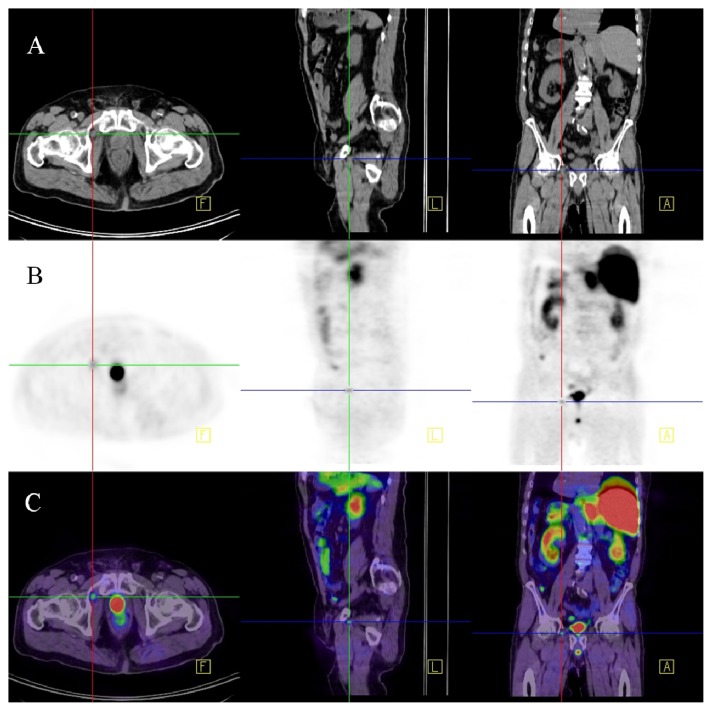
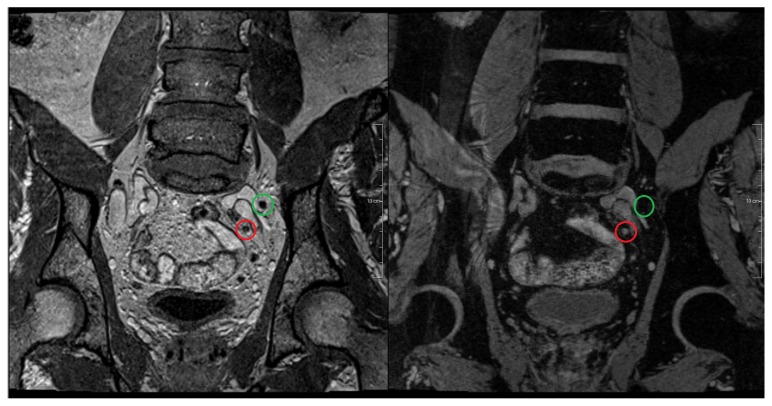
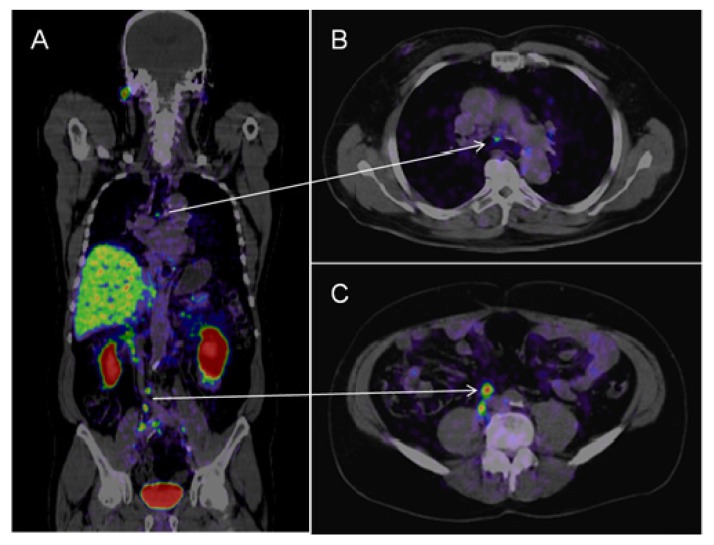
Knowledge on lymph node metastases is crucial for the prognosis and treatment of prostate cancer patients. Conventional anatomic imaging often fails to differentiate benign from metastatic lymph nodes. Pelvic lymph node dissection is an invasive technique and underestimates the extent of lymph node metastases. Therefore, there is a need for more accurate non-invasive diagnostic techniques. Molecular and functional imaging has been subject of research for the last decades, in this respect. Therefore, in this article the value of imaging techniques to detect lymph node metastases is reviewed. These techniques include scintigraphy, sentinel node imaging, positron emission tomography/computed tomography (PET/CT), diffusion weighted magnetic resonance imaging (DWI MRI) and magnetic resonance lymphography (MRL). Knowledge on pathway and size of lymph node metastases has increased with molecular and functional imaging. Furthermore, improved detection and localization of lymph node metastases will enable (focal) treatment of the positive nodes only.
了解淋巴结转移情况对于前列腺癌患者的预后和治疗至关重要。传统的解剖成像常常无法区分良性淋巴结和转移性淋巴结。盆腔淋巴结清扫是一种侵入性技术,且会低估淋巴结转移的范围。因此,需要更准确的非侵入性诊断技术。在这方面,分子和功能成像在过去几十年一直是研究的主题。因此,本文对检测淋巴结转移的成像技术的价值进行了综述。这些技术包括闪烁扫描、前哨淋巴结成像、正电子发射断层扫描/计算机断层扫描(PET/CT)、扩散加权磁共振成像(DWI MRI)和磁共振淋巴造影(MRL)。随着分子和功能成像技术的发展,人们对淋巴结转移的途径和大小的认识有所增加。此外,改进的淋巴结转移检测和定位将仅能对阳性淋巴结进行(局部)治疗。