The University of Alabama at Birmingham, Division of Molecular and Cellular Pathology, Birmingham, Alabama, United States of America.
PLoS One. 2013 Jun 25;8(6):e66835. doi: 10.1371/journal.pone.0066835. Print 2013.
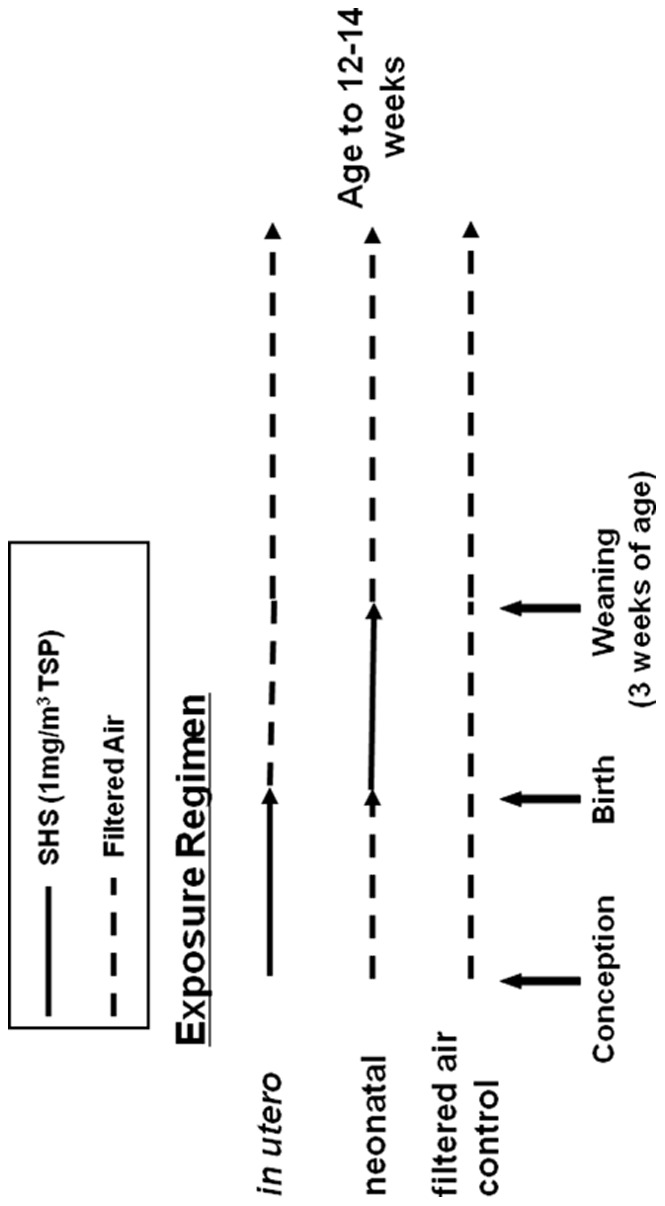
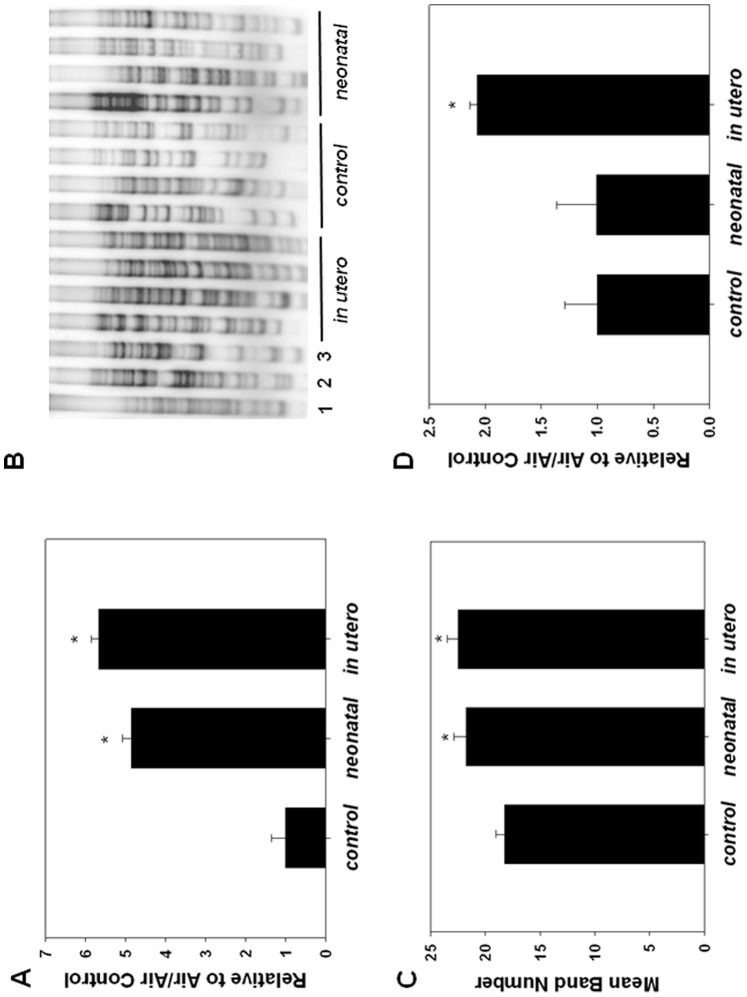
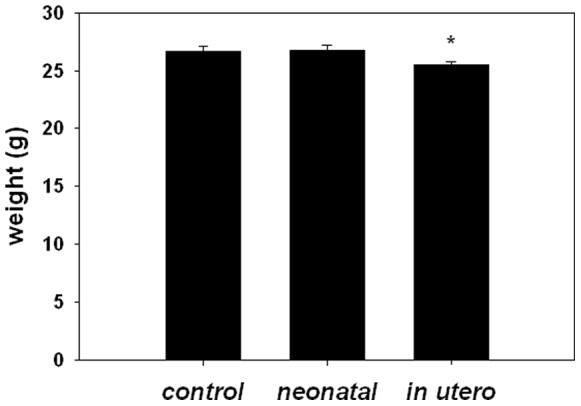
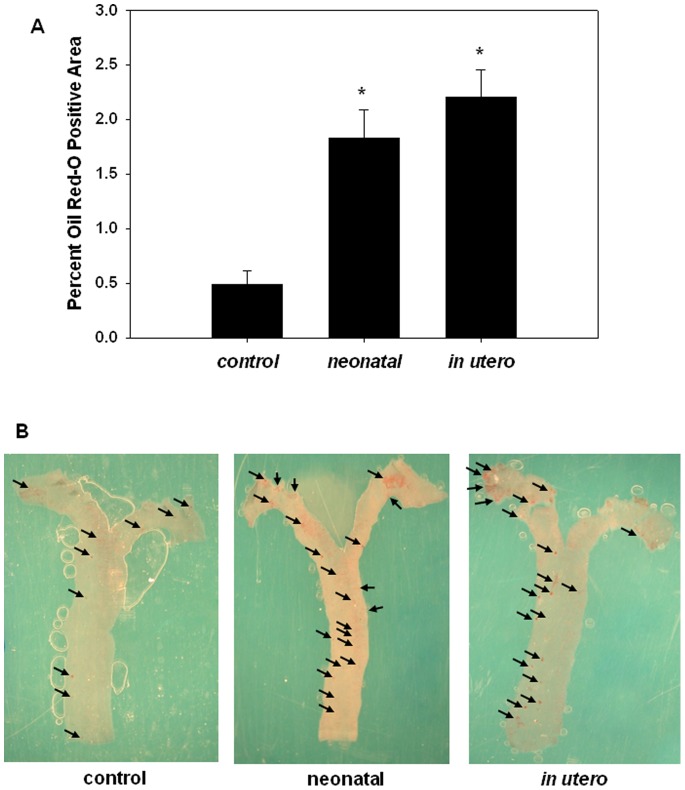
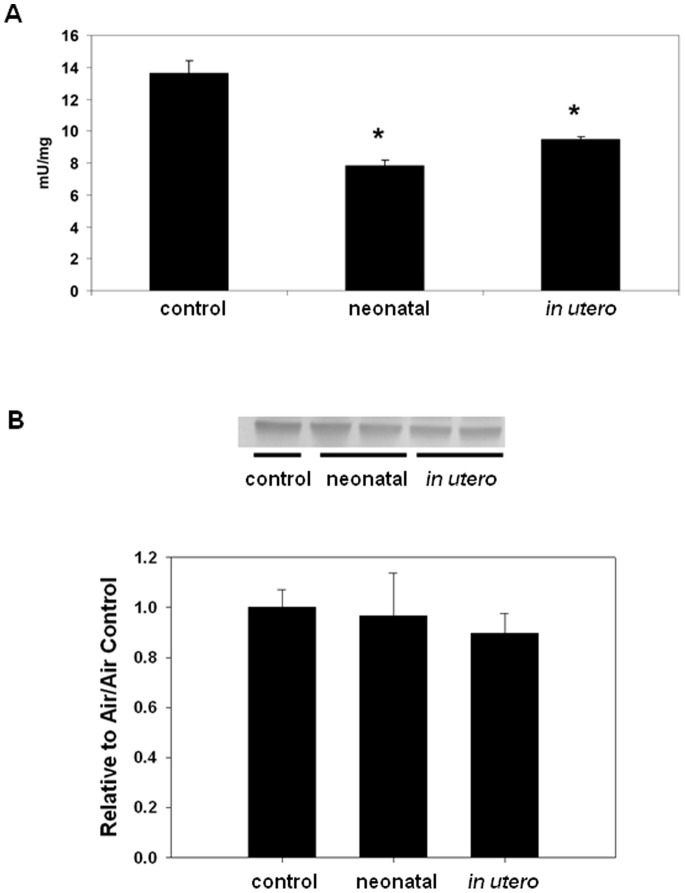
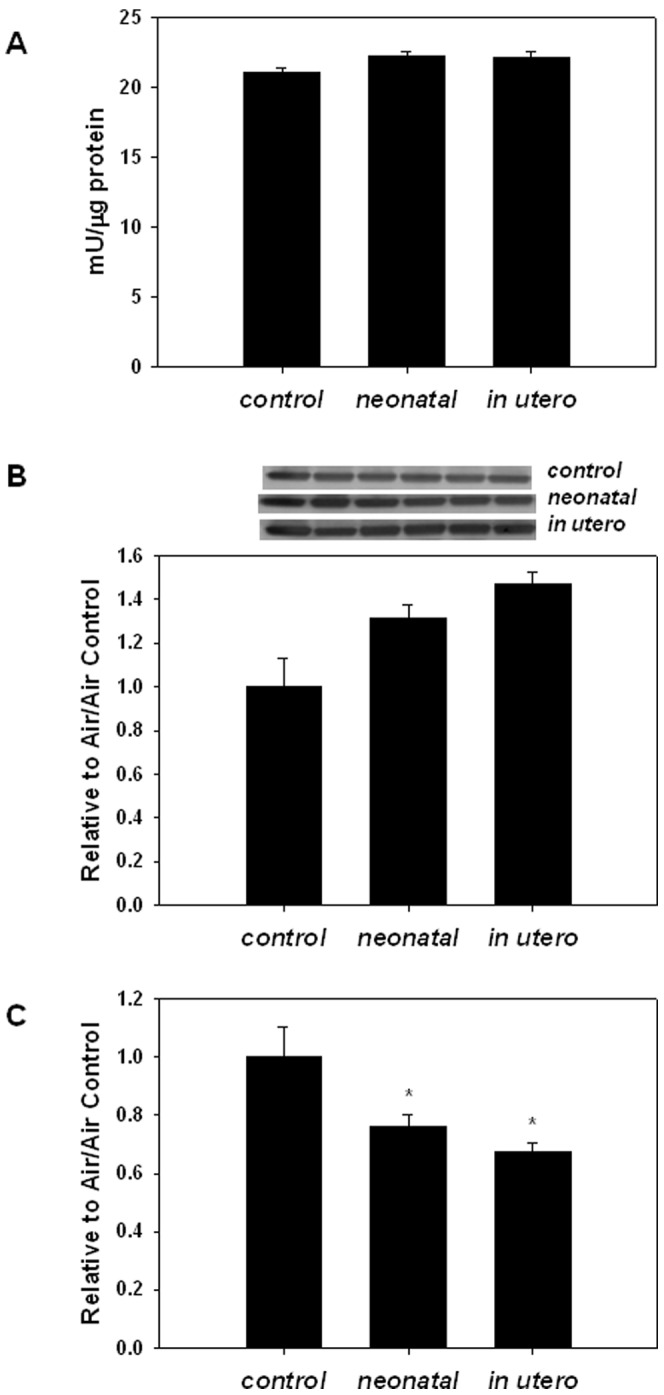
Cardiovascular disease is a major cause of morbidity and mortality in the United States. While many studies have focused upon the effects of adult second-hand smoke exposure on cardiovascular disease development, disease development occurs over decades and is likely influenced by childhood exposure. The impacts of in utero versus neonatal second-hand smoke exposure on adult atherosclerotic disease development are not known. The objective of the current study was to determine the effects of in utero versus neonatal exposure to a low dose (1 mg/m(3) total suspended particulate) of second-hand smoke on adult atherosclerotic lesion development using the apolipoprotein E null mouse model. Consequently, apolipoprotein E null mice were exposed to either filtered air or second-hand smoke: (i) in utero from gestation days 1-19, or (ii) from birth until 3 weeks of age (neonatal). Subsequently, all animals were exposed to filtered air and sacrificed at 12-14 weeks of age. Oil red-O staining of whole aortas, measures of mitochondrial damage, and oxidative stress were performed. Results show that both in utero and neonatal second-hand smoke exposure significantly increased adult atherogenesis in mice compared to filtered air controls. These changes were associated with changes in aconitase and mitochondrial superoxide dismutase activities consistent with increased oxidative stress in the aorta, changes in mitochondrial DNA copy number and deletion levels. These studies show that in utero or neonatal exposure to second-hand smoke significantly influences adult atherosclerotic lesion development and results in significant alterations to the mitochondrion and its genome that may contribute to atherogenesis.
心血管疾病是美国发病率和死亡率的主要原因。虽然许多研究都集中在成人二手烟暴露对心血管疾病发展的影响上,但疾病的发展需要数十年的时间,并且可能受到儿童时期暴露的影响。宫内和新生儿期二手烟暴露对成人动脉粥样硬化疾病发展的影响尚不清楚。本研究的目的是确定在载脂蛋白 E 基因敲除小鼠模型中,低剂量(1 毫克/立方米总悬浮颗粒物)二手烟的宫内和新生儿暴露对成年动脉粥样硬化病变发展的影响。因此,载脂蛋白 E 基因敲除小鼠暴露于过滤空气或二手烟:(i)从妊娠第 1 天至第 19 天宫内,或(ii)从出生到 3 周龄(新生儿期)。随后,所有动物均暴露于过滤空气中,并在 12-14 周龄时处死。对整个主动脉进行油红-O 染色,测量线粒体损伤和氧化应激。结果表明,与过滤空气对照组相比,宫内和新生儿期二手烟暴露均显著增加了小鼠的成年动脉粥样硬化形成。这些变化与顺乌头酸酶和线粒体超氧化物歧化酶活性的变化相关,提示主动脉氧化应激增加,线粒体 DNA 拷贝数和缺失水平发生变化。这些研究表明,宫内或新生儿期接触二手烟会显著影响成年动脉粥样硬化病变的发展,并导致线粒体及其基因组发生显著改变,从而可能促进动脉粥样硬化的发生。