Lee Chi Fung, Ullevig Sarah, Kim Hong Seok, Asmis Reto
Department of Biochemistry, School of Health Professions, University of Texas Health Science Center at San Antonio, Texas, United States of America.
PLoS One. 2013 Jun 18;8(6):e66964. doi: 10.1371/journal.pone.0066964. Print 2013.
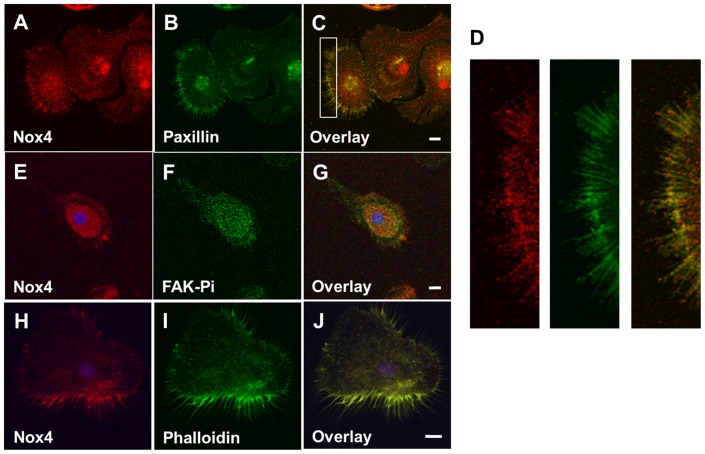
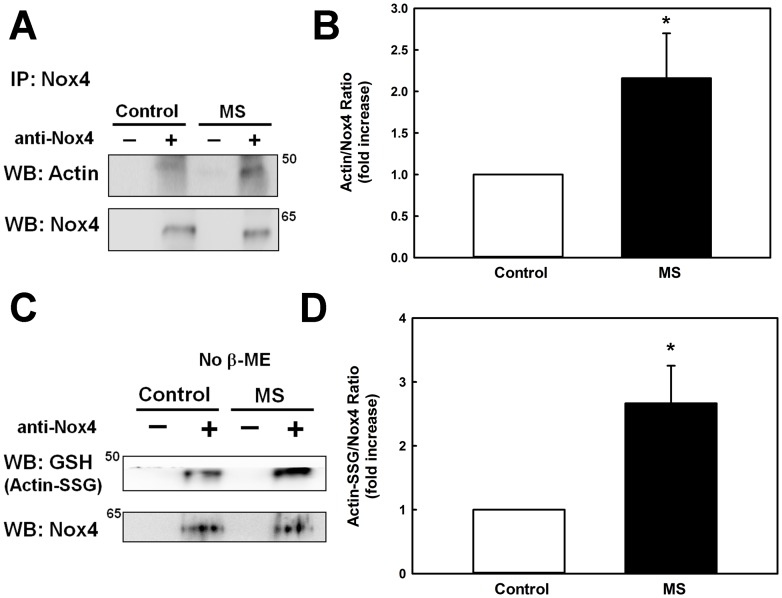
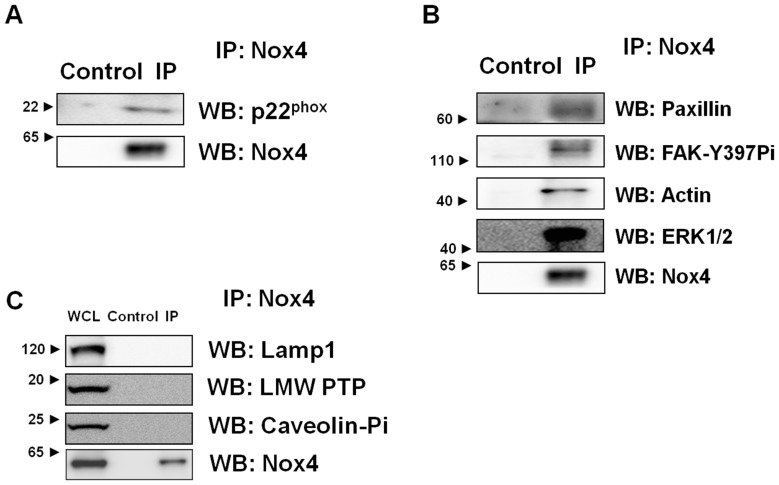
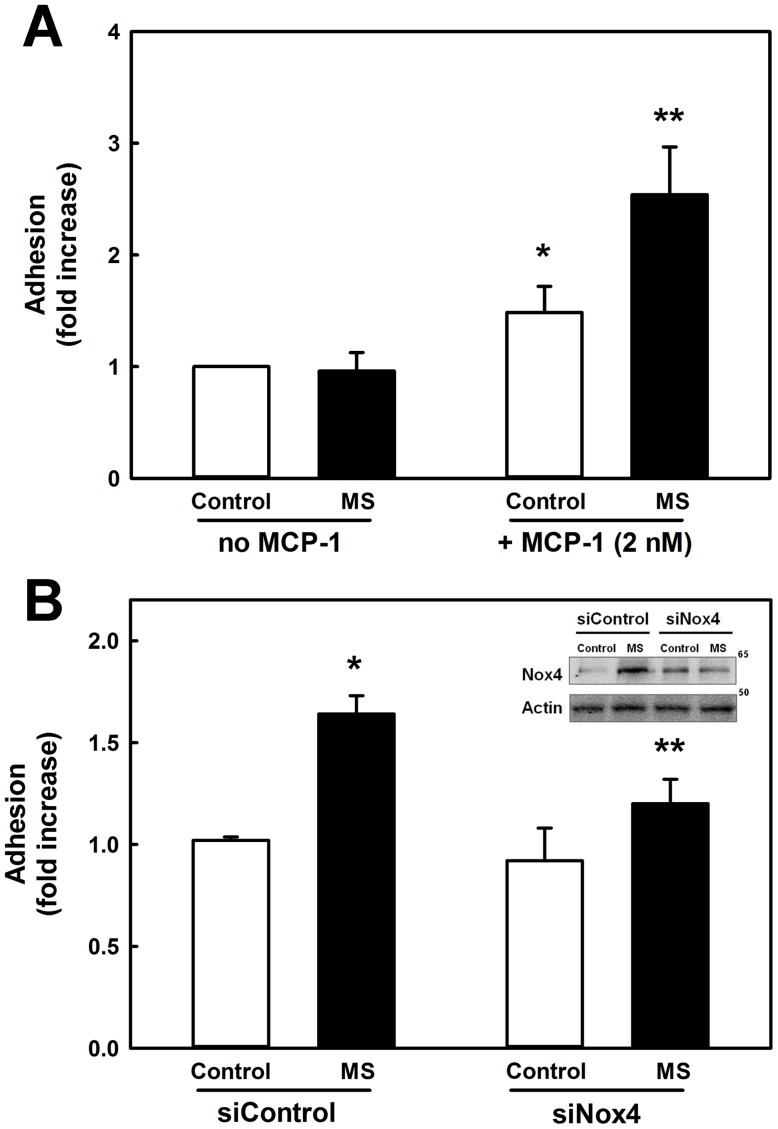
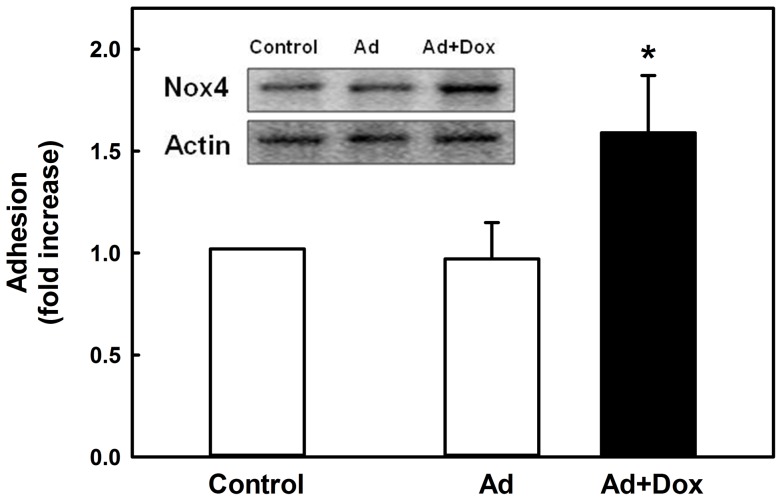
We showed that metabolic disorders promote thiol oxidative stress in monocytes, priming monocytes for accelerated chemokine-induced recruitment, and accumulation at sites of vascular injury and the progression of atherosclerosis. The aim of this study was to identify both the source of reactive oxygen species (ROS) responsible for thiol oxidation in primed and dysfunctional monocytes and the molecular mechanisms through which ROS accelerate the migration and recruitment of monocyte-derived macrophages. We found that Nox4, a recently identified NADPH oxidase in monocytes and macrophages, localized to focal adhesions and the actin cytoskeleton, and associated with phospho-FAK, paxillin, and actin, implicating Nox4 in the regulation of monocyte adhesion and migration. We also identified Nox4 as a new, metabolic stress-inducible source of ROS that controls actin S-glutathionylation and turnover in monocytes and macrophages, providing a novel mechanistic link between Nox4-derived H2O2 and monocyte adhesion and migration. Actin associated with Nox4 was S-glutathionylated, and Nox4 association with actin was enhanced in metabolically-stressed monocytes. Metabolic stress induced Nox4 and accelerated monocyte adhesion and chemotaxis in a Nox4-dependent mechanism. In conclusion, our data suggest that monocytic Nox4 is a central regulator of actin dynamics, and induction of Nox4 is the rate-limiting step in metabolic stress-induced monocyte priming and dysfunction associated with accelerated atherosclerosis and the progression of atherosclerotic plaques.
我们发现,代谢紊乱会促进单核细胞中的硫醇氧化应激,使单核细胞为趋化因子诱导的加速募集做好准备,并在血管损伤部位积聚以及促进动脉粥样硬化的进展。本研究的目的是确定引发单核细胞硫醇氧化并使其功能失调的活性氧(ROS)来源,以及ROS加速单核细胞衍生巨噬细胞迁移和募集的分子机制。我们发现,Nox4是最近在单核细胞和巨噬细胞中发现的一种NADPH氧化酶,定位于粘着斑和肌动蛋白细胞骨架,并与磷酸化粘着斑激酶(phospho-FAK)、桩蛋白和肌动蛋白相关,这表明Nox4参与单核细胞粘附和迁移的调节。我们还确定Nox4是一种新的、代谢应激诱导的ROS来源,它控制单核细胞和巨噬细胞中肌动蛋白的S-谷胱甘肽化和周转,在Nox4衍生的过氧化氢与单核细胞粘附和迁移之间提供了一种新的机制联系。与Nox4相关的肌动蛋白发生了S-谷胱甘肽化,并且在代谢应激的单核细胞中,Nox4与肌动蛋白的结合增强。代谢应激以Nox4依赖的机制诱导Nox4并加速单核细胞粘附和趋化作用。总之,我们的数据表明,单核细胞中的Nox4是肌动蛋白动力学的核心调节因子,Nox4的诱导是代谢应激诱导单核细胞启动和功能障碍的限速步骤,这种启动和功能障碍与动脉粥样硬化加速以及动脉粥样硬化斑块进展相关。