SUPA, School of Physics and Astronomy, North Haugh, University of St Andrews, St Andrews, Fife, Scotland, United Kingdom.
PLoS One. 2013 Jun 25;8(6):e67211. doi: 10.1371/journal.pone.0067211. Print 2013.
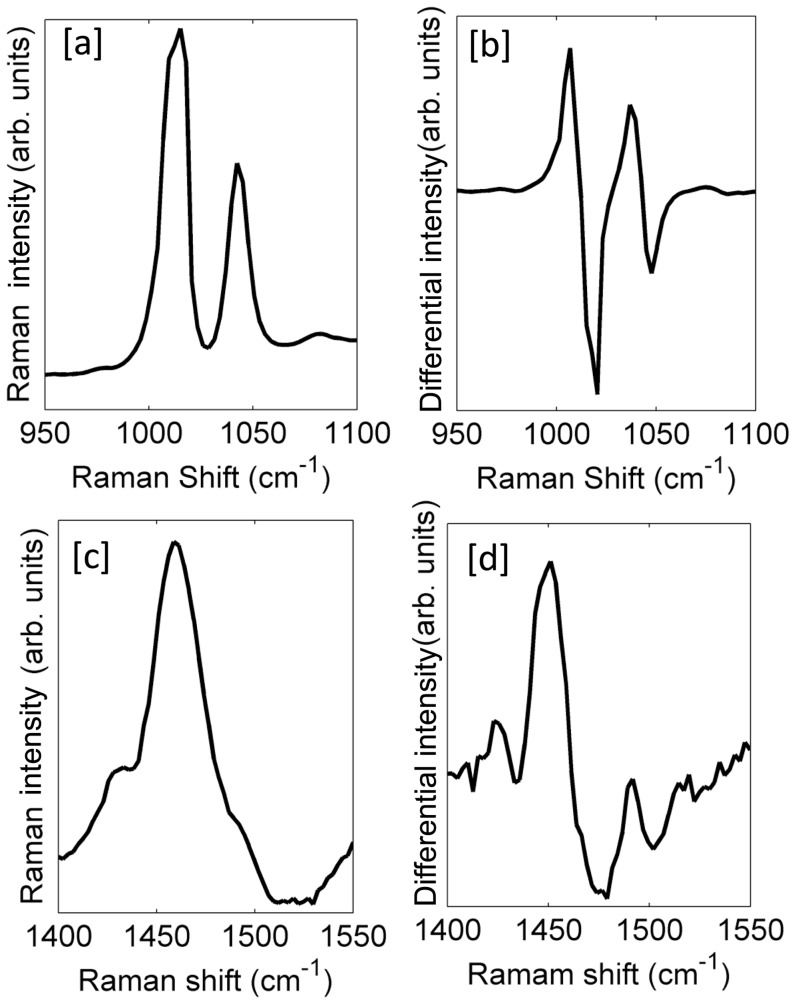
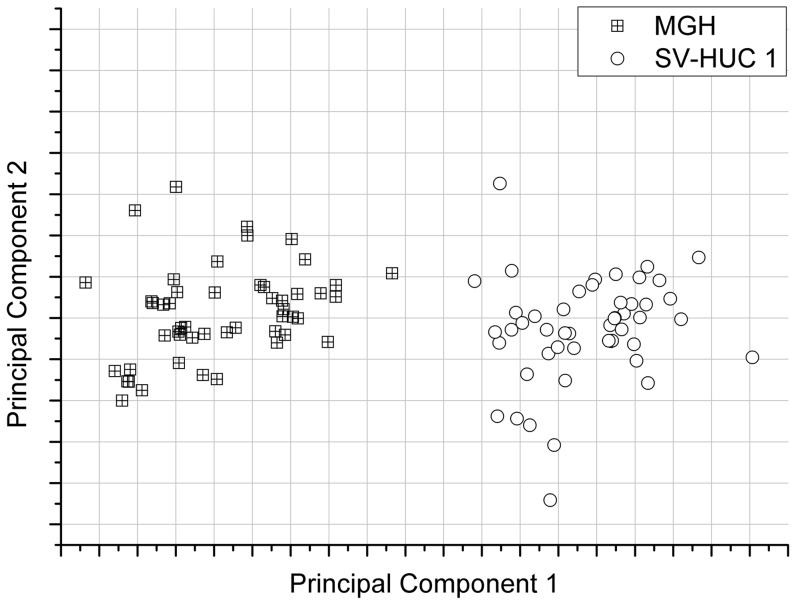
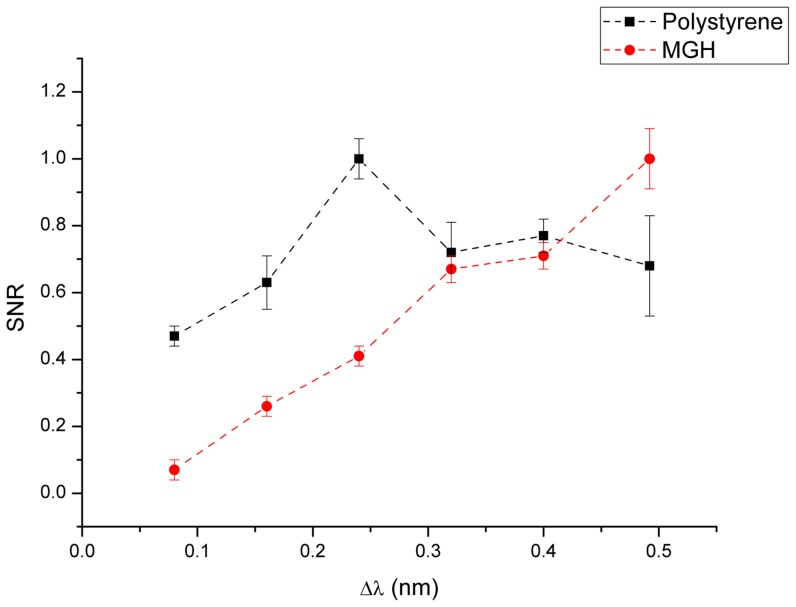
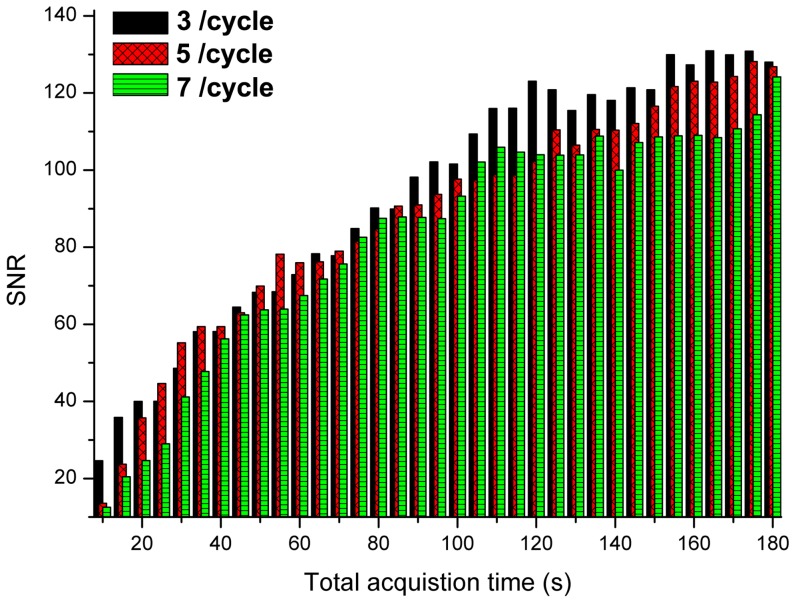
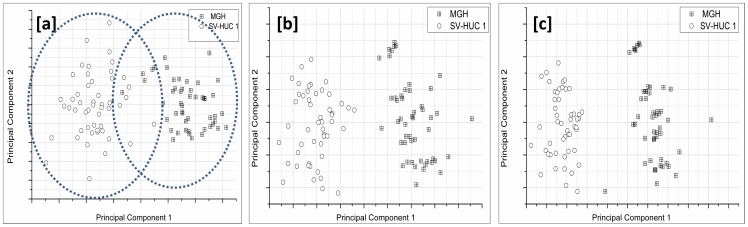
In the field of biomedicine, Raman spectroscopy is a powerful technique to discriminate between normal and cancerous cells. However the strong background signal from the sample and the instrumentation affects the efficiency of this discrimination technique. Wavelength Modulated Raman spectroscopy (WMRS) may suppress the background from the Raman spectra. In this study we demonstrate a systematic approach for optimizing the various parameters of WMRS to achieve a reduction in the acquisition time for potential applications such as higher throughput cell screening. The Signal to Noise Ratio (SNR) of the Raman bands depends on the modulation amplitude, time constant and total acquisition time. It was observed that the sampling rate does not influence the signal to noise ratio of the Raman bands if three or more wavelengths are sampled. With these optimised WMRS parameters, we increased the throughput in the binary classification of normal human urothelial cells and bladder cancer cells by reducing the total acquisition time to 6 s which is significantly lower in comparison to previous acquisition times required for the discrimination between similar cell types.
在生物医学领域,拉曼光谱是区分正常细胞和癌细胞的有力技术。然而,来自样本和仪器的强背景信号会影响这种区分技术的效率。波长调制拉曼光谱(WMRS)可以抑制拉曼光谱的背景信号。在这项研究中,我们展示了一种系统的方法来优化 WMRS 的各种参数,以实现潜在应用(如更高通量的细胞筛选)的采集时间的减少。拉曼带的信噪比(SNR)取决于调制幅度、时间常数和总采集时间。如果采集三个或更多波长,则可以观察到采样率不会影响拉曼带的信噪比。通过使用这些优化的 WMRS 参数,我们将正常人类尿路上皮细胞和膀胱癌细胞的二进制分类的吞吐量提高了 6 秒,与以前用于类似细胞类型区分所需的采集时间相比,显著降低了采集时间。