Edinburgh Cancer Research Centre, Institute of Genetics and Molecular Medicine, University of Edinburgh, Edinburgh, UK.
SUPA, School of Physics and Astronomy, University of St. Andrews, Fife, UK.
J Biophotonics. 2018 Apr;11(4):e201700244. doi: 10.1002/jbio.201700244. Epub 2018 Jan 30.
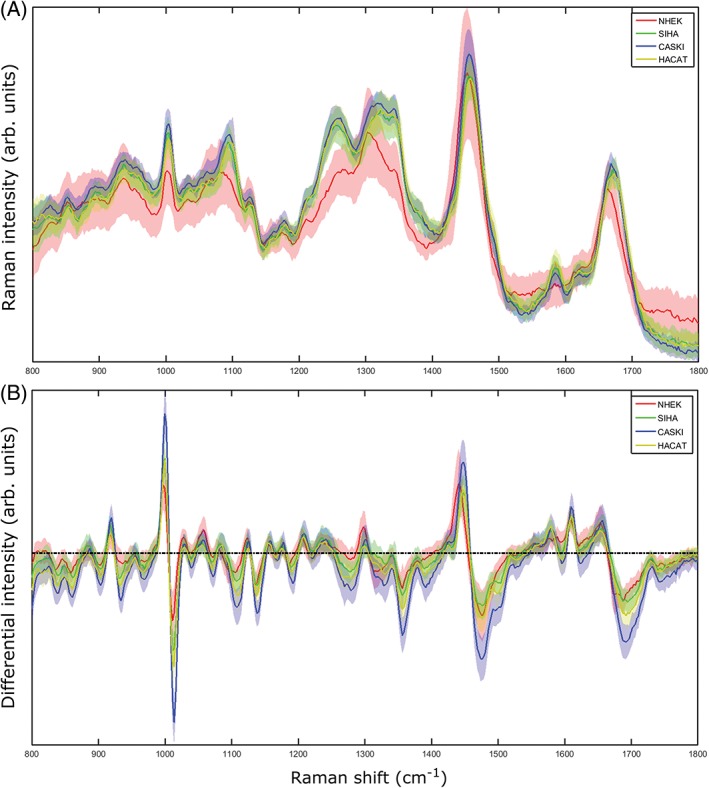
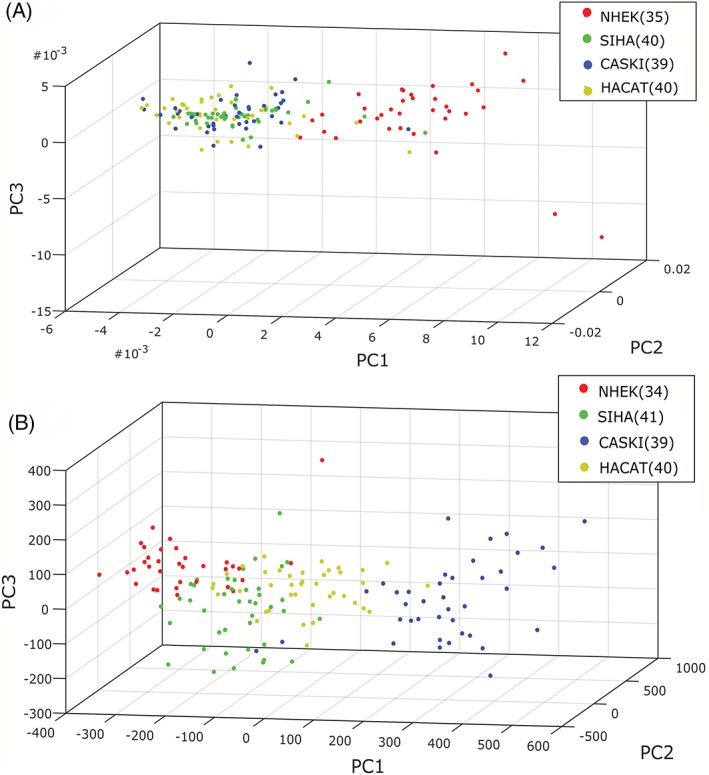
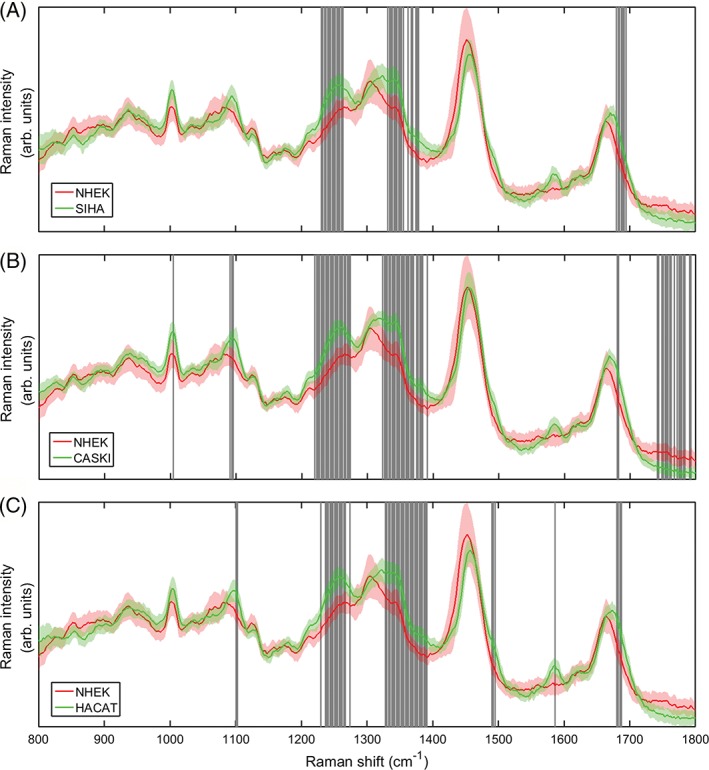
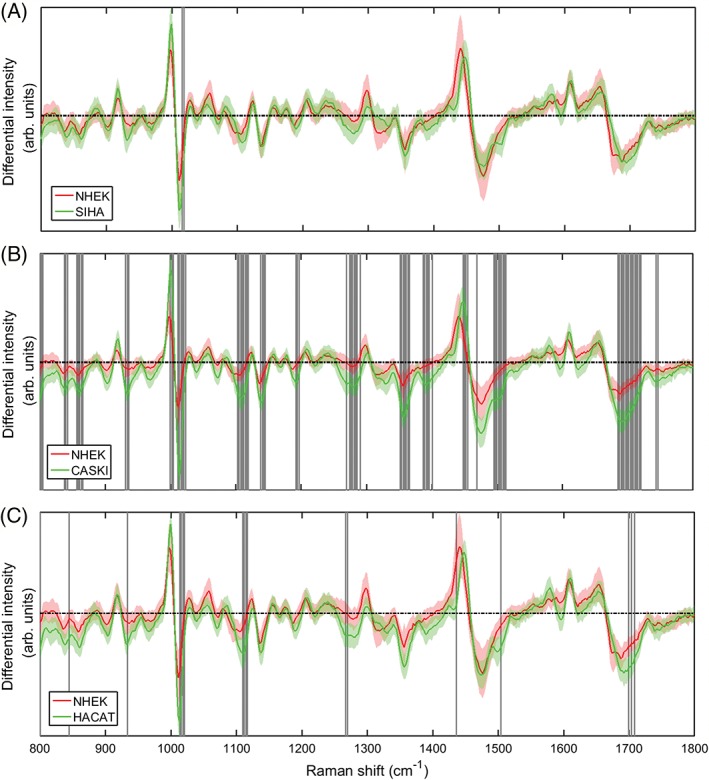
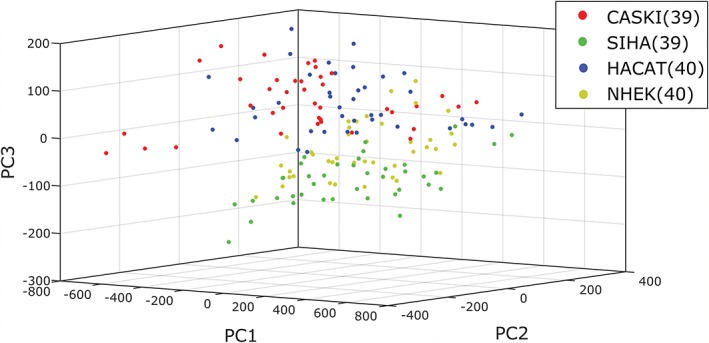
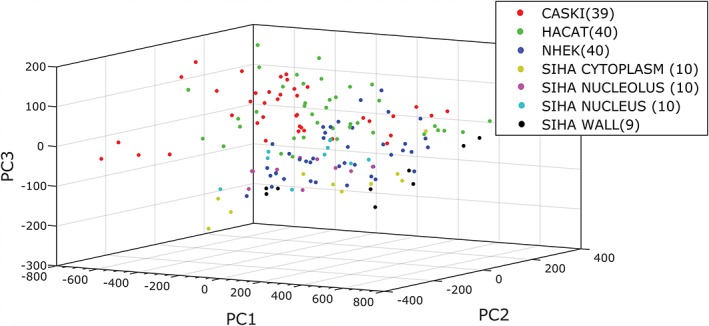
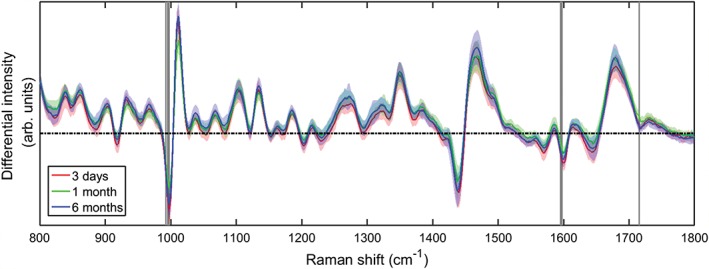
The ability to provide quantitative, objective and automated pathological analysis would provide enormous benefits for national cancer screening programmes, in terms of both resource reduction and improved patient wellbeing. The move towards molecular pathology through spectroscopic methods shows great promise, but has been restricted by spectral quality, acquisition times and lack of direct clinical application. In this paper, we present the application of wavelength modulated Raman spectroscopy for the automated label- and fluorescence-free classification of fixed squamous epithelial cells in suspension, such as those produced during a cervical smear test. Direct comparison with standard Raman spectroscopy shows marked improvement of sensitivity and specificity when considering both human papillomavirus (sensitivity +12.0%, specificity +5.3%) and transformation status (sensitivity +10.3%, specificity +11.1%). Studies on the impact of intracellular sampling location and storage effects suggest that wavelength modulated Raman spectroscopy is sufficiently robust to be used in fixed cell classification, but requires further investigations of potential sources of molecular variation in order to improve current clinical tools.
提供定量、客观和自动化的病理分析能力将为国家癌症筛查计划带来巨大的好处,无论是在资源减少还是改善患者福祉方面。通过光谱方法向分子病理学的转变显示出巨大的前景,但受到光谱质量、采集时间和缺乏直接临床应用的限制。本文介绍了波长调制拉曼光谱在自动化标签和荧光自由分类固定鳞状上皮细胞悬浮液中的应用,例如在宫颈涂片检查中产生的那些细胞。与标准拉曼光谱的直接比较表明,在考虑人乳头瘤病毒(灵敏度+12.0%,特异性+5.3%)和转化状态(灵敏度+10.3%,特异性+11.1%)时,灵敏度和特异性都有显著提高。对细胞内采样位置和储存效果影响的研究表明,波长调制拉曼光谱足够稳健,可以用于固定细胞分类,但需要进一步研究潜在的分子变异源,以改进当前的临床工具。