Pfister Roland, Janczyk Markus
Department of Psychology III, Julius Maximilians University of Würzburg, Germany.
Adv Cogn Psychol. 2013 Jun 17;9(2):74-80. doi: 10.2478/v10053-008-0133-x. Print 2013.
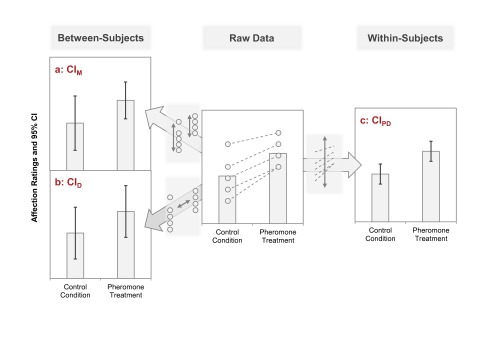
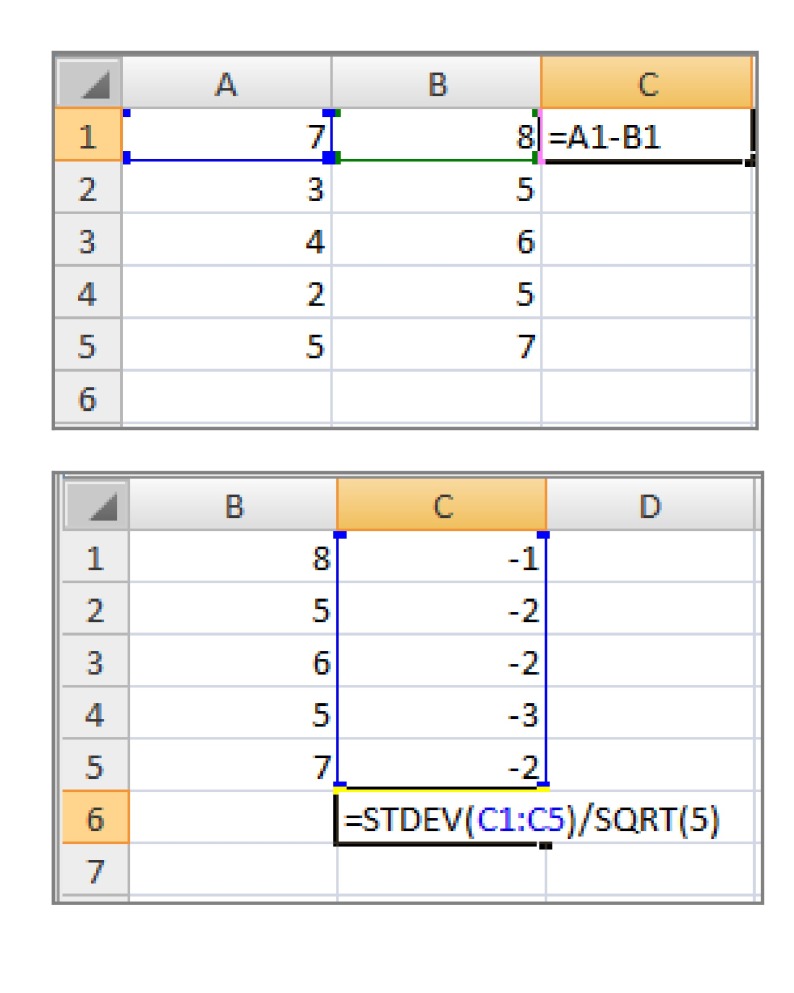
Valued by statisticians, enforced by editors, and confused by many authors, standard errors (SEs) and confidence intervals (CIs) remain a controversial issue in the psychological literature. This is especially true for the proper use of CIs for within-subjects designs, even though several recent publications elaborated on possible solutions for this case. The present paper presents a short and straightforward introduction to the basic principles of CI construction, in an attempt to encourage students and researchers in cognitive psychology to use CIs in their reports and presentations. Focusing on a simple but prevalent case of statistical inference, the comparison of two sample means, we describe possible CIs for between- and within-subjects designs. In addition, we give hands-on examples of how to compute these CIs and discuss their relation to classical t-tests.
标准误差(SEs)和置信区间(CIs)受到统计学家的重视,由编辑强制执行,却让许多作者感到困惑,在心理学文献中仍然是一个有争议的问题。对于在被试内设计中正确使用置信区间来说尤其如此,尽管最近有几篇出版物详细阐述了针对这种情况的可能解决方案。本文对置信区间构建的基本原理进行了简短而直接的介绍,旨在鼓励认知心理学领域的学生和研究人员在他们的报告和展示中使用置信区间。聚焦于一个简单但普遍的统计推断案例,即两个样本均值的比较,我们描述了被试间设计和被试内设计可能的置信区间。此外,我们给出了如何计算这些置信区间的实际示例,并讨论了它们与经典t检验的关系。