Department of Chemistry, Jinan University, Tianhe District, Guangzhou 510632, China.
Research Center of Hydrobiology, Jinan University, Tianhe District, Guangzhou 510632, China.
Biotechnol Biofuels. 2013 Jul 9;6(1):98. doi: 10.1186/1754-6834-6-98.
Recent studies have demonstrated that microalga has been widely regarded as one of the most promising raw materials of biofuels. However, lack of an economical, efficient and convenient method to harvest microalgae is a bottleneck to boost their full-scale application. Many methods of harvesting microalgae, including mechanical, electrical, biological and chemical based, have been studied to overcome this hurdle.
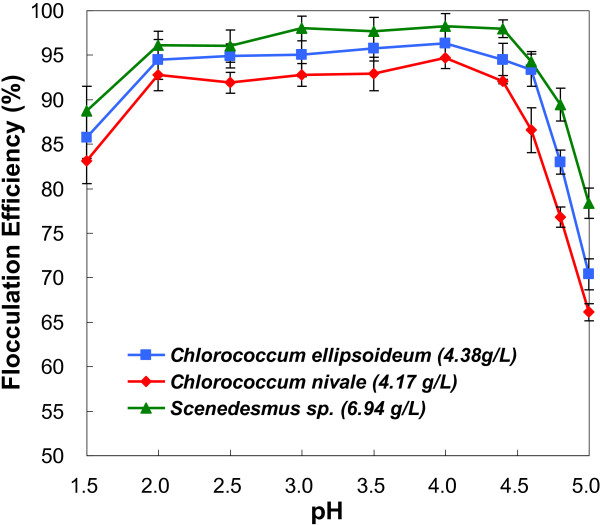
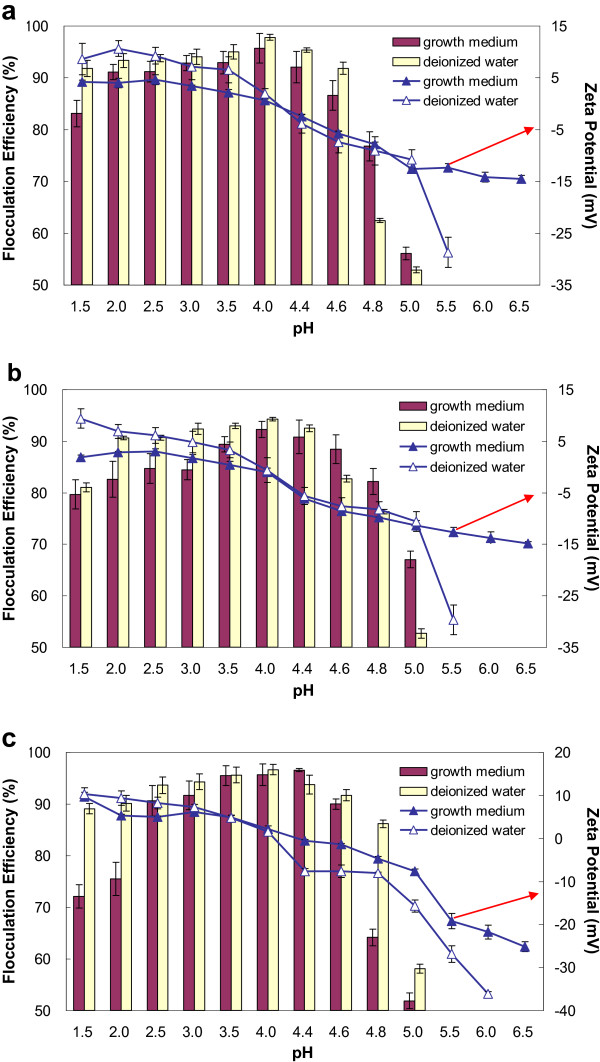
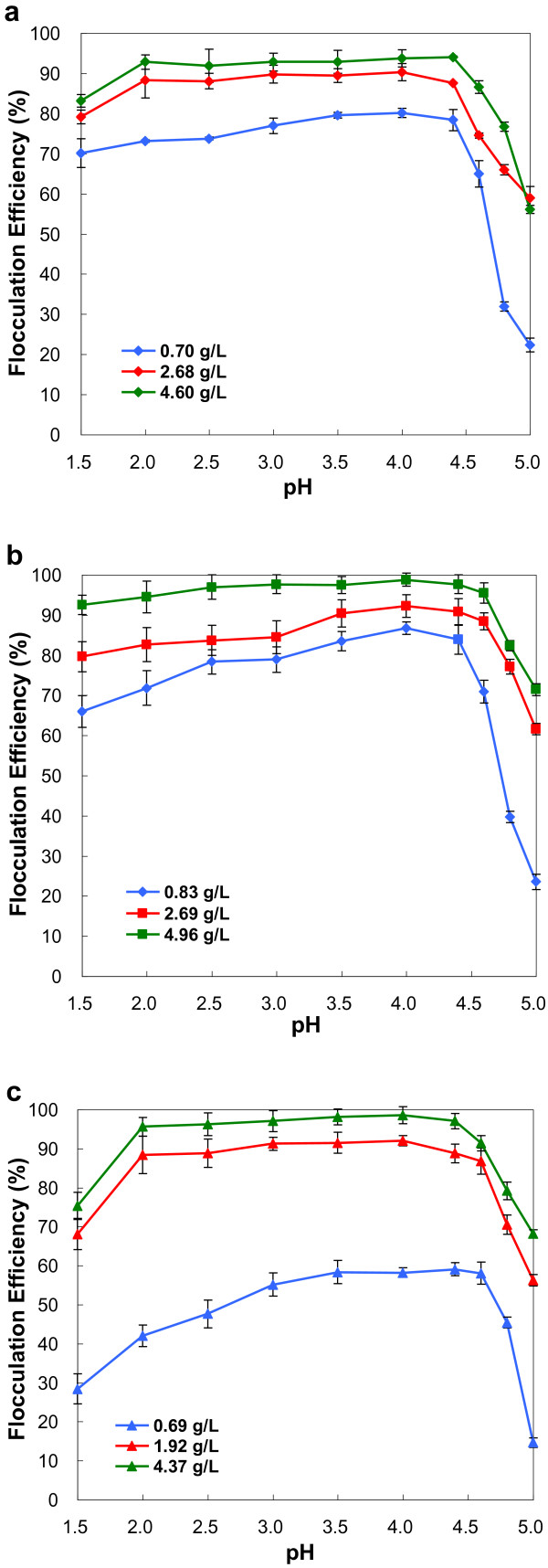
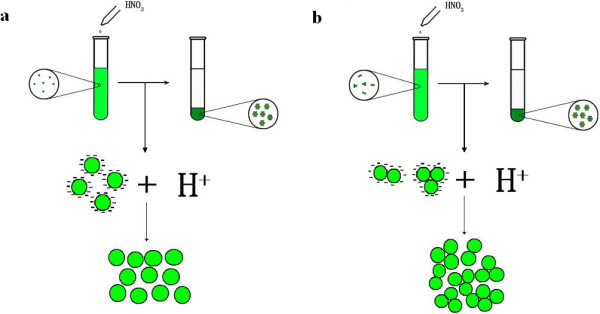
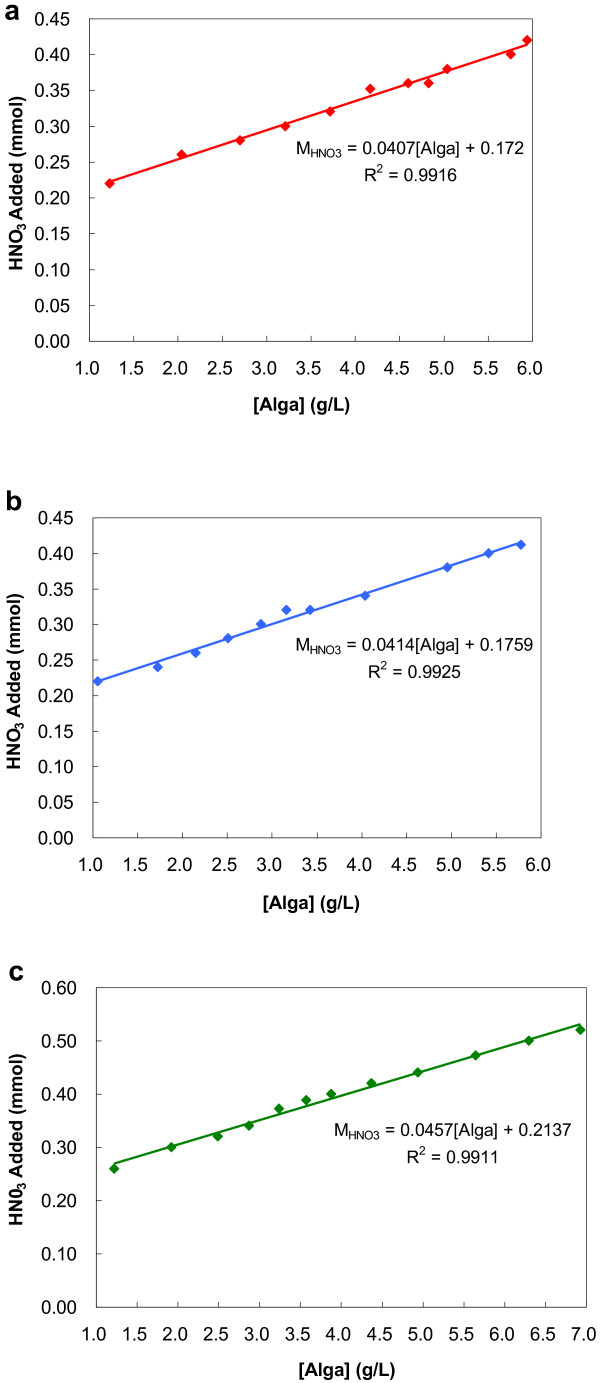
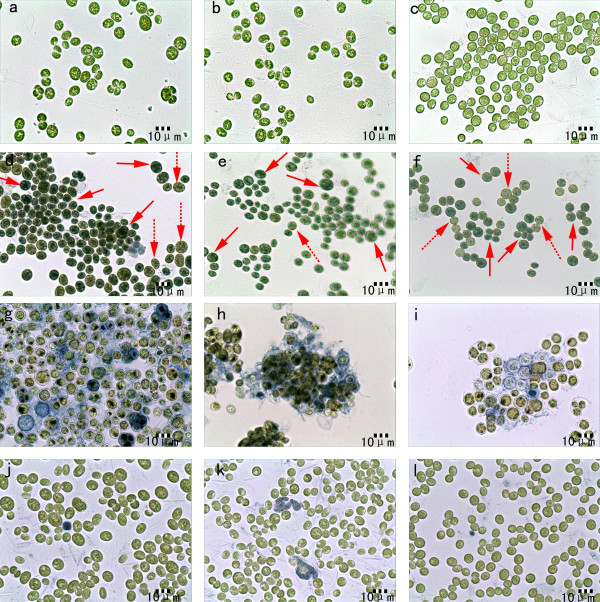
A new flocculation method induced by decreasing pH value of growth medium was developed for harvesting freshwater microalgae. The flocculation efficiencies were as high as 90% for Chlorococcum nivale, Chlorococcum ellipsoideum and Scenedesmus sp. with high biomass concentrations (>1g/L). The optimum flocculation efficiency was achieved at pH 4.0. The flocculation mechanism could be that the carboxylate ions of organic matters adhering on microalgal cells accepted protons when pH decreases and the negative charges were neutralized, resulting in disruption of the dispersing stability of cells and subsequent flocculation of cells. A linear correlation between biomass concentration and acid dosage was observed. Furthermore, viability of flocculated cells was determined by Evans Blue assay and few cells were found to be damaged with pH decrease. After neutralizing pH and adding nutrients to the flocculated medium, microalgae were proved to maintain a similar growth yield in the flocculated medium comparing with that in the fresh medium. The recycling of medium could contribute to the economical production from algae to biodiesel.
The study provided an economical, efficient and convenient method to harvest fresh microalgae. Advantages include capability of treating high cell biomass concentrations (>1g/L), excellent flocculation efficiencies (≥ 90%), operational simplicity, low cost and recycling of medium. It has shown the potential to overcome the hurdle of harvesting microalgae to promote full-scale application to biofuels from microalgae.
最近的研究表明,微藻已被广泛认为是生物燃料最有前途的原料之一。然而,缺乏经济、高效和便捷的方法来收获微藻是阻碍其大规模应用的瓶颈。为了克服这一障碍,已经研究了许多收获微藻的方法,包括机械、电气、生物和化学方法。
开发了一种通过降低生长介质 pH 值来诱导絮凝的新方法,用于收获淡水微藻。当 pH 值为 4.0 时,絮凝效率最高,对于生物量浓度(>1g/L)较高的衣藻、椭圆小球藻和栅藻,絮凝效率高达 90%。絮凝机制可能是细胞上附着的有机物中的羧酸盐在 pH 值降低时接受质子,从而中和了负电荷,破坏了细胞的分散稳定性,导致细胞絮凝。观察到生物量浓度与酸剂量之间存在线性相关性。此外,通过 Evans Blue 测定法测定了絮凝细胞的活力,发现随着 pH 值降低,细胞受损的很少。中和 pH 值并向絮凝介质中添加营养物质后,发现絮凝介质中的微藻与新鲜介质中的微藻相比,生长产量相似。介质的回收有助于从藻类生产生物柴油的经济生产。
该研究提供了一种经济、高效和便捷的方法来收获新鲜微藻。其优点包括能够处理高细胞生物量浓度(>1g/L)、优异的絮凝效率(≥90%)、操作简单、成本低和介质回收。它显示出克服收获微藻的障碍、促进微藻生物燃料大规模应用的潜力。