Campos Paulo R A, Rosas Alexandre, de Oliveira Viviane M, Gomes Marcelo A F
Departamento de Física, Universidade Federal de Pernambuco, Recife, Pernambuco, Brazil.
PLoS One. 2013 Jun 19;8(6):e66495. doi: 10.1371/journal.pone.0066495. Print 2013.
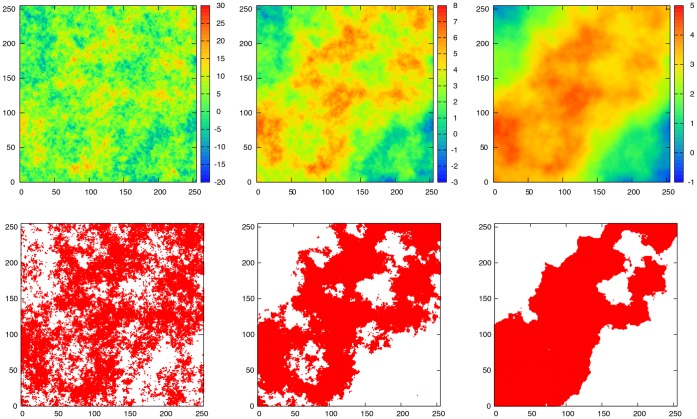
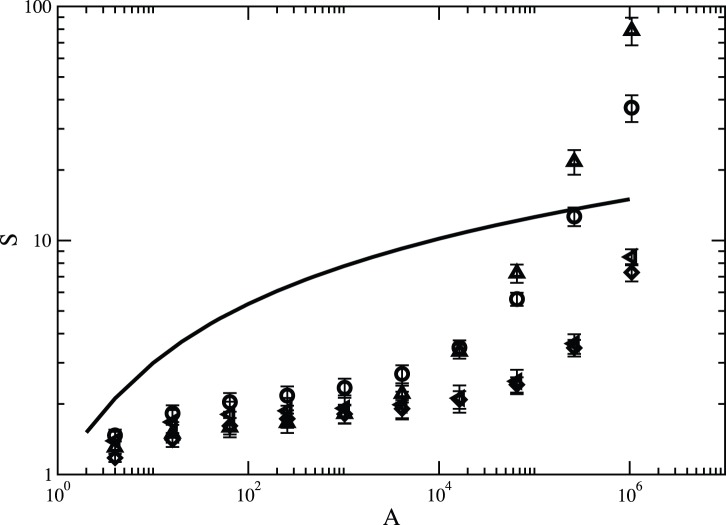
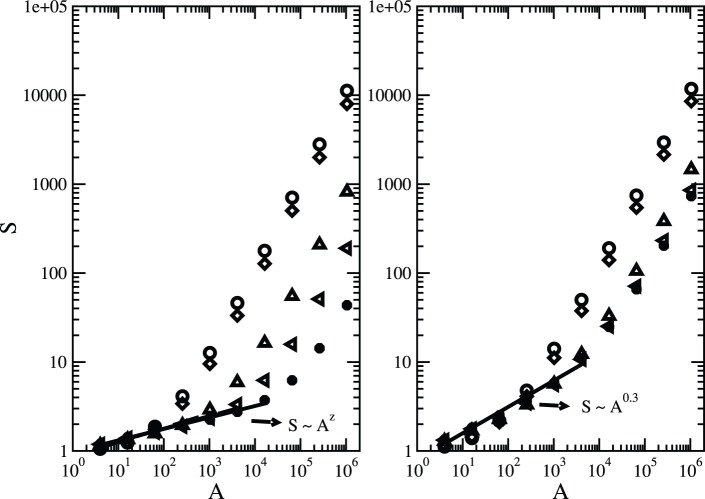
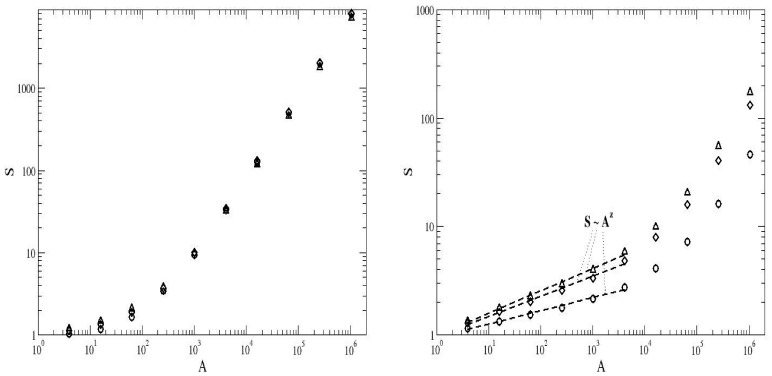
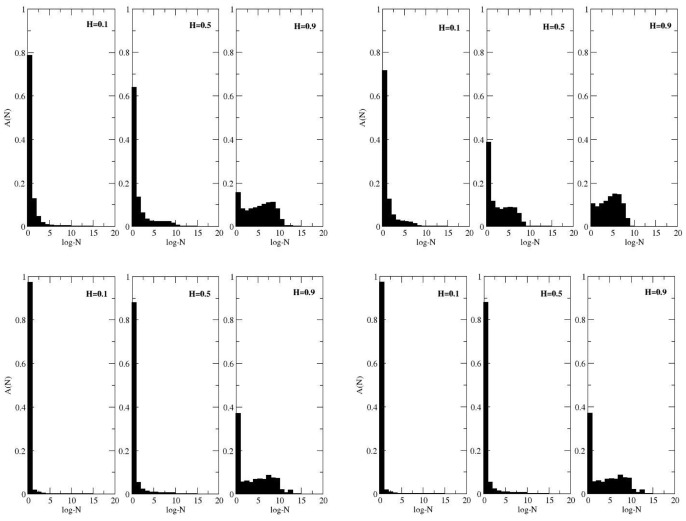
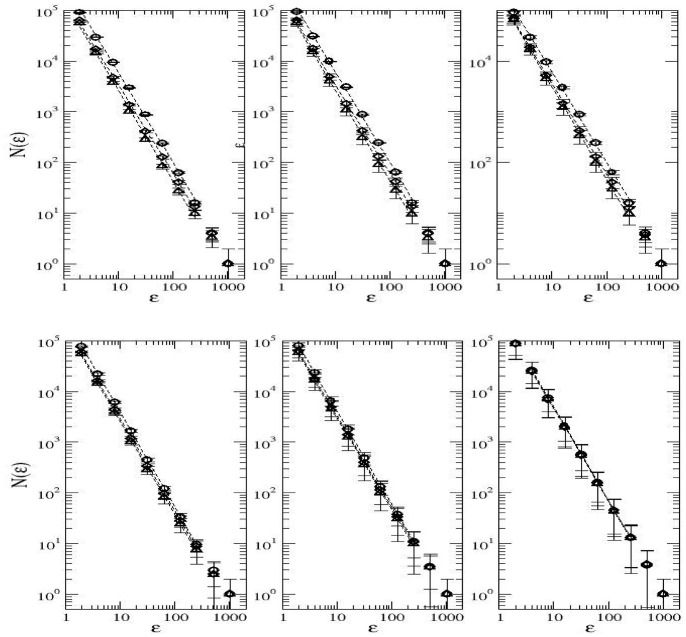
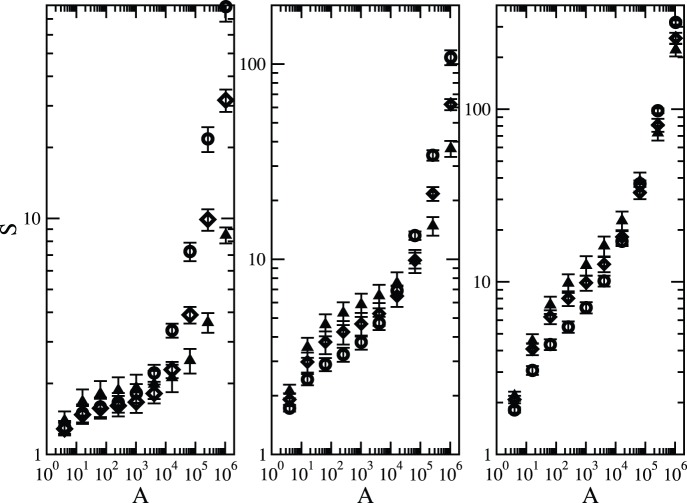
The effects of habitat fragmentation and their implications for biodiversity is a central issue in conservation biology which still lacks an overall comprehension. There is not yet a clear consensus on how to quantify fragmentation even though it is quite common to couple the effects of habitat loss with habitat fragmentation on biodiversity. Here we address the spatial patterns of species distribution in fragmented landscapes, assuming a neutral community model. To build up the fragmented landscapes, we employ the fractional Brownian motion approach, which in turn permits us to tune the amount of habitat loss and degree of clumping of the landscape independently. The coupling between the neutral community model, here simulated by means of the coalescent method, and fractal neutral landscape models enables us to address how the species-area relationship changes as the spatial patterns of a landscape is varied. The species-area relationship is one of the most fundamental laws in ecology, considered as a central tool in conservation biology, and is used to predict species loss following habitat disturbances. Our simulation results indicate that the level of clumping has a major role in shaping the species-area relationship. For instance, more compact landscapes are more sensitive to the effects of habitat loss and speciation rate. Besides, the level of clumping determines the existence and extension of the power-law regime which is expected to hold at intermediate scales. The distributions of species abundance are strongly influenced by the degree of fragmentation. We also show that the first and second commonest species have approximately self-similar spatial distributions across scales, with the fractal dimensions of the support of the first and second commonest species being very robust to changes in the spatial patterns of the landscape.
栖息地破碎化的影响及其对生物多样性的意义是保护生物学中的核心问题,但目前仍缺乏全面的理解。尽管将栖息地丧失的影响与栖息地破碎化对生物多样性的影响联系起来很常见,但对于如何量化破碎化尚未达成明确共识。在这里,我们假设一个中性群落模型,研究破碎景观中物种分布的空间模式。为了构建破碎景观,我们采用分数布朗运动方法,这使我们能够独立调整栖息地丧失的数量和景观的聚集程度。中性群落模型(这里通过合并方法进行模拟)与分形中性景观模型之间的耦合,使我们能够研究随着景观空间模式的变化,物种 - 面积关系如何改变。物种 - 面积关系是生态学中最基本的规律之一,被视为保护生物学的核心工具,用于预测栖息地干扰后的物种丧失。我们的模拟结果表明,聚集程度在塑造物种 - 面积关系中起主要作用。例如,更紧凑的景观对栖息地丧失和物种形成率的影响更敏感。此外,聚集程度决定了幂律 regime 的存在和范围,预计该幂律 regime 在中等尺度下成立。物种丰度的分布受到破碎化程度的强烈影响。我们还表明,最常见的第一和第二个物种在不同尺度上具有近似自相似的空间分布,最常见的第一和第二个物种分布的分形维数对景观空间模式的变化非常稳健。