College of Forestry, Northwest A&F University, Yangling, Shaanxi, China.
PLoS One. 2013 Jun 28;8(6):e67353. doi: 10.1371/journal.pone.0067353. Print 2013.
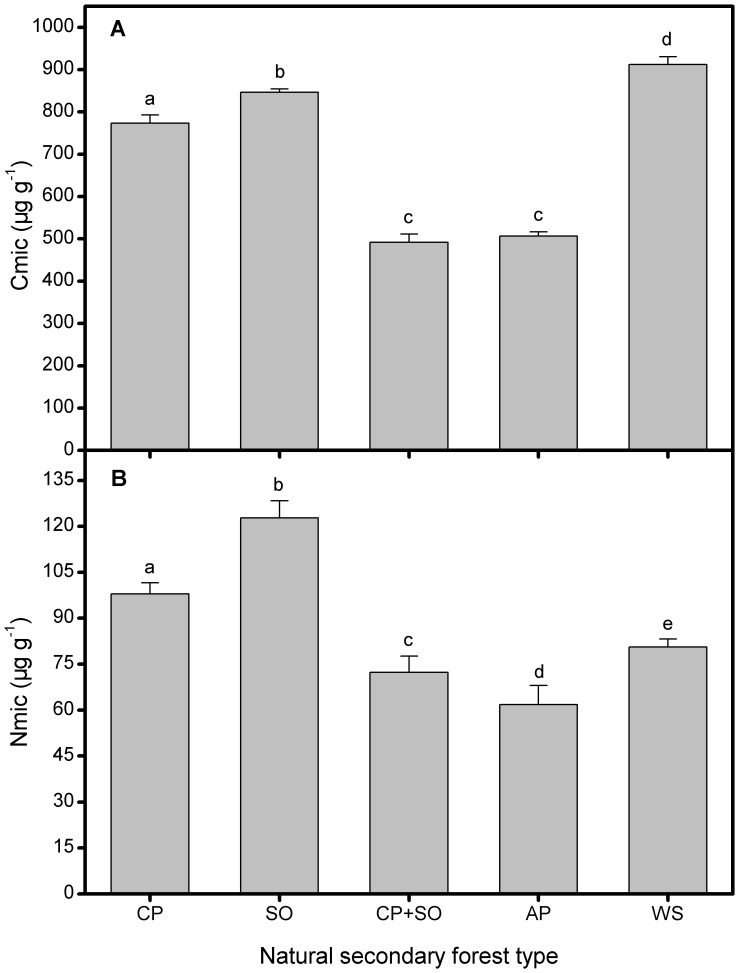
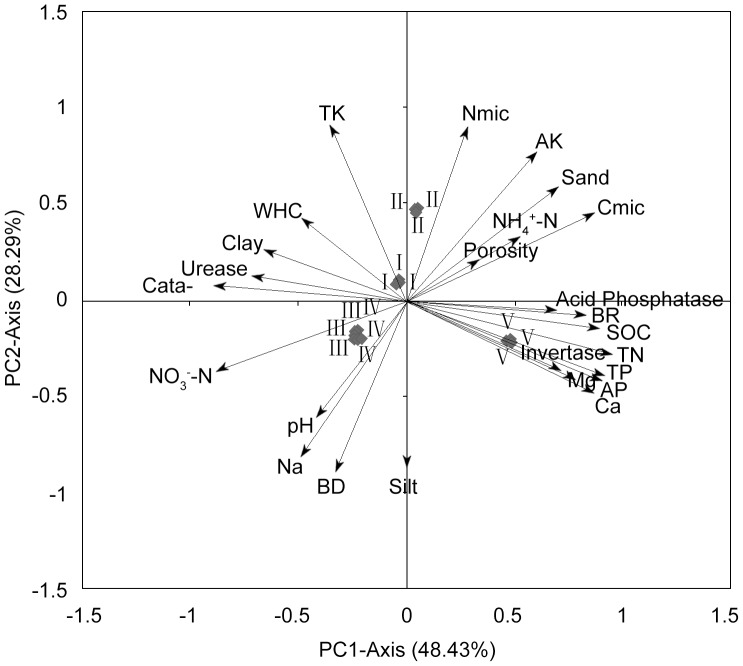
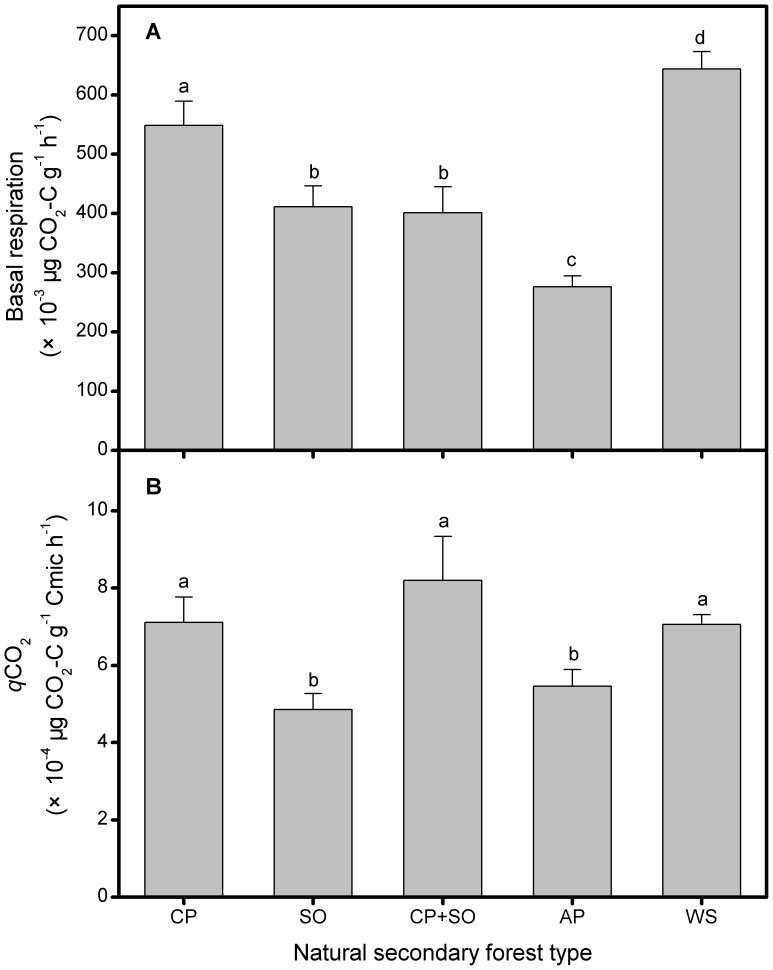
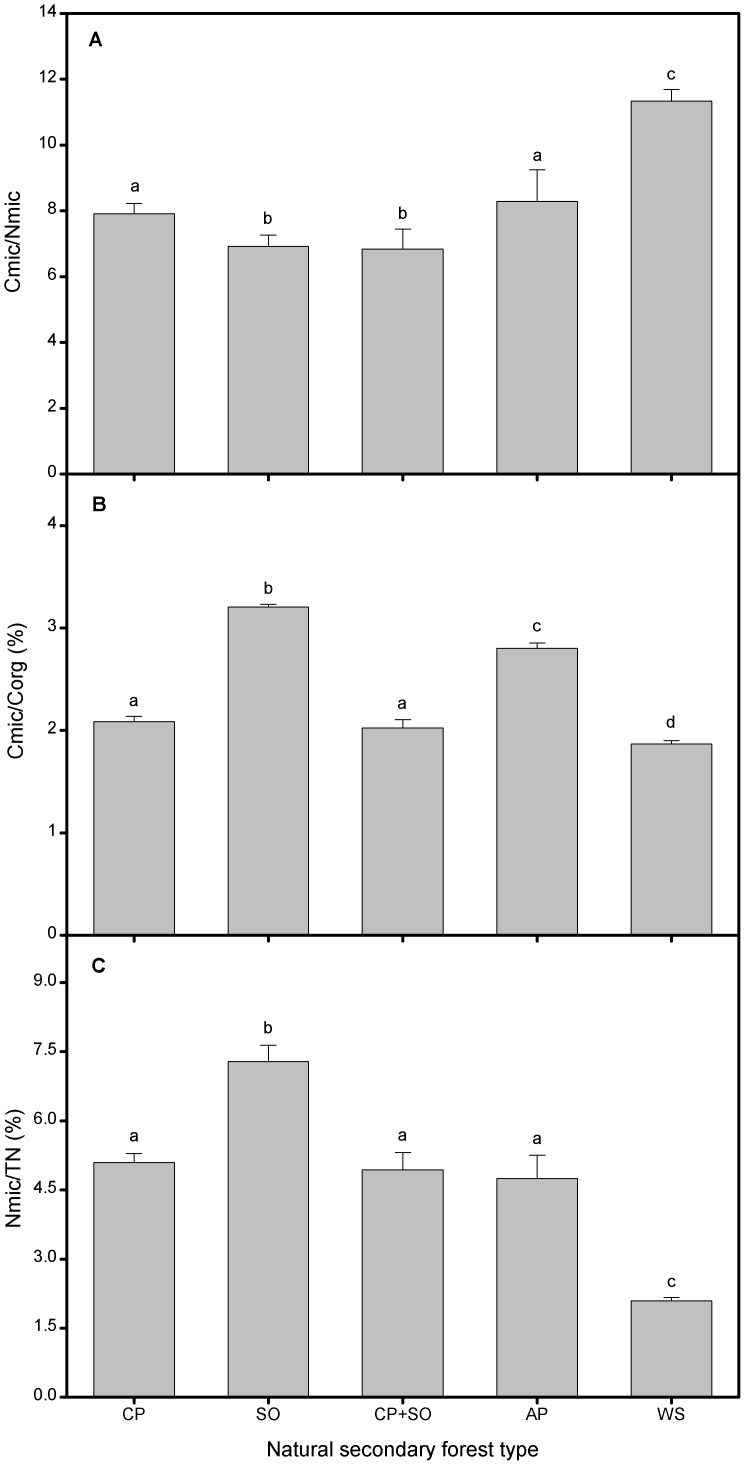
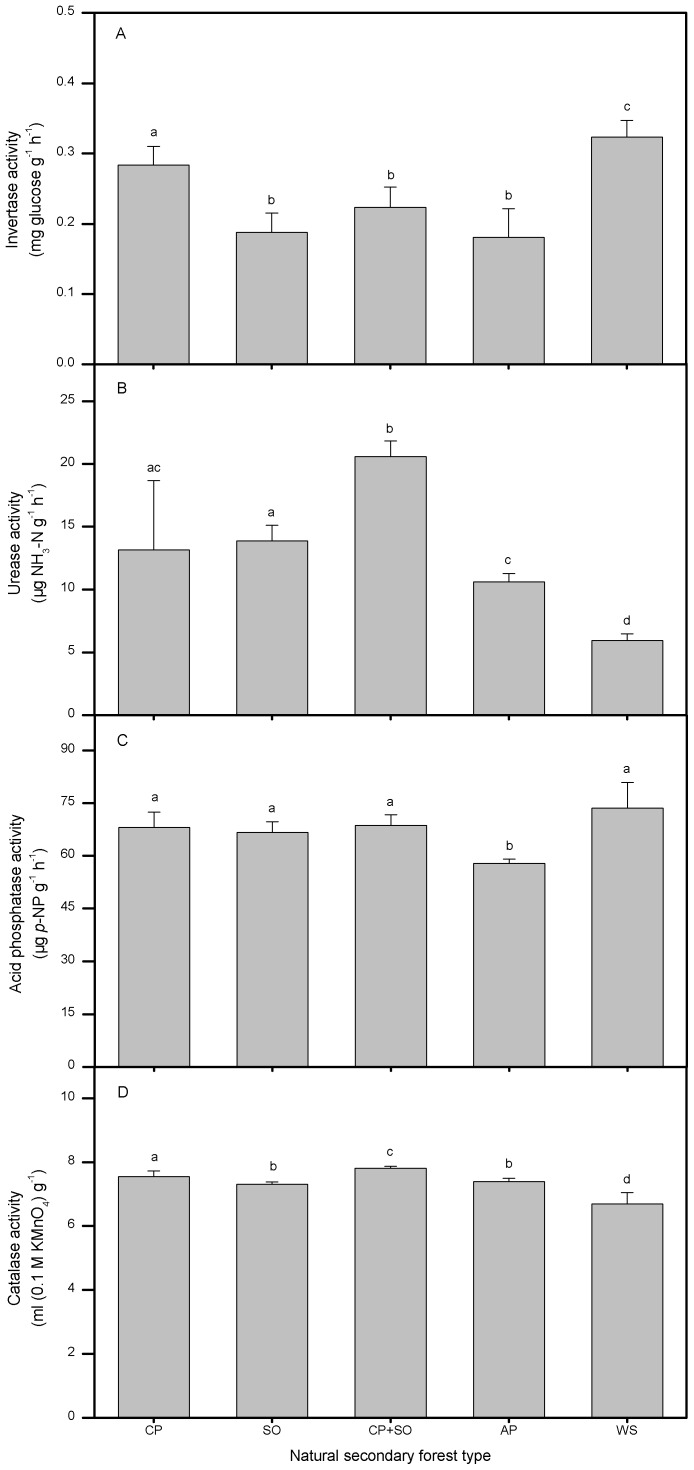
Different forest types exert essential impacts on soil physical-chemical characteristics by dominant tree species producing diverse litters and root exudates, thereby further regulating size and activity of soil microbial communities. However, the study accuracy is usually restricted by differences in climate, soil type and forest age. Our objective is to precisely quantify soil microbial biomass, basal respiration and enzyme activity of five natural secondary forest (NSF) types with the same stand age and soil type in a small climate region and to evaluate relationship between soil microbial and physical-chemical characters. We determined soil physical-chemical indices and used the chloroform fumigation-extraction method, alkali absorption method and titration or colorimetry to obtain the microbial data. Our results showed that soil physical-chemical characters remarkably differed among the NSFs. Microbial biomass carbon (Cmic) was the highest in wilson spruce soils, while microbial biomass nitrogen (Nmic) was the highest in sharptooth oak soils. Moreover, the highest basal respiration was found in the spruce soils, but mixed, Chinese pine and spruce stands exhibited a higher soil qCO2. The spruce soils had the highest Cmic/Nmic ratio, the greatest Nmic/TN and Cmic/Corg ratios were found in the oak soils. Additionally, the spruce soils had the maximum invertase activity and the minimum urease and catalase activities, but the maximum urease and catalase activities were found in the mixed stand. The Pearson correlation and principle component analyses revealed that the soils of spruce and oak stands obviously discriminated from other NSFs, whereas the others were similar. This suggested that the forest types affected soil microbial properties significantly due to differences in soil physical-chemical features.
不同的森林类型通过优势树种产生不同的凋落物和根系分泌物,对土壤理化特性产生重要影响,从而进一步调节土壤微生物群落的大小和活性。然而,研究的准确性通常受到气候、土壤类型和森林年龄的差异的限制。我们的目标是在小气候区精确量化具有相同林龄和土壤类型的五种天然次生林(NSF)类型的土壤微生物生物量、基础呼吸和酶活性,并评估土壤微生物与理化特性之间的关系。我们测定了土壤理化指标,并采用氯仿熏蒸提取法、碱吸收法和滴定或比色法获得微生物数据。结果表明,NSF 之间的土壤理化性质存在显著差异。土壤微生物生物量碳(Cmic)在云杉土壤中最高,而土壤微生物生物量氮(Nmic)在锐齿栎土壤中最高。此外,云杉土壤中的基础呼吸最高,但混合林、油松林和云杉林的土壤 qCO2 较高。云杉土壤的 Cmic/Nmic 比值最高,栎土壤的 Nmic/TN 和 Cmic/Corg 比值最大。此外,云杉土壤的转化酶活性最高,脲酶和过氧化氢酶活性最低,但混合林的脲酶和过氧化氢酶活性最高。Pearson 相关分析和主成分分析表明,云杉和栎林的土壤明显与其他 NSF 区分开来,而其他林分则相似。这表明森林类型由于土壤理化特性的差异,对土壤微生物特性有显著影响。