Des Jarlais D C, Pinkerton S, Hagan H, Guardino V, Feelemyer J, Cooper H, Hatzatkis A, Uuskula A
The Baron Edmond de Rothschild Chemical Dependency Institute, Beth Israel Medical Center, 160 Water Street, FL 24, New York, NY 10038, USA.
Adv Prev Med. 2013;2013:346372. doi: 10.1155/2013/346372. Epub 2013 Jun 12.
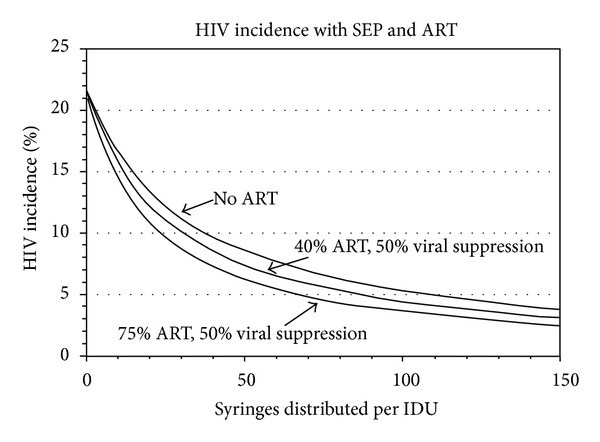
After 30 years of extensive research on human immunodeficiency virus (HIV) among persons who inject drugs (PWID), we now have a good understanding of the critical issues involved. Following the discovery of HIV in 1981, epidemics among PWID were noted in many countries, and consensus recommendations for interventions for reducing injection related HIV transmission have been developed. While high-income countries have continued to develop and implement new Harm Reduction programs, most low-/middle-income countries have implemented Harm Reduction at very low levels. Modeling of combined prevention programming including needle exchange (NSP) and antiretroviral therapy (ARV) suggests that NSP be given the highest priority. Future HIV prevention programming should continue to provide Harm Reduction programs for PWID coupled with interventions aimed at reducing sexual transmission. As HIV continues to spread in low- and middle-income countries, it is important to achieve and maintain high coverage of Harm Reduction programs in these locations. As PWID almost always experience multiple health problems, it will be important to address these multiple problems within a comprehensive approach grounded in a human rights perspective.
在对注射吸毒者中的人类免疫缺陷病毒(HIV)进行了30年的广泛研究之后,我们现在对其中涉及的关键问题有了很好的理解。1981年发现HIV后,许多国家都注意到注射吸毒者中的疫情,并制定了关于减少与注射相关的HIV传播干预措施的共识性建议。虽然高收入国家继续制定和实施新的减少伤害计划,但大多数低收入/中等收入国家实施减少伤害的水平非常低。对包括针头交换(NSP)和抗逆转录病毒疗法(ARV)在内的联合预防方案进行建模表明,应将针头交换置于最高优先地位。未来的HIV预防方案应继续为注射吸毒者提供减少伤害计划,并辅以旨在减少性传播的干预措施。随着HIV在低收入和中等收入国家继续传播,在这些地区实现并维持减少伤害计划的高覆盖率非常重要。由于注射吸毒者几乎总是面临多种健康问题,从人权角度出发,以综合方法解决这些多重问题将很重要。