The Jenner Institute, University of Oxford, Oxford, United Kingdom.
PLoS One. 2013 Jul 3;8(7):e67922. doi: 10.1371/journal.pone.0067922. Print 2013.
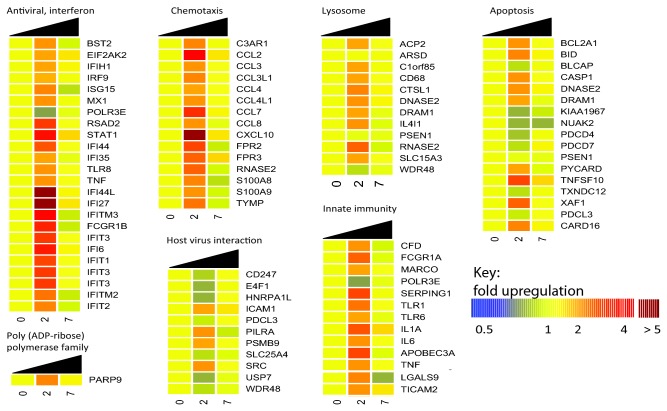
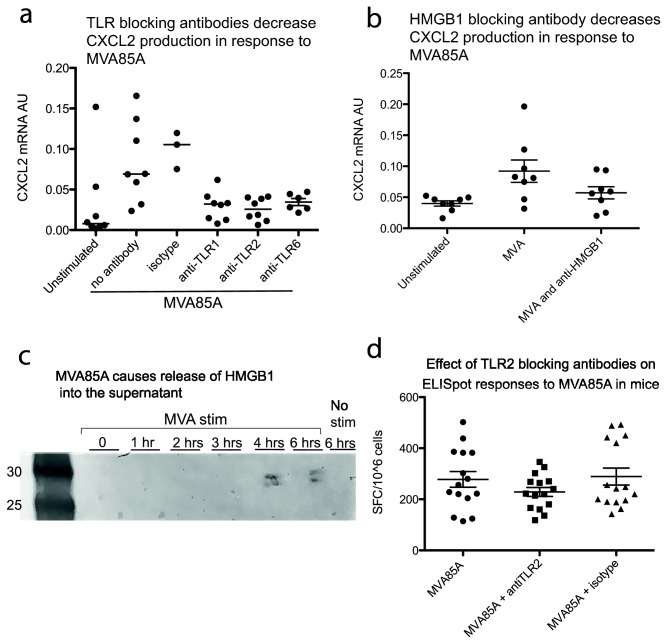
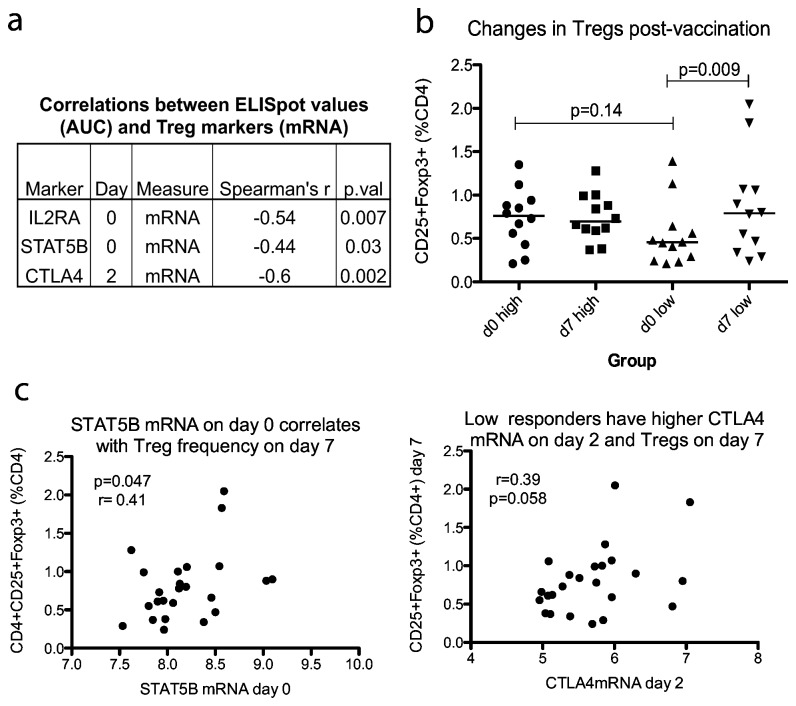
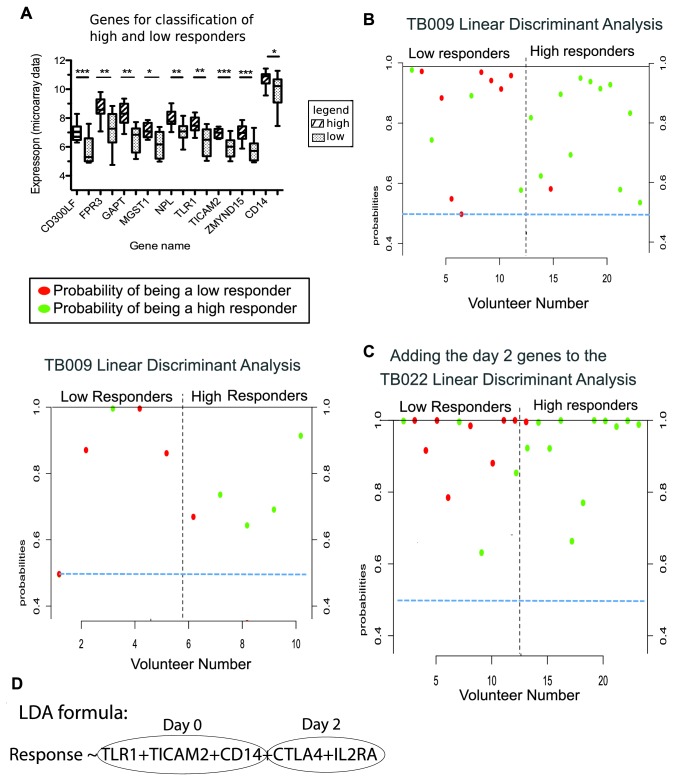
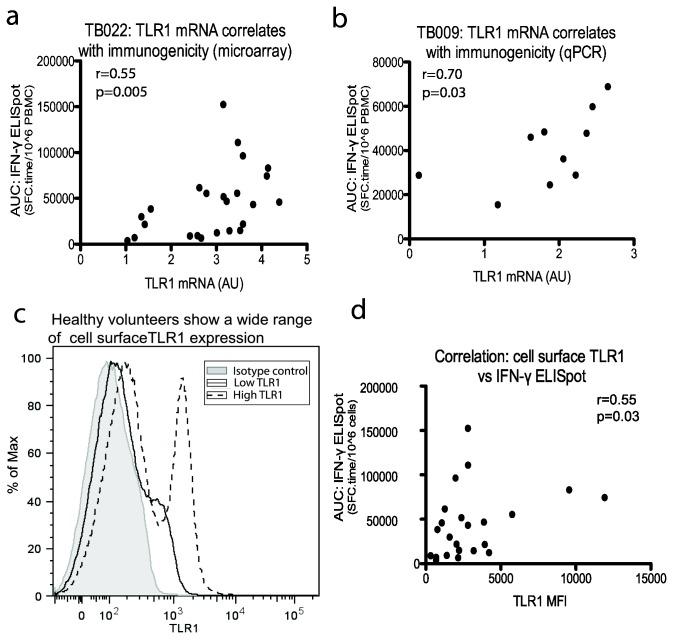
A better understanding of the relationships between vaccine, immunogenicity and protection from disease would greatly facilitate vaccine development. Modified vaccinia virus Ankara expressing antigen 85A (MVA85A) is a novel tuberculosis vaccine candidate designed to enhance responses induced by BCG. Antigen-specific interferon-γ (IFN-γ) production is greatly enhanced by MVA85A, however the variability between healthy individuals is extensive. In this study we have sought to characterize the early changes in gene expression in humans following vaccination with MVA85A and relate these to long-term immunogenicity. Two days post-vaccination, MVA85A induces a strong interferon and inflammatory response. Separating volunteers into high and low responders on the basis of T cell responses to 85A peptides measured during the trial, an expansion of circulating CD4+ CD25+ Foxp3+ cells is seen in low but not high responders. Additionally, high levels of Toll-like Receptor (TLR) 1 on day of vaccination are associated with an increased response to antigen 85A. In a classification model, combined expression levels of TLR1, TICAM2 and CD14 on day of vaccination and CTLA4 and IL2Rα two days post-vaccination can classify high and low responders with over 80% accuracy. Furthermore, administering MVA85A in mice with anti-TLR2 antibodies may abrogate high responses, and neutralising antibodies to TLRs 1, 2 or 6 or HMGB1 decrease CXCL2 production during in vitro stimulation with MVA85A. HMGB1 is released into the supernatant following atimulation with MVA85A and we propose this signal may be the trigger activating the TLR pathway. This study suggests an important role for an endogenous ligand in innate sensing of MVA and demonstrates the importance of pattern recognition receptors and regulatory T cell responses in determining the magnitude of the antigen specific immune response to vaccination with MVA85A in humans.
更好地理解疫苗、免疫原性和疾病保护之间的关系将极大地促进疫苗的开发。表达抗原 85A 的改良安卡拉牛痘病毒(MVA85A)是一种新型的结核病疫苗候选物,旨在增强卡介苗诱导的反应。MVA85A 极大地增强了抗原特异性干扰素-γ(IFN-γ)的产生,然而,健康个体之间的变异性很大。在这项研究中,我们试图描述接种 MVA85A 后人类早期基因表达的变化,并将这些变化与长期免疫原性相关联。接种后两天,MVA85A 诱导强烈的干扰素和炎症反应。根据试验中测量的 85A 肽的 T 细胞反应,将志愿者分为高应答者和低应答者,在低应答者中可见循环 CD4+CD25+Foxp3+细胞的扩增,但在高应答者中未见。此外,接种日 TLR1 的高水平与对抗原 85A 的反应增加相关。在分类模型中,接种日 TLR1、TICAM2 和 CD14 的组合表达水平以及接种后两天的 CTLA4 和 IL2Rα 可以以超过 80%的准确率对高应答者和低应答者进行分类。此外,在具有抗 TLR2 抗体的小鼠中给予 MVA85A 可能会消除高应答,并且中和 TLR1、2 或 6 或 HMGB1 的抗体可降低体外刺激用 MVA85A 时 CXCL2 的产生。HMGB1 在刺激用 MVA85A 后释放到上清液中,我们提出该信号可能是激活 TLR 途径的触发因素。这项研究表明,内源性配体在先天感知 MVA 中起着重要作用,并证明了模式识别受体和调节性 T 细胞反应在决定人类接种 MVA85A 后的抗原特异性免疫反应的幅度方面的重要性。