Centre for Integrative Neuroscience, University of Tübingen Tübingen, Germany ; MEG-Center, University of Tübingen Tübingen, Germany.
Front Hum Neurosci. 2013 Jul 10;7:338. doi: 10.3389/fnhum.2013.00338. eCollection 2013.
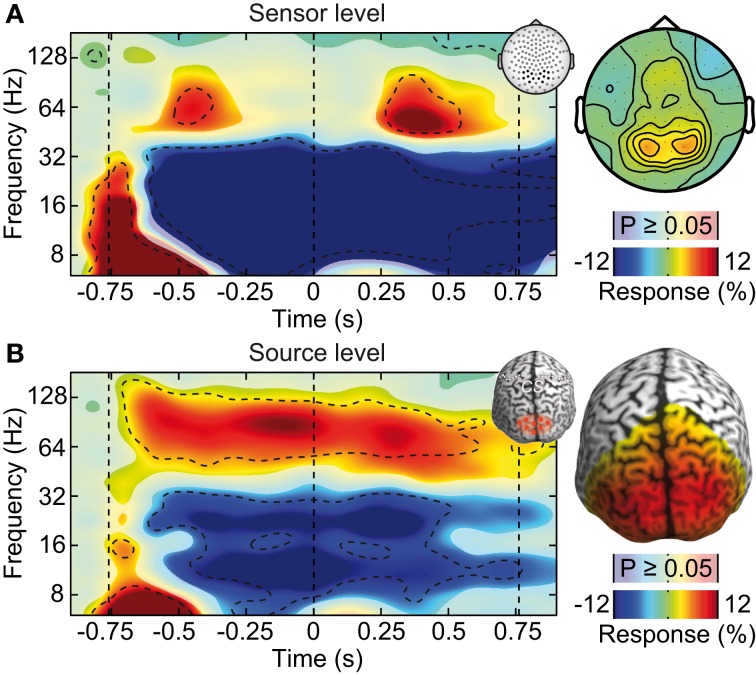
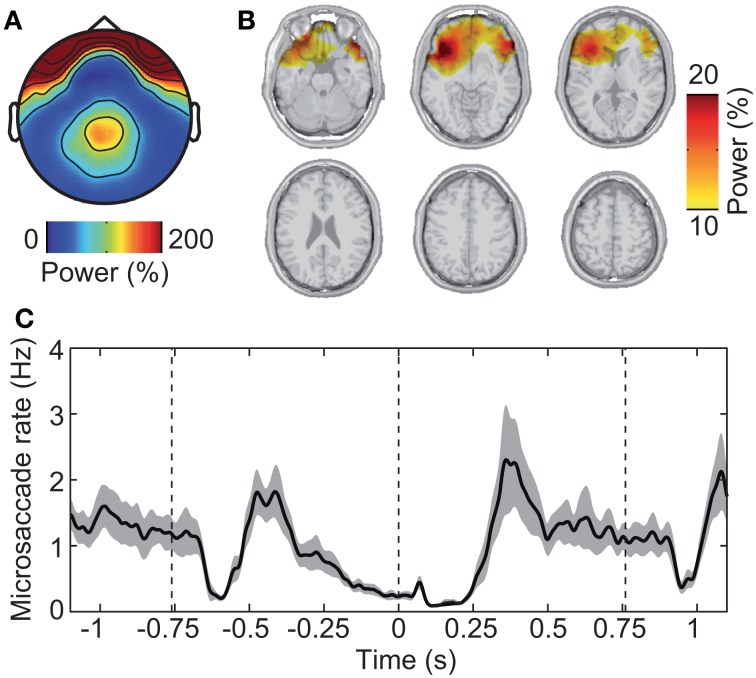
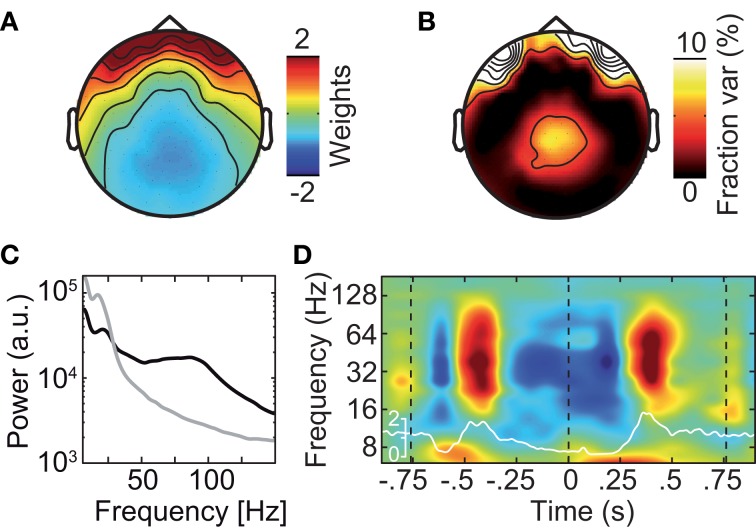
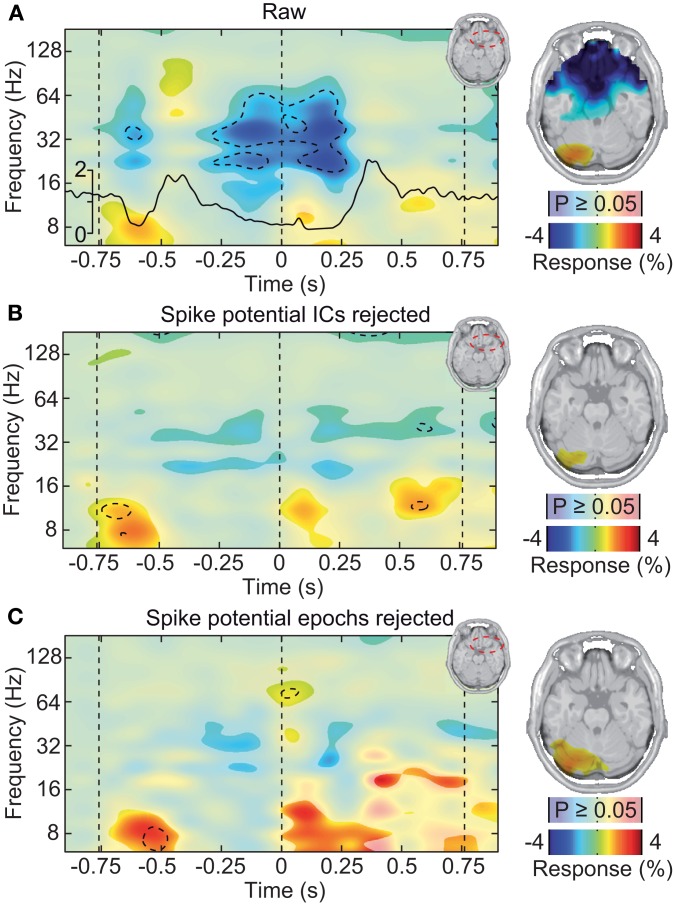
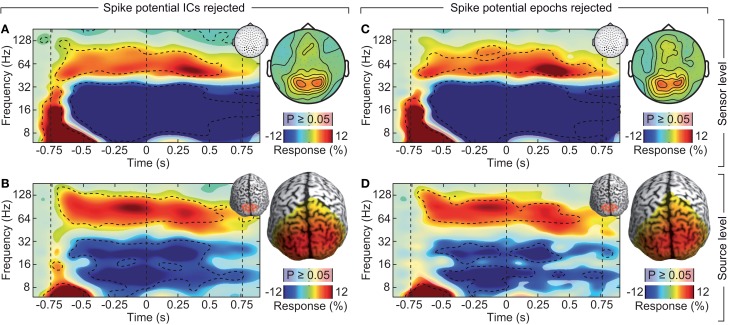
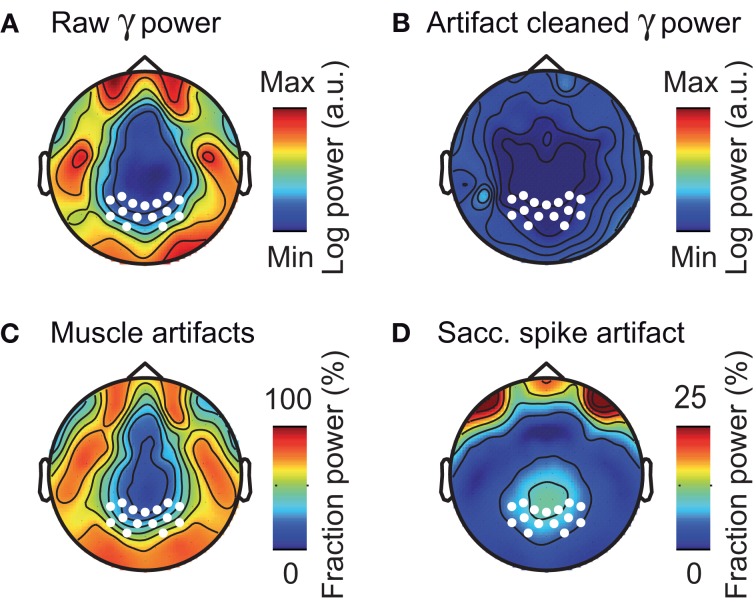
EEG is the most common technique for studying neuronal dynamics of the human brain. However, electromyogenic artifacts from cranial muscles and ocular muscles executing involuntary microsaccades compromise estimates of neuronal activity in the gamma band (>30 Hz). Yet, the relative contributions and practical consequences of these artifacts remain unclear. Here, we systematically dissected the effects of these different artifacts on studying visual gamma-band activity with EEG on the sensor and source level, and show strategies to cope with these confounds. We found that cranial muscle activity prevented a direct investigation of neuronal gamma-band activity at the sensor level. Furthermore, we found prolonged microsaccade-related artifacts beyond the well-known transient EEG confounds. We then show that if electromyogenic artifacts are carefully accounted for, the EEG nonetheless allows for studying visual gamma-band activity even at the sensor level. Furthermore, we found that source analysis based on spatial filtering does not only map the EEG signals to the cortical space of interest, but also efficiently accounts for cranial and ocular muscle artifacts. Together, our results clarify the relative contributions and characteristics of myogenic artifacts confounding visual gamma-band activity in EEG, and provide practical guidelines for future experiments.
脑电图是研究人类大脑神经元动力学最常用的技术。然而,来自颅肌和眼肌的肌源性伪迹会干扰伽马波段(>30 Hz)神经元活动的估计。然而,这些伪迹的相对贡献和实际后果仍不清楚。在这里,我们系统地分析了这些不同的伪迹在脑电图传感器和源水平上研究视觉伽马波段活动的影响,并展示了应对这些混淆的策略。我们发现颅肌活动阻止了在传感器水平上直接研究神经元伽马波段活动。此外,我们发现了与微扫视相关的伪迹比已知的瞬态 EEG 干扰持续时间更长。然后我们表明,如果仔细考虑肌源性伪迹,脑电图仍然可以在传感器水平上研究视觉伽马波段活动。此外,我们发现基于空间滤波的源分析不仅将 EEG 信号映射到感兴趣的皮质空间,而且还有效地解释了颅肌和眼肌伪迹。总之,我们的研究结果阐明了肌源性伪迹在脑电图中干扰视觉伽马波段活动的相对贡献和特征,并为未来的实验提供了实用的指导方针。