Chen Shaohua, Huang Xin, Zheng Haitao, Geng Suxia, Wu Xiuli, Yang Lijian, Weng Jianyu, Du Xin, Li Yangqiu
Mol Cancer. 2013 Jul 12;12:73. doi: 10.1186/1476-4598-12-73.
To improve the outcome of patients with T-cell acute lymphoblastic leukemia (T-ALL), characterization of the biological features of T-ALL blast cells and the immune status of patients with T-ALL is needed to identify specific therapeutic strategies.
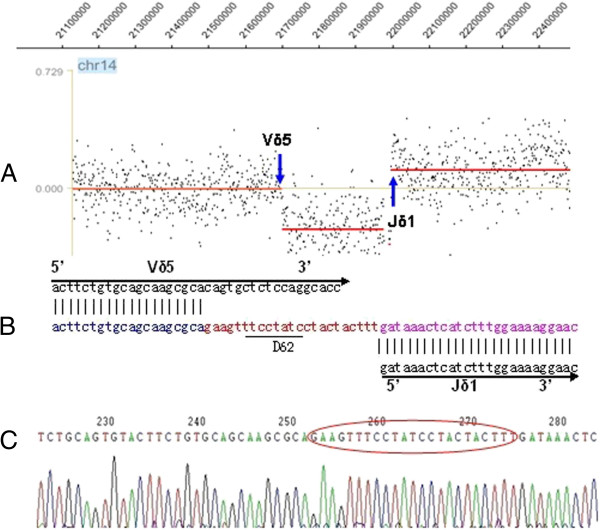
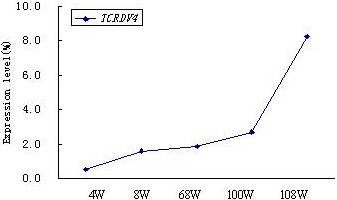
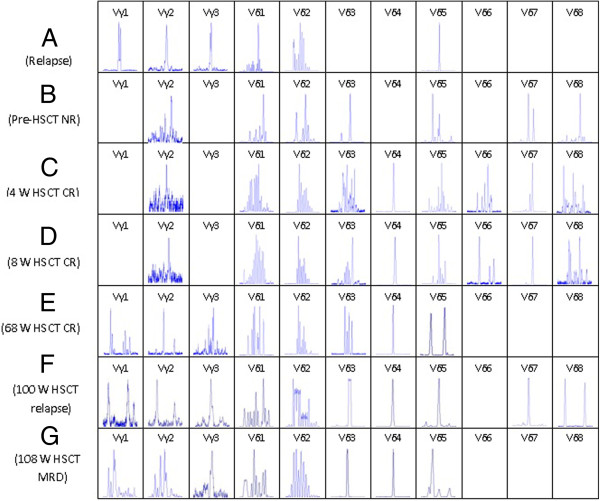
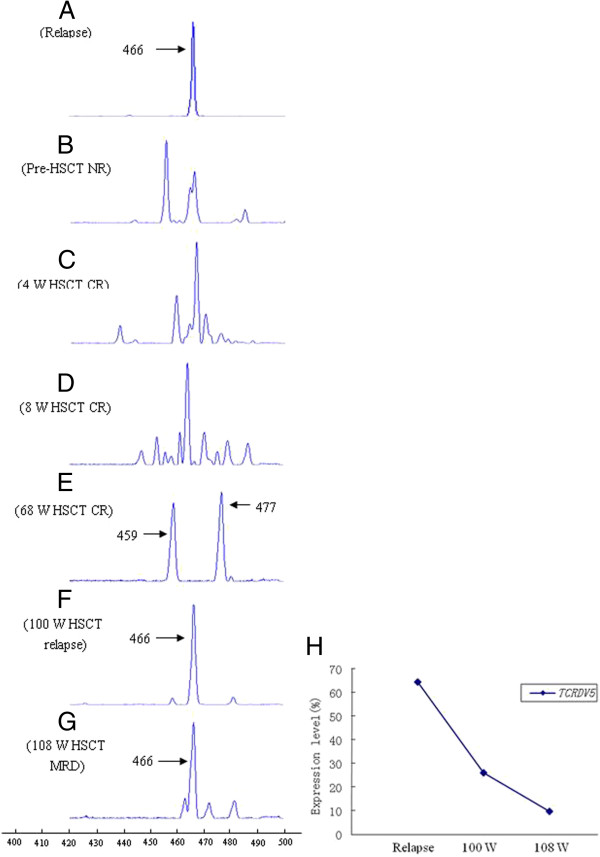
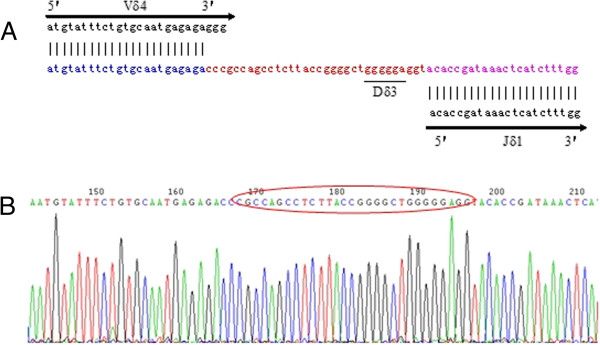
Using a novel approach based on the combination of fine-tiling comparative genomic hybridization (FT-CGH) and ligation-mediated PCR (LM-PCR), we molecularly identified a malignant γδ + T cell clone with a Vδ5Dδ2Jδ1 rearrangement that was paired with a T cell receptor (TCR) VγI and comprised a Vγ1Vδ5 T cell clone in a relapse T-ALL patient. This malignant Vδ5 T cell clone disappeared after chemotherapy, but the clone was detected again when disease relapsed post allogeneic hematopoietic stem cell transplantation (allo-HSCT) at 100 weeks. Using PCR and GeneScan analyses, the distribution and clonality of the TCR Vγ and Vδ subfamilies were examined before and after allo-HSCT in the patient. A reactive T cell clone with a Vδ4Dδ3Jδ1 rearrangement was identified in all samples taken at different time points (i.e., 4, 8, 68, 100 and 108 weeks after allo-HSCT). The expression of this Vδ4+ T cell clone was higher in the patient during complete remission (CR) post allo-HSCT and at disease relapse.
This study established a sensitive methodology to detect T cell subclones, which may be used to monitor minimal residual disease and immune reconstitution.
为改善T细胞急性淋巴细胞白血病(T-ALL)患者的治疗结果,需要对T-ALL原始细胞的生物学特征及T-ALL患者的免疫状态进行表征,以确定具体的治疗策略。
我们采用一种基于精细平铺比较基因组杂交(FT-CGH)和连接介导PCR(LM-PCR)相结合的新方法,从分子水平鉴定出1例复发T-ALL患者体内一个恶性γδ+T细胞克隆,该克隆具有Vδ5Dδ2Jδ1重排,与T细胞受体(TCR)VγI配对,构成一个Vγ1Vδ5 T细胞克隆。化疗后该恶性Vδ5 T细胞克隆消失,但在异基因造血干细胞移植(allo-HSCT)100周后疾病复发时再次检测到该克隆。利用PCR和基因扫描分析,对该患者allo-HSCT前后TCR Vγ和Vδ亚家族的分布及克隆性进行了检测。在allo-HSCT后不同时间点(即4、8、68、100和108周)采集的所有样本中均鉴定出一个具有Vδ4Dδ3Jδ1重排的反应性T细胞克隆。该Vδ4+T细胞克隆在患者allo-HSCT后完全缓解(CR)期及疾病复发时表达较高。
本研究建立了一种检测T细胞亚克隆的敏感方法,可用于监测微小残留病和免疫重建。