Faculty of Humanities, Hirosaki University , 1 Bunkyo, Hirosaki, Aomori 036-8560, Japan.
Breed Sci. 2013 Jun;63(2):183-96. doi: 10.1270/jsbbs.63.183. Epub 2013 Jun 1.
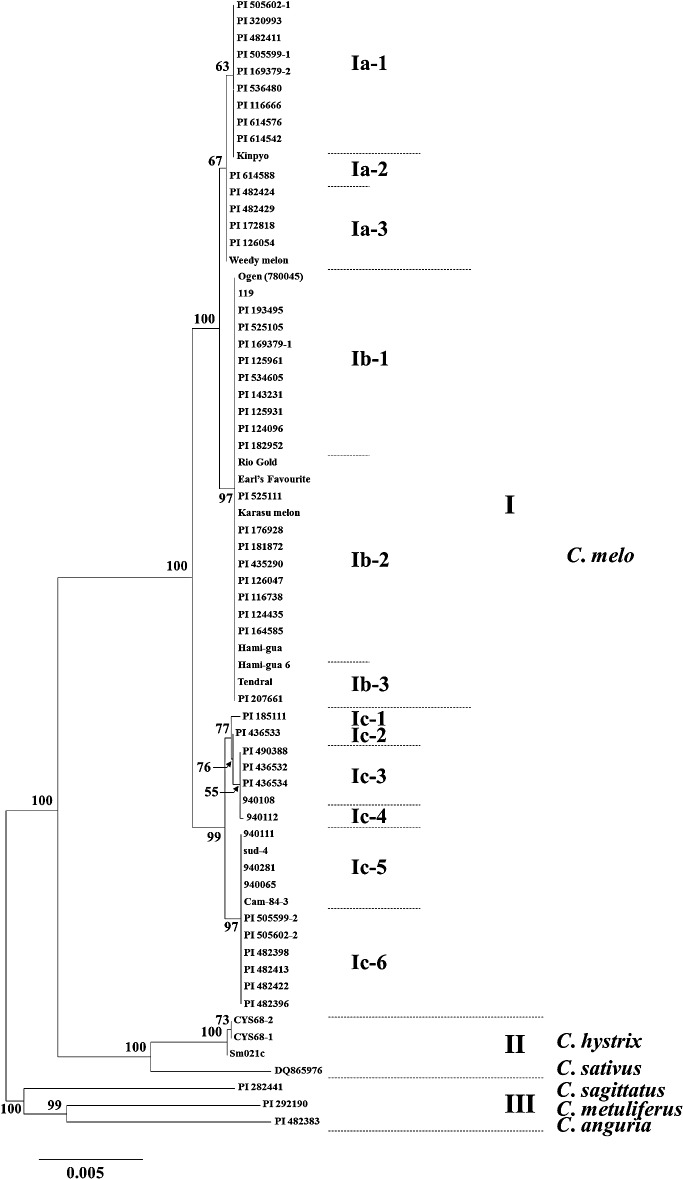
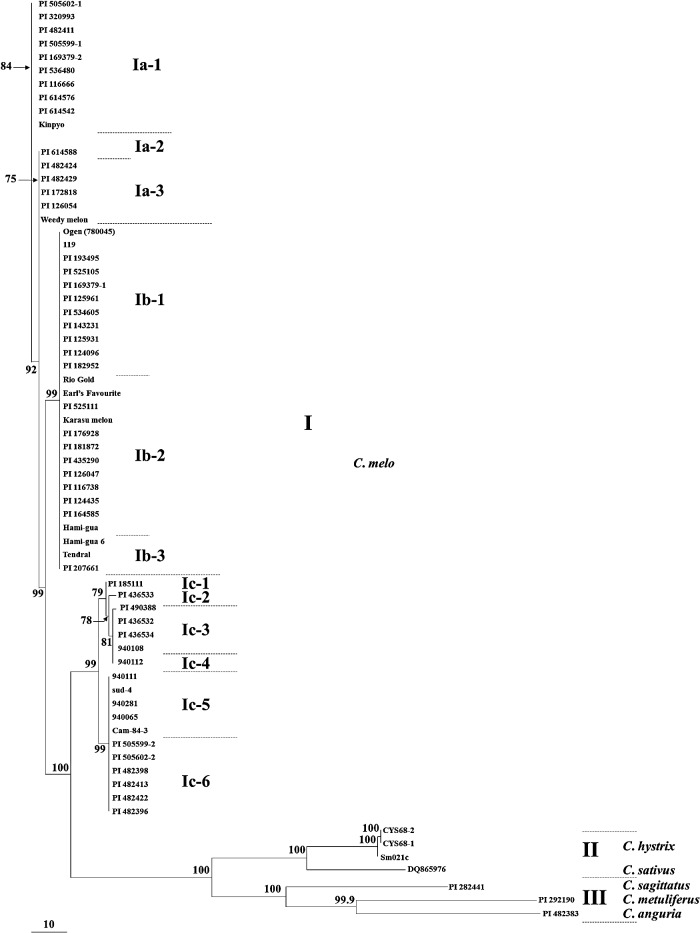
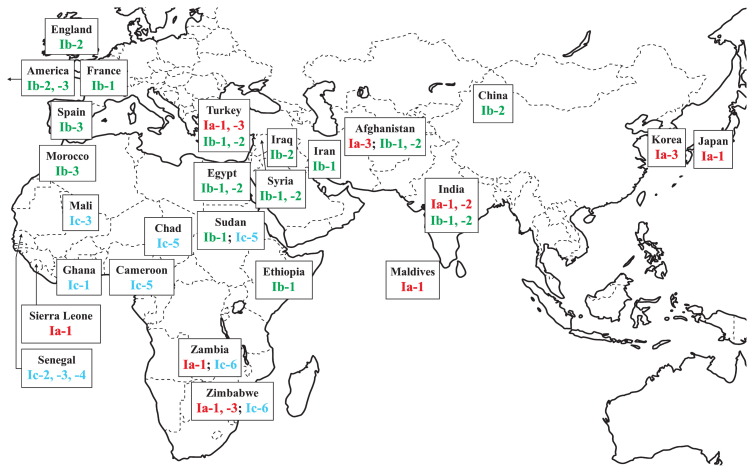
Molecular analysis encouraged discovery of genetic diversity and relationships of cultivated melon (Cucumis melo L.). We sequenced nine inter- and intra-genic regions of the chloroplast genome, about 5500 bp, using 60 melon accessions and six reference accessions of wild species of Cucumis to show intra-specific variation of the chloroplast genome. Sequence polymorphisms were detected among melon accessions and other Cucumis species, indicating intra-specific diversification of the chloroplast genome. Melon accessions were classified into three subclusters by cytoplasm type and then into 12 subgroups. Geographical origin and seed size also differed between the three subclusters. Subcluster Ia contained small-seed melon from Southern Africa and South and East Asia and subcluster Ib mainly consisted of large-seed melon from northern Africa, Europe and USA. Melon accessions of subcluster Ic were only found in West, Central and Southern Africa. Our results indicated that European melon groups and Asian melon groups diversified independently and shared the same maternal lineage with northern African large-seed melon and Southern African small-seed melon, respectively. Cultivated melon of subcluster Ic may have been domesticated independently in Africa. The presence of 11 cytoplasm types in Africa strongly supported African origin of cultivated melon and indicated the importance of germplasm from Africa.
分子分析促进了栽培甜瓜(Cucumis melo L.)遗传多样性和亲缘关系的发现。我们使用 60 份甜瓜材料和 6 份野生黄瓜属参考材料,对叶绿体基因组的 9 个种间和种内基因区域进行了测序,约 5500bp,以展示叶绿体基因组的种内变异。在甜瓜材料和其他 Cucumis 种之间检测到序列多态性,表明叶绿体基因组的种内多样化。根据细胞质类型,甜瓜材料被分为三个亚群,然后进一步分为 12 个亚组。三个亚群的地理起源和种子大小也存在差异。亚群 Ia 包含来自南部非洲和南亚及东亚的小粒甜瓜,亚群 Ib 主要由来自北非、欧洲和美国的大粒甜瓜组成。亚群 Ic 的甜瓜材料仅在西非、中非和南非发现。我们的研究结果表明,欧洲甜瓜群体和亚洲甜瓜群体独立进化,并与北非大粒甜瓜和南非小粒甜瓜分别共享相同的母系遗传。亚群 Ic 的栽培甜瓜可能在非洲独立驯化。非洲存在 11 种细胞质类型,强烈支持栽培甜瓜起源于非洲,并表明非洲种质资源的重要性。