Wang Pingli, You Dahui, Saravia Jordy, Shen Huahao, Cormier Stephania A
Part Fibre Toxicol. 2013 Jul 16;10:29. doi: 10.1186/1743-8977-10-29.
Epidemiological studies suggest that maternal exposure to environmental hazards, such as particulate matter, is associated with increased incidence of asthma in childhood. We hypothesized that maternal exposure to combustion derived ultrafine particles containing persistent free radicals (MCP230) disrupts the development of the infant immune system and results in aberrant immune responses to allergens and enhances asthma severity.
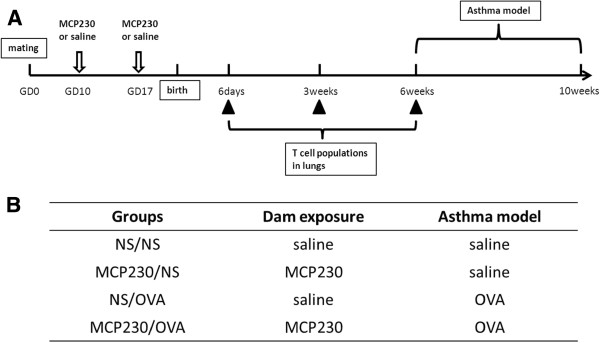
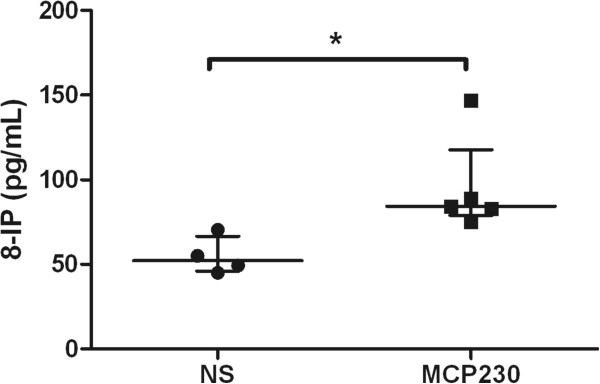
Pregnant C57/BL6 mice received MCP230 or saline by oropharyngeal aspiration on gestational days 10 and 17. Three days after the second administration, blood was collected from MCP230 or saline treated dams and 8-isoprostanes in the serum were measured to assess maternal oxidative stress. Pulmonary T cell populations were assayed in the infant mice at six days, three and six weeks of postnatal age. When the infant mice matured to adults (i.e. six weeks of age), an asthma model was established with ovalbumin (OVA). Airway inflammation, mucus production and airway hyperresponsiveness were then examined.
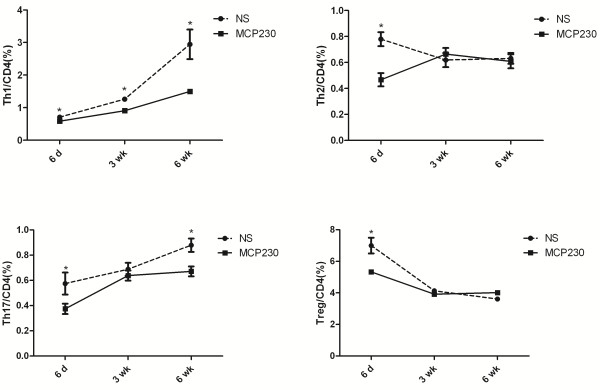
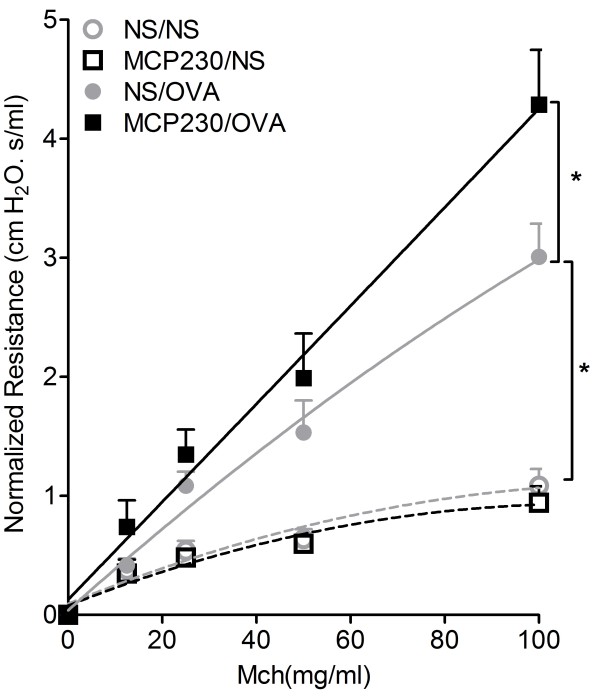
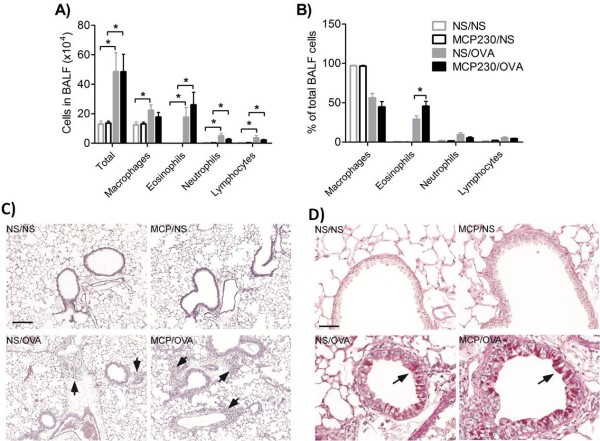
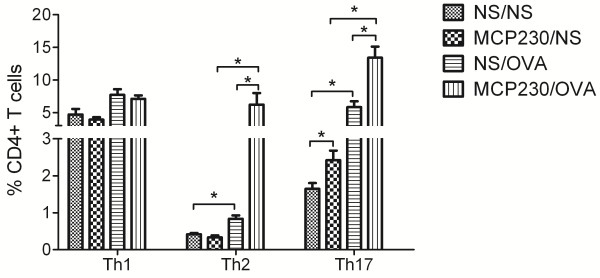
Maternal exposure to MCP230 induced systemic oxidative stress. The development of pulmonary T helper (Th1/Th2/Th17) and T regulatory (Treg) cells were inhibited in the infant offspring from MCP230-exposed dams. As the offspring matured, the development of Th2 and Treg cells recovered and eventually became equivalent to that of offspring from non-exposed dams. However, Th1 and Th17 cells remained attenuated through 6 weeks of age. Following OVA sensitization and challenge, mice from MCP230-exposed dams exhibited greater airway hyperresponsiveness, eosinophilia and pulmonary Th2 responses compared to offspring from non-exposed dams.
Our data suggest that maternal exposure to MCP230 enhances postnatal asthma development in mice, which might be related to the inhibition of pulmonary Th1 maturation and systemic oxidative stress in the dams.
流行病学研究表明,母亲暴露于环境危害因素,如颗粒物,与儿童哮喘发病率增加有关。我们推测,母亲暴露于含有持久性自由基的燃烧衍生超细颗粒(MCP230)会扰乱婴儿免疫系统的发育,并导致对过敏原的异常免疫反应,加重哮喘严重程度。
在妊娠第10天和第17天,通过口咽吸入法给怀孕的C57/BL6小鼠给予MCP230或生理盐水。第二次给药后三天,从接受MCP230或生理盐水处理的母鼠采集血液,检测血清中的8-异前列腺素以评估母体氧化应激。在出生后6天、3周和6周时检测幼鼠肺部的T细胞群体。当幼鼠成长为成年小鼠(即6周龄)时,用卵清蛋白(OVA)建立哮喘模型。然后检测气道炎症、黏液分泌和气道高反应性。
母亲暴露于MCP230会诱导全身氧化应激。来自暴露于MCP230的母鼠的幼崽中,肺部辅助性T细胞(Th1/Th2/Th17)和调节性T细胞(Treg)的发育受到抑制。随着幼崽的成长,Th2和Treg细胞的发育恢复,最终与未暴露母鼠的后代相当。然而,Th1和Th17细胞在6周龄时仍处于减弱状态。与未暴露母鼠的后代相比,经OVA致敏和激发后,来自暴露于MCP230的母鼠的小鼠表现出更大的气道高反应性、嗜酸性粒细胞增多和肺部Th2反应。
我们的数据表明,母亲暴露于MCP230会增强小鼠出生后哮喘的发展,这可能与母鼠肺部Th1成熟的抑制和全身氧化应激有关。