Department of System Ecotoxicology, UFZ - Helmholtz Centre for Environmental Research , Permoserstrasse 15, D-04318 Leipzig, Germany.
Environ Sci Technol. 2013 Aug 6;47(15):8862-8. doi: 10.1021/es401346d. Epub 2013 Jul 26.
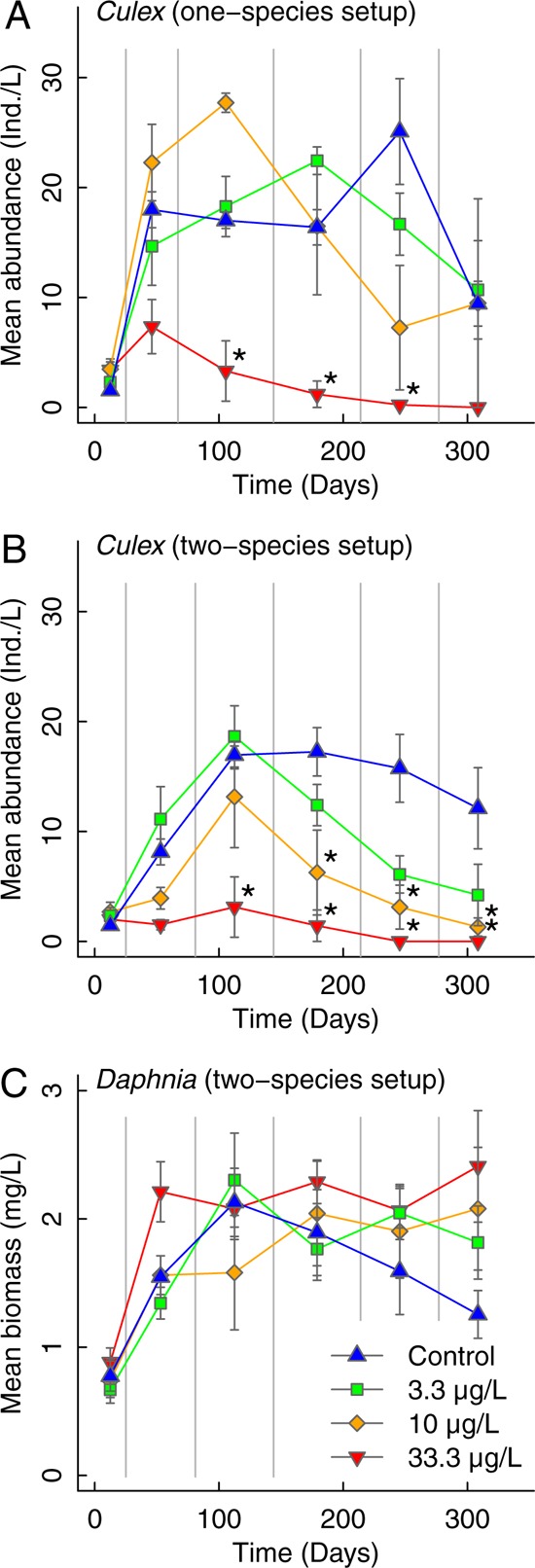
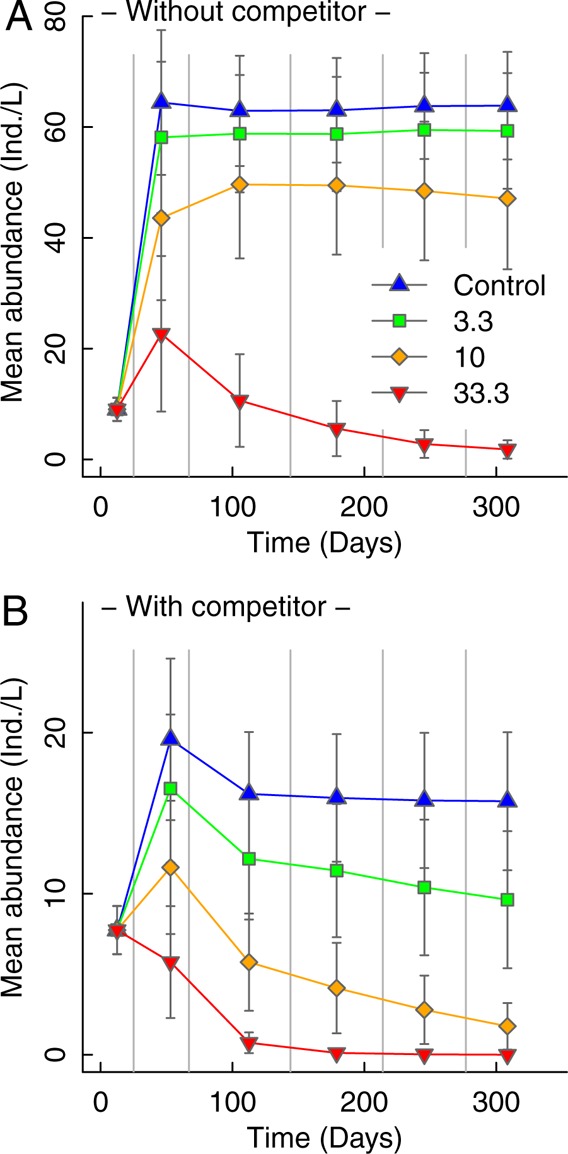
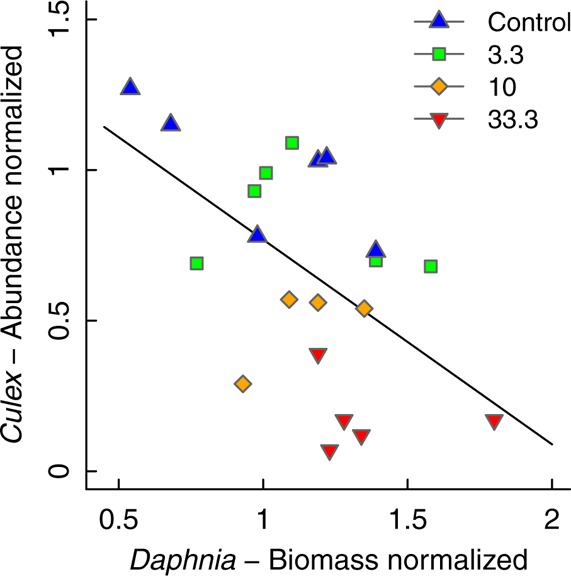
Pesticides applied in agriculture can affect the structure and function of nontarget populations at lower doses and for longer timespans than predicted by the current risk assessment frameworks. We identified a mechanism for this observation. The populations of an aquatic invertebrate (Culex pipiens) exposed over several generations to repeated pulses of low concentrations of the neonicotinoid insecticide (thiacloprid) continuously declined and did not recover in the presence of a less sensitive competing species (Daphnia magna). By contrast, in the absence of a competitor, insecticide effects on the more sensitive species were only observed at concentrations 1 order of magnitude higher, and the species recovered more rapidly after a contamination event. The underlying processes are experimentally identified and reconstructed using a simulation model. We conclude that repeated toxicant pulse of populations that are challenged with interspecific competition may result in a multigenerational culmination of low-dose effects.
农业中使用的杀虫剂在较低剂量和更长时间内会影响非靶标种群的结构和功能,这超出了当前风险评估框架的预测。我们确定了这一观察结果的机制。经过几代人的反复接触低浓度新烟碱类杀虫剂(噻虫嗪)脉冲后,水生无脊椎动物(库蚊)的种群持续下降,在有竞争力较弱的物种(大型溞)存在的情况下无法恢复。相比之下,如果没有竞争者,只有在浓度高出 1 个数量级时,杀虫剂对更敏感物种的影响才会显现,而且在污染事件后,该物种的恢复速度更快。使用仿真模型,我们从实验上确定并重建了潜在的过程。我们得出的结论是,受到种间竞争挑战的种群的反复毒物脉冲可能导致低剂量效应的多代累积。